Attacks Near Persian Gulf Nuclear Site Raise Accident Fears, No Radiation Spike Reported
A projectile struck a structure 350 metres from Iran's Bushehr reactor, the latest in a string of attacks near the Persian Gulf site that has alarmed nuclear safety monitors.

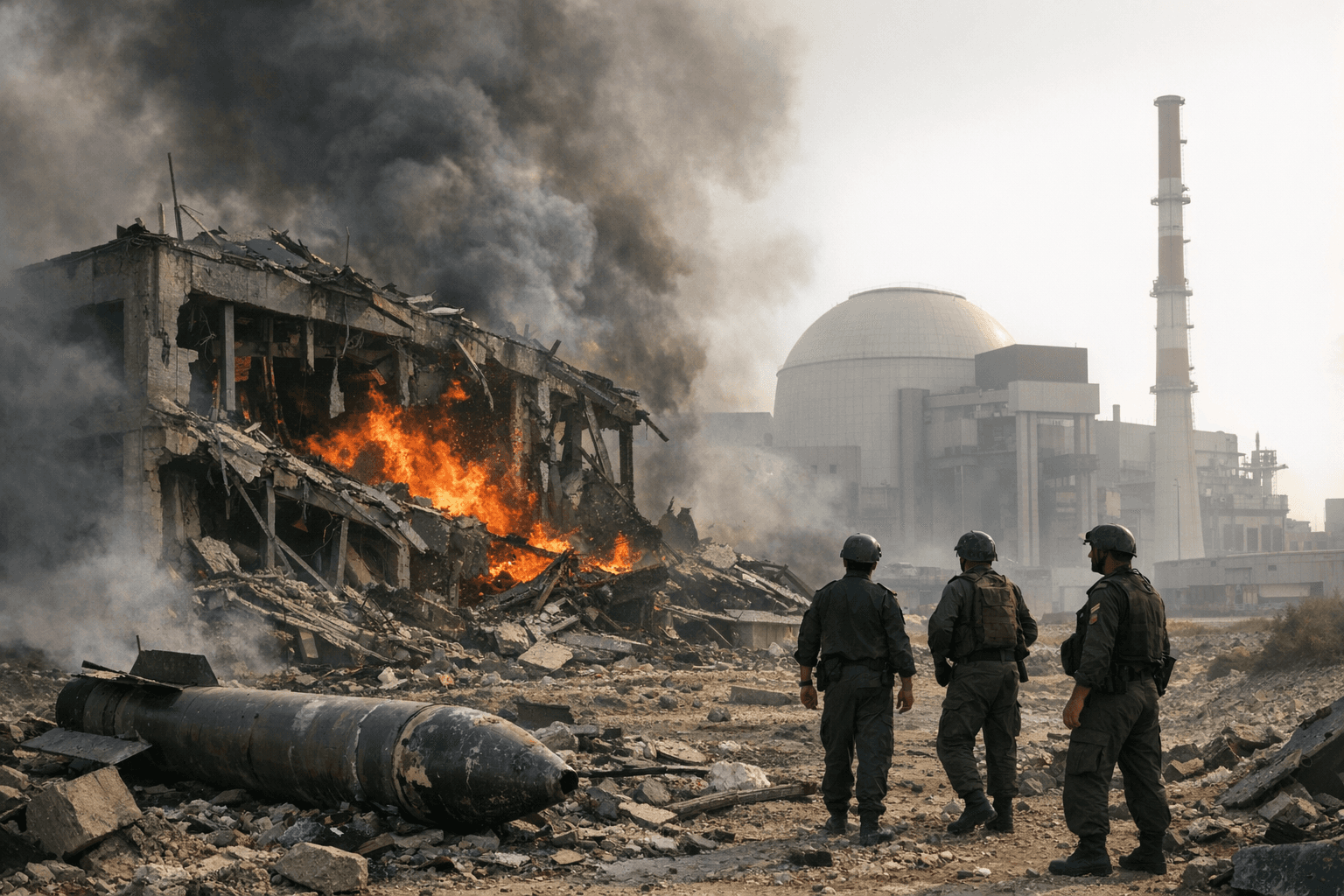
A projectile struck and destroyed a structure just 350 metres from the operating reactor at Iran's Bushehr Nuclear Power Plant on Tuesday evening, the International Atomic Energy Agency confirmed, intensifying fears of a radiological catastrophe even as monitors reported no measurable spike in radiation levels across the region.
The IAEA said it received information from Iran about the "projectile incident" and confirmed that a structure near the plant had been hit and destroyed. Rosatom, the Russian state nuclear corporation that operates the facility, said the strike hit the area near the plant's metrological service at 15:11 GMT, describing it as landing "in close proximity to an operating power unit." Rosatom Director General Alexei Likhachev said about 250 employees and their families had been safely evacuated from Iran, with children removed before the armed conflict began in late February.
The Tuesday strike was not the first near Bushehr. The plant, situated on Iran's Persian Gulf coast roughly 480 miles south of Tehran, was also targeted in an attack on March 17 that reportedly caused no casualties or physical damage. That pattern of repeated near-misses has placed nuclear safety agencies on edge as the conflict between the United States, Israel, and Iran enters its second month.
IAEA Director General Rafael Grossi activated the agency's Incident and Emergency Centre and placed its regional safety monitoring network on continuous alert. His assessment offered a measured degree of reassurance: "So far, no elevation of radiation levels above the usual background levels has been detected in countries bordering Iran," Grossi said. He added that there was no current indication that nuclear installations had been damaged, though he acknowledged that communications with Iranian nuclear regulatory authorities had become severely limited since late February.
Grossi has been increasingly vocal about the danger the conflict poses to nuclear safety broadly. He warned that armed attacks on nuclear facilities should never take place and could lead to radioactive releases with serious consequences beyond national borders. In a statement posted to the IAEA's social media account, Grossi reiterated his "deep concern about recent military strikes reportedly occurring near Iran's Bushehr Nuclear Power Plant."
The UAE operates four nuclear reactors, while Jordan and Syria have research reactors, and Bahrain, Iraq, Kuwait, Oman, Qatar, and Saudi Arabia have all been subjected to attacks, all of them using nuclear applications in some form. Grossi urged "utmost restraint in all military operations" and called for a return to diplomacy to address Iran's nuclear program over the long term.
Brent crude hovered around $107 a barrel, up more than 45% since the war started February 28 when the U.S. and Israel attacked Iran. Iran has maintained its closure of the Strait of Hormuz, through which roughly a fifth of the world's oil passes during peacetime, compounding the economic pressure of a conflict that now reaches into the nuclear safety calculations of an entire region.
This article was produced by Prism’s automated news system from verified source data, official records, and press releases, then run through automated quality and moderation checks before publishing. The system is built and supervised by the people who set the standards it runs under. Read our full AI policy.
Did this article answer your question?