Australian Fugitive Dezi Freeman Shot Dead After Seven Months on Run
A $1 million reward and 211 days of silence: Victoria Police shot dead fugitive Dezi Freeman on Monday, ending a manhunt that drew in ASIO and the Australian Defence Force.
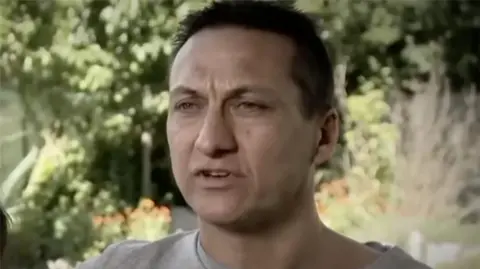
The AU$1 million reward, the largest in Victoria's history, produced not a single confirmed lead. For 211 days, Dezi Freeman moved through the ranges of north-east Victoria without once being spotted, despite a dragnet that drew in hundreds of officers, the Australian Defence Force, ASIO, and staff from New Zealand Police. On Monday morning, the hunt ended not with a tip or a bounty claim, but with a fatal police shooting at a rural address in the state's north-east.
Freeman, 56, had been a self-described sovereign citizen known to police long before August 26, 2025, when officers Neal Thompson and Vadim De Waart-Hottart were killed at a property near Porepunkah, a small town in Victoria's alpine north-east, as they attempted to execute a warrant. A third officer was injured. Freeman fled immediately into the dense bushland of Mount Buffalo National Park, and what followed became one of the most resource-intensive fugitive hunts in Australian history.
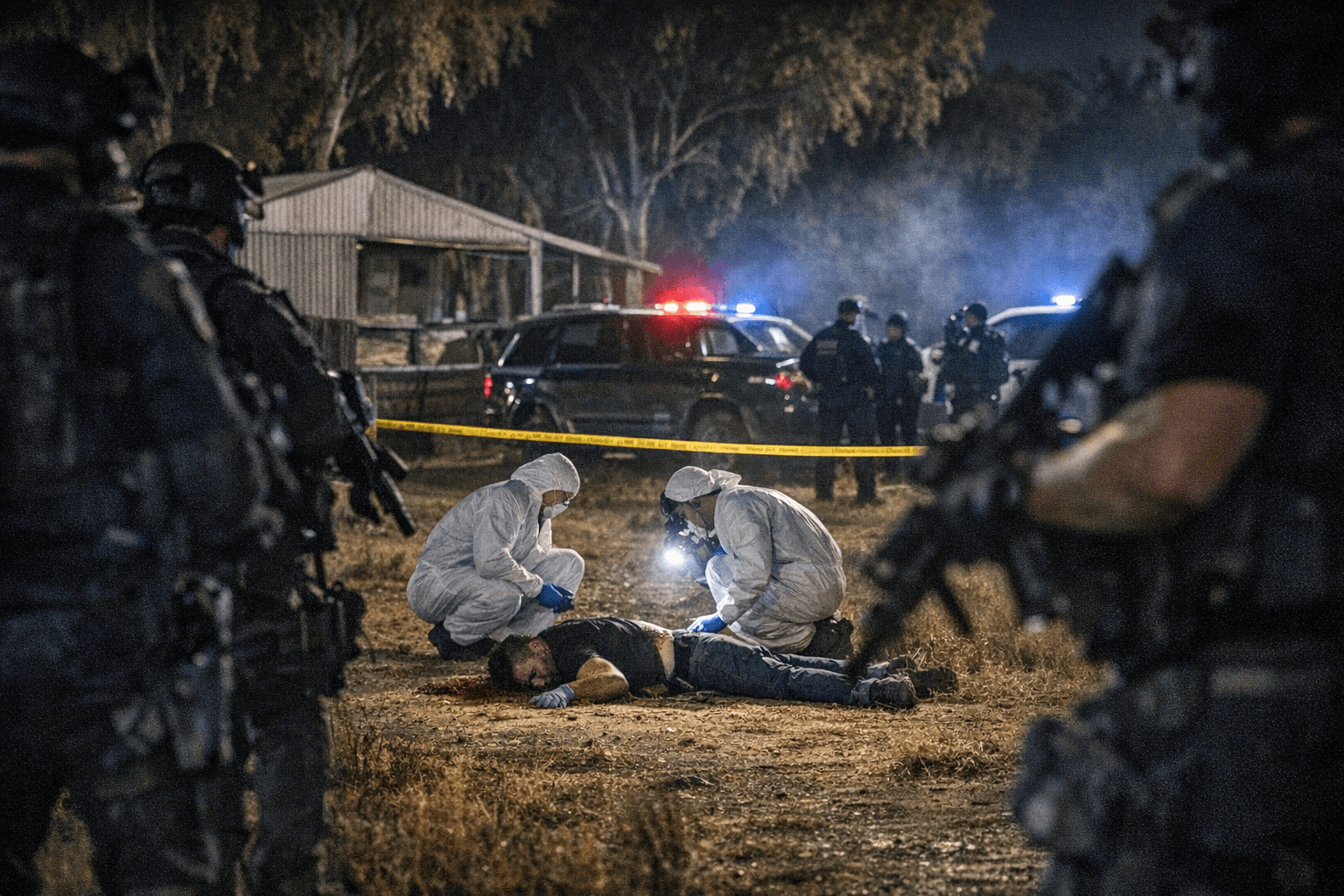
Victoria Police confirmed Monday that a man had been fatally shot at a rural address in the state's north-east as part of the operation to locate Freeman. "No police officers were injured during the incident," a Victoria Police statement said. The State Coroner will attend the scene, and the investigation will be oversighted by Professional Standards Command, "as per standard process for a police shooting."
That phrase, "standard process," carries considerable weight. Victoria's model mandates dual-track oversight automatically whenever a person dies in a police operation: the coroner investigates the circumstances of death independently, while Professional Standards Command reviews whether officers' actions complied with use-of-force policy and departmental guidelines. The framework exists precisely for cases like this one, where operational pressure was extreme and the use of lethal force, while challenged by no party at this stage, still requires scrutiny independent of the operational chain. It is a model that treats accountability as a procedural default rather than a response to controversy, and it will now be tested against one of the most politically charged police shootings in recent Victorian memory.
The scale of the manhunt preceding Monday's outcome was without precedent in the state. More than 400 officers were deployed in the hours and days after the August 26 killings alone, with hundreds involved over the ensuing months. Victoria Police drew on interstate forces, the ADF, and ASIO, involvement that raised persistent questions about the assessed threat Freeman posed. In parallel, authorities put up an AU$1 million (NZ$1.21 million) reward and offered the possibility of indemnity for anyone who provided information leading to Freeman's capture. Despite all of it, no confirmed sightings emerged across 211 days.
ABC profiled Freeman's trajectory as a path "from an 'unemployable' sovereign citizen to Porepunkah police shooter," a framing that pointed toward an ideological thread running through both the Freeman and Wieambilla cases. The 2022 Wieambilla shootings in Queensland, in which a sovereign citizen fatally shot police in a rural community, drew direct comparisons from domestic and international journalists once the Porepunkah killings occurred. Both incidents underscored a pattern: individuals who reject the legal authority of the state and who are known to police as holding that view can escalate without warning and with devastating consequences for responding officers.
The longer historical parallel invoked throughout the search was Malcolm Naden, a New South Wales fugitive who evaded police for seven years before his capture in 2013. Naden's "ability to elude police had become something of an embarrassment," as The Guardian reported at the time. He was eventually caught when 20 specialist officers surrounded a property near Gloucester in a midnight raid; a police dog bit him before he was hospitalised. Like Freeman, Naden was treated as extraordinarily capable in remote Australian bushland. Unlike Freeman's case, Naden's ended in arrest, a court appearance, and a formal adjudication of guilt. Freeman's ends with a coroner's attendance and a Professional Standards review.
That distinction is the central accountability question now facing Victoria's oversight bodies. A live capture produces a public record: charges, evidence, cross-examination, verdict. A police shooting produces institutional review that, however rigorous, operates outside open court and is not required to reach a verdict on guilt. Whether the families of Thompson and De Waart-Hottart, whose deaths triggered the entire 211-day operation, find resolution in that process will be one measure of whether Victoria's oversight model is adequate to cases of this magnitude.
The practical disruptions of the search also deserve a reckoning. For more than seven months, the dense alpine terrain of Mount Buffalo National Park and the surrounding north-east communities lived alongside an active fugitive hunt involving military and intelligence agencies. In the Naden case, the long-term police presence in the small town of Gloucester, population 5,000, injected enough money into the local economy that the publican at the Avon Valley Inn, Gary Daley, noted beer sales had increased by up to 20 percent. The parallel costs and disruptions across north-east Victoria's communities during the Freeman search, measured in diverted resources, tourism impact, and the psychological burden of an unresolved threat in a regional landscape, remain to be fully accounted for.
Victoria Police's statement that the State Coroner will attend and that Professional Standards Command will oversight the investigation is the beginning of that accounting, not its conclusion.
This article was produced by Prism’s automated news system from verified source data, official records, and press releases, then run through automated quality and moderation checks before publishing. The system is built and supervised by the people who set the standards it runs under. Read our full AI policy.
Did this article answer your question?


