Australia's Psychedelic Therapy Program Shows Promise But Remains Out of Reach for Many
More than half of PTSD patients treated with MDMA in Australia reported significant relief, but the $30,000 price tag keeps the therapy out of reach for most.
.jpg%3Fformat%3D1500w&w=1920&q=75)
Zoe Marshall sat in a warmly lit room in Sydney, blinds drawn, as clinicians began preparing her MDMA-assisted therapy session. Her experience, documented this week, puts a face on what Australia has quietly built since 2023: the world's first government-sanctioned program allowing psychiatrists to prescribe MDMA and psilocybin for treatment-resistant mental illness. The results are striking. The cost is a wall most Australians cannot climb.
Data obtained through a Freedom of Information request to the Therapeutic Goods Administration revealed that no serious adverse events were recorded among patients receiving MDMA-assisted therapy under the Authorised Prescriber Scheme as of September 16, 2025. Researchers report that patient-reported outcomes are being collected by the Australian National University as part of an expanding real-world evidence program focused on MDMA-assisted therapy for the treatment of PTSD. And clinically, the early signals are hard to dismiss: more than half of patients who received MDMA alongside psychotherapy reported significant relief from PTSD, according to researchers.
In early 2023, the TGA announced that MDMA and psilocybin would be reclassified from Schedule 9 Prohibited Substances to Schedule 8 Controlled Drugs, legally accessible in specific therapeutic contexts under the Authorised Prescriber Scheme. These changes came into effect July 1, 2023. Australia became the first country to make this move, and in January 2024, the first patients in Australia received treatment with psychedelic-assisted therapy as part of the TGA's Authorised Prescriber program.
The program's reach has remained tightly constrained. Since those first treatments, 87 patients had been treated with MDMA-assisted therapy for PTSD and 47 with psilocybin-assisted therapy for treatment-resistant depression as of September 16, 2025, with patient numbers beginning to grow in mid-2025 as the system found its footing. By that point, the number of psychiatrists who had become Authorised Prescribers could be counted in the dozens. Collectively, nearly 200 patients have now been through the program, which includes up to three dosing sessions with MDMA.
The pathway to becoming an Authorised Prescriber is deliberately rigorous. To prescribe MDMA and psilocybin, psychiatrists must obtain approval for purposes of the Authorised Prescriber Scheme from a Human Research Ethics Committee registered with the National Health and Medical Research Council, and subsequently seek and obtain authorisation from the TGA. Psychiatrists must also show they have the necessary training, competency, and robust evidence-based treatment protocols that appropriately control the risks to patients.
Access is further narrowed by strict clinical eligibility. Australia's 2026 guidelines specify that patients must have had PTSD symptoms for at least six months after diagnosis, have experienced moderate or severe symptoms in the past month, have already exhausted first-line evidence-based treatments, and are not likely to be exposed to further significant traumatic events during treatment. That last-resort framing is deliberate. "We're talking about someone who has actually been through all the usual sorts of treatments for PTSD including the trauma-focused psychotherapies, various medications to help the anxiety, depression and anger and potentially substance abuse that typically accompany PTSD," said Dr. Lane, who advises on the veterans' program.
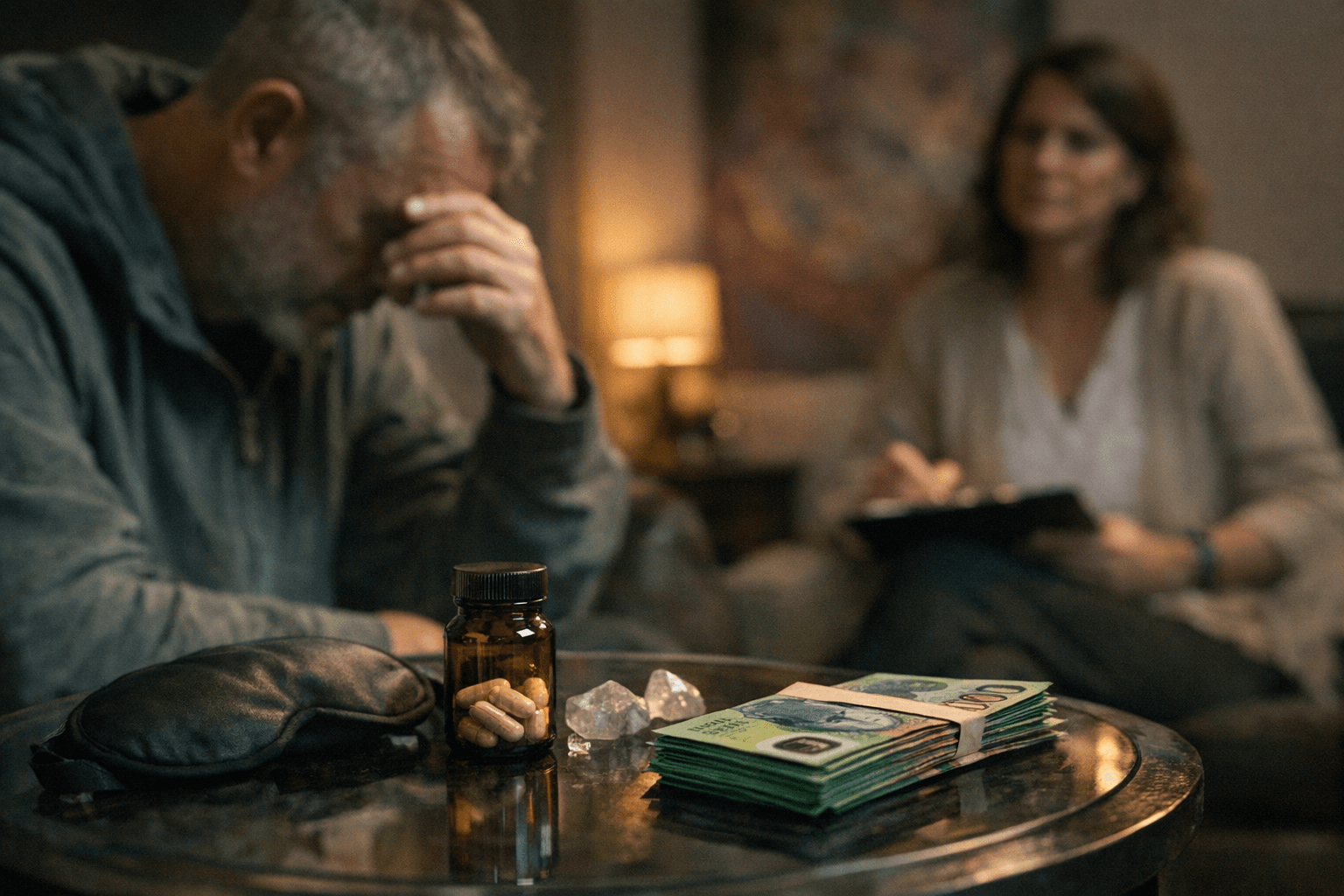
Then comes the price. The main cost driver is psychiatrist and therapist time delivering therapy in a clinical setting consistent with the standards established in clinical trials. That resource intensity has pushed average charges to roughly $30,000 AUD for a three-dose MDMA-assisted therapy program, or $10,000 AUD for a single dose with accompanying preparation and integration sessions. That figure is well beyond the reach of the average Australian, and the problem is not unique to Australia: as seen in other jurisdictions that have sidestepped traditional pharmaceutical routes to market, such as Oregon and Switzerland, early access schemes have raised major questions about affordability and insurer participation.
Veterans represent the most significant opening for subsidised access. The Australian Department of Veterans' Affairs recently announced a $740 million veterans rehabilitation plan that includes support for psychedelic-assisted therapy for eligible veterans with PTSD. The department will begin funding MDMA and psilocybin treatment where eligible, alongside medicinal cannabis, with the enhanced supports funded over four years from 2025-26. The government has also launched a $200 million crackdown on what it describes as fraudulent billing by predatory fee-for-service advocates defrauding the veterans' payment system.
The contrast with the United States is pointed. In 2024, a contentious safety debate helped sink MDMA therapy's prospects at the Food and Drug Administration. Australia's regulators, meanwhile, have recorded zero serious adverse events across a program now approaching 200 patients. Since commencement of the regulatory system, clinical uptake has been relatively slow, with barriers including a lack of suitably qualified clinical staff, a lack of standardized and accredited training programs, the need for specialized clinical treatment spaces, and the high cost of treatment.
Patient-reported outcomes are being collected by the Australian National University as part of an expanding real-world evidence program, meaning the data underpinning future funding decisions is still being built. Until public subsidies or broader insurer coverage arrive, the therapy will remain what it has been since January 2024: genuinely promising, and genuinely inaccessible to most of the Australians who need it most.
This article was produced by Prism’s automated news system from verified source data, official records, and press releases, then run through automated quality and moderation checks before publishing. The system is built and supervised by the people who set the standards it runs under. Read our full AI policy.
Did this article answer your question?