AWS outage in UAE forces power cuts, disrupts dozens of cloud services
Amazon Web Services said objects struck a UAE data center, sparking a fire and power cuts that disrupted EC2, S3 and RDS; Bahrain saw API errors across 50+ services.
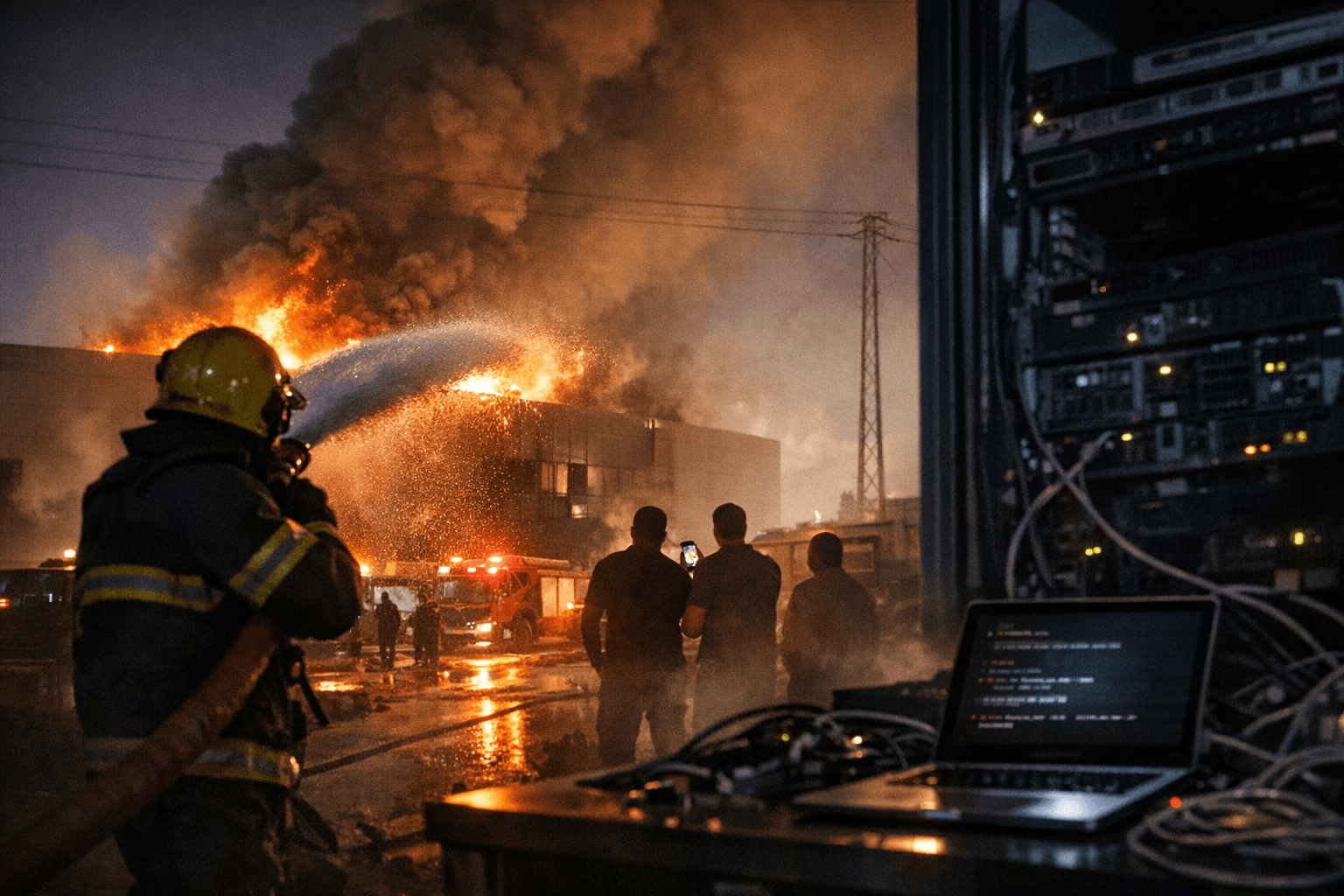
Amazon Web Services reported that objects struck a data center availability zone in the United Arab Emirates, creating sparks and a fire that led authorities to cut power and caused multi-hour outages across core cloud services. The company’s status updates and regional reports showed cascading effects through EC2, S3, RDS and dozens of other offerings, and a parallel incident in Bahrain produced connectivity and API errors affecting more than 50 services.
In a status message reproduced by industry outlets, AWS said: “At around 4:30 AM PST, one of our Availability Zones (mec1-az2) was impacted by objects that struck the data center, creating sparks and fire.” Reuters later reported that the objects “had triggered a fire on Sunday that forced authorities to eventually cut power to two clusters of Amazon data centers in the UAE, with restoration expected to take several more hours, according to Amazon Web Services' (AWS) status page.”
AWS Health dashboard entries establish the timeline of troubleshooting and rolling impact. At Mar 01 5:19 AM PST the dashboard stated: “We are investigating connectivity and power issues affecting APIs and instances in a single Availability Zone (mec1-az2) in the ME-CENTRAL-1 Region due to a localized power issue.” Subsequent updates read: Mar 01 6:09 AM PST, “We can confirm that a localized power issue has affected a single Availability Zone in the ME-CENTRAL-1 Region (mec1-az2).” By Mar 01 8:59 AM PST the dashboard reported ongoing work to restore power in the affected AZ. A later Mar 02 12:52 AM PST entry broadened the list of impacted AZs: “We continue to work on a localized power issue affecting multiple Availability Zones in the ME-CENTRAL-1 Region (mec1-az3 and mec1-az1).”
Datacentremagazine quoted a Mar 02 6:22 AM PST update saying, “We continue to work towards recovery of the two impaired Availability Zones (mec1-az2 and mec1-az3) in the ME-CENTRAL-1 Region.” Reporting across outlets showed that the exact set of impaired AZs shifted across updates, and that AWS warned recovery could take multiple hours.
The ME-SOUTH-1 Bahrain region experienced a separate but concurrent disruption. DatacenterKnowledge reported “connectivity and API error rates in the ME-SOUTH-1 (Bahrain) Region, where a localized power issue in a single Availability Zone led to increased errors across more than 50 services, including EC2 and RDS.” DatacenterKnowledge also summarized the UAE impact: “Localized power issues in the UAE Region disrupted EC2, S3, RDS, and dozens of other services, with AWS warning recovery could take multiple hours.”
AWS advised customers to follow standard resilience steps. Datacentremagazine reported that AWS “has advised customers to back up critical data and, where possible, fail over workloads to another AWS region.” Industry posts and the status dashboard encouraged customers to move critical workloads to alternate regions where feasible.
Questions remain about the nature of the objects and the precise cause of the strike; none of the published updates identify the objects or say whether they were deliberate or accidental. Coverage also reflects differences in wording about the scope of the power cuts, with some reports describing cuts to a single facility and others citing two clusters. When contacted, outlets noted that AWS “neither confirmed nor denied” further details beyond the status page messaging.
The disruptions underline the operational risks cloud customers face when regional infrastructure is affected. Analysts and operators typically point to geographic separation and multi-AZ design as safeguards; that architecture was cited by industry outlets as the recommended mitigation as AWS worked to restore services.
This article was produced by Prism’s automated news system from verified source data, official records, and press releases, then run through automated quality and moderation checks before publishing. The system is built and supervised by the people who set the standards it runs under. Read our full AI policy.
Did this article answer your question?