Baby shower games, how to pace activities for a better party
The smartest shower games are the ones that fit the room. A tighter, better-paced mix keeps gifts, conversation, and laughter from fighting for space.

Why pacing beats piling on
Baby shower games work best when they behave like part of the room’s rhythm, not a separate program shoved on top of it. One guide organizes twenty game ideas by type, but its sharper point is structural: a shower usually needs four to six games across a typical two-hour event, not a full slate of back-to-back activities. That approach treats games as pacing tools, with one icebreaker as guests arrive, a few main activities after people settle in, one sentimental option that can become a keepsake for the parents-to-be, and a backup in case the party moves faster than expected.
That matters because baby showers are changing. TODAY’s 2024 roundup says the modern version tends to be more casual, and the schedule has relaxed along with it. Jeannette Tavares, creative director at Evoke Design & Creative, puts the point plainly: know your group, and do not over-program the event. Leave room for eating and presents, because those moments are not dead space, they are the social backbone of the party.
Start with the people in the room
The right activity depends on who is actually attending. A mixed-age guest list can include college friends, coworkers, relatives, and people who barely know one another, which changes everything about how much structure feels comfortable. A game that works for a tight friend group may feel awkward in a room where half the guests are meeting for the first time, so the host has to read the temperature before deciding how playful the room can get.
That is where the experience-design mindset comes in. The best shower games are not simply popular, they are appropriate to the guest mix, the energy level, and the tone of the day. TODAY’s 2024 coverage reflects a broader expectation that guests should actually want to play, which is a notable shift from the old reputation for stiff, formal, or forced activities. The goal is interaction without cringe, the kind that sparks conversation instead of making people glance at the clock.
Build the flow, not just the list
A good shower game plan should feel spread out rather than clustered into one long block. The most practical timing advice in the guide gives each game roughly five to fifteen minutes, including setup and winner announcements, which is enough to create momentum without hijacking the party. That range also leaves room for the real pleasures of a shower, the chat, the snacks, the gifts, and the small social pauses that help different generations and friend groups mix.

The sequence matters as much as the count. An icebreaker can ease people into the room while the first arrivals are still finding seats and names. Mid-party games can carry the energy once everyone is comfortable, while a more sentimental activity can land later, when guests are already invested in the parents-to-be and the mood has softened. A backup game is useful too, not because you need to fill every minute, but because a shower can run ahead of schedule once people get chatting or the present-opening moves quickly.
Where baby bingo earns its place
Baby shower bingo is one of the easiest examples of pacing done right because it naturally belongs to the gift-opening portion of the shower. Guests mark off gifts as they are opened, which turns a long, passive stretch into a shared activity without interrupting the flow of presents. It works especially well as a built-in bridge between watching the gifts and staying socially engaged, which is why it remains one of the most common low-pressure options.
Its strength is that it does not demand a separate performance from the room. People can stay seated, follow along, and participate at their own pace while the parent-to-be opens gifts. That makes it ideal for showers where the conversation should stay loose and the energy should remain warm rather than hyper-competitive.
Why word scramble is still such a useful opener
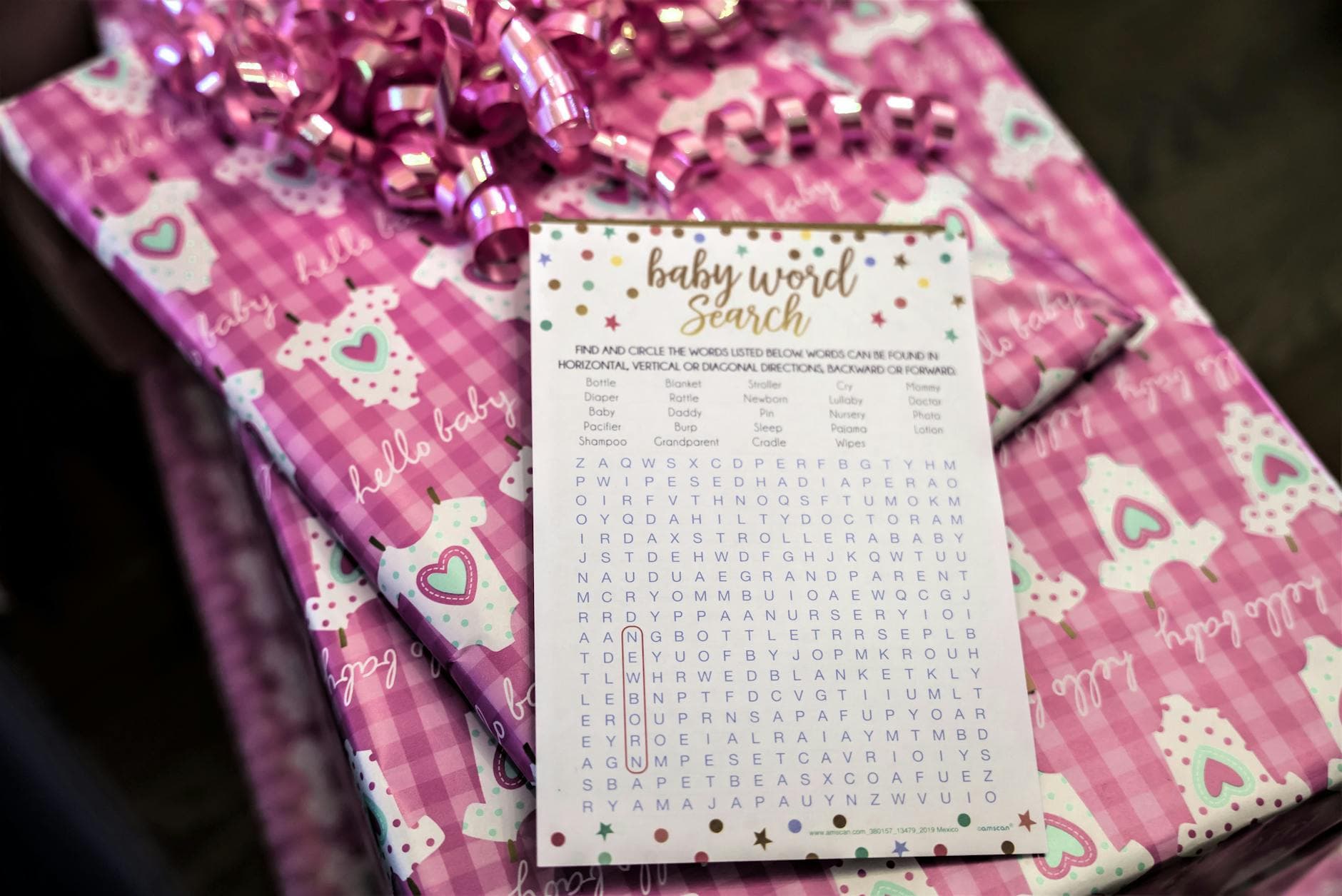
Baby word scramble fills a different role. It is often used as an arrival-time icebreaker or as a transition activity, which makes it one of the cleanest ways to move the room from mingling into game time. It is quick, familiar, and easy to explain, so it does not ask much from guests who may not know one another well.
That ease is exactly why it works. A word scramble gives guests something to do with their hands and attention while the room settles, but it does not monopolize the event. In a shower with coworkers, family members, and old friends, that low-stakes structure can be the difference between a pleasant start and a lurch into awkward silence.
The cultural shift behind the games
The larger story is that baby showers are now being treated as social rituals that deserve a smarter design. Encyclopaedia Britannica places baby showers within life-cycle ceremonies and rites of passage tied to childbirth, which gives the event a deeper frame than just cake and decor. The shower marks a transition in family status, so the entertainment has to support that transition instead of distracting from it.
TODAY’s older reporting on “man showers” shows how much the format has widened. Co-ed showers and dad-focused celebrations have become more common, which means the old assumptions about who attends, who hosts, and how formal the day should feel no longer hold. In that broader mix, games need to be flexible enough for a dad-to-be gathering, a co-ed party, or a multi-generational room that includes grandparents alongside friends from work.
Fewer games, better matched
That is the real takeaway from the newer advice: fewer, better-matched games outperform a stuffed schedule. A shower does not get better because every possible activity makes an appearance. It gets better when the games suit the people in the room, leave time for conversation and gifts, and keep the event from tipping into a rigid program.
The strongest showers now feel like a well-paced host has thought about the whole arc of the afternoon. There is a gentle start, a few moments of shared play, a place for sentiment, and enough breathing room for food and presents to do their part. When the games are chosen with that kind of care, they stop being filler and start doing real work for the party.
Know something we missed? Have a correction or additional information?
Submit a Tip