Plus-size maternity dresses for baby showers balance style and comfort
The best baby-shower dress solves three jobs at once: it flatters a changing shape, photographs cleanly, and stays comfortable through the whole party.

Baby-shower dressing is a fit problem first
The smartest plus-size maternity dresses for baby showers are not chasing a trend. They are solving a very specific problem: how to look polished, feel physically at ease, and stay confident through sitting, posing, eating, and moving around. That is the fit-comfort-confidence gap in one sentence, and it is why the best options are the ones built with body-aware design rather than one-note styling.
Maternity sizing helps, but only if you use it correctly. Motherhood Maternity says maternity and post-pregnancy sizing generally matches pre-pregnancy size, and its size chart is based on measurements taken with a 6-month belly. Seraphine gives the same basic advice: pick your pre-pregnancy size for the best fit throughout pregnancy. That matters because the goal is not to size up blindly. It is to choose a dress with enough built-in room, stretch, and drape to work with a changing body instead of fighting it.
Start with the setting, not the trend
The easiest way to avoid a wardrobe mistake is to match the dress to the shower itself. An outdoor or garden shower calls for a flowy maxi dress, because movement matters there. Long, sweeping silhouettes handle breeze, uneven ground, and seated conversation better than anything stiff or clingy, and they also photograph well when the fabric has enough movement to catch light naturally.
For an indoor or more elegant shower, lace maternity dresses make more sense. Lace reads dressier immediately, which gives you the polished look most people want for a hosted event, but the maternity cut keeps the dress from feeling restrictive. The trick is choosing lace with structure, not stiffness. If the fabric holds shape without digging in at the bust, arms, or midsection, it does the job beautifully.
At home or for a low-key celebration, a casual and comfortable dress is usually the right call. That does not mean sloppy. It means skipping fussy details that need constant adjusting and choosing something you can sit in, eat in, and wear for a few hours without thinking about it. When the focus stays on the event instead of the outfit, the dress has done its job.
Maxi dresses do a lot of heavy lifting outdoors
Flowy maxi dresses are the easiest win for garden parties and outdoor showers because they balance coverage and ease. A good maxi gives you vertical length, which creates a clean line in photos, while the looser skirt skims over the belly instead of clinging to it. That is exactly the kind of silhouette that helps plus-size moms-to-be look put together without feeling boxed in.
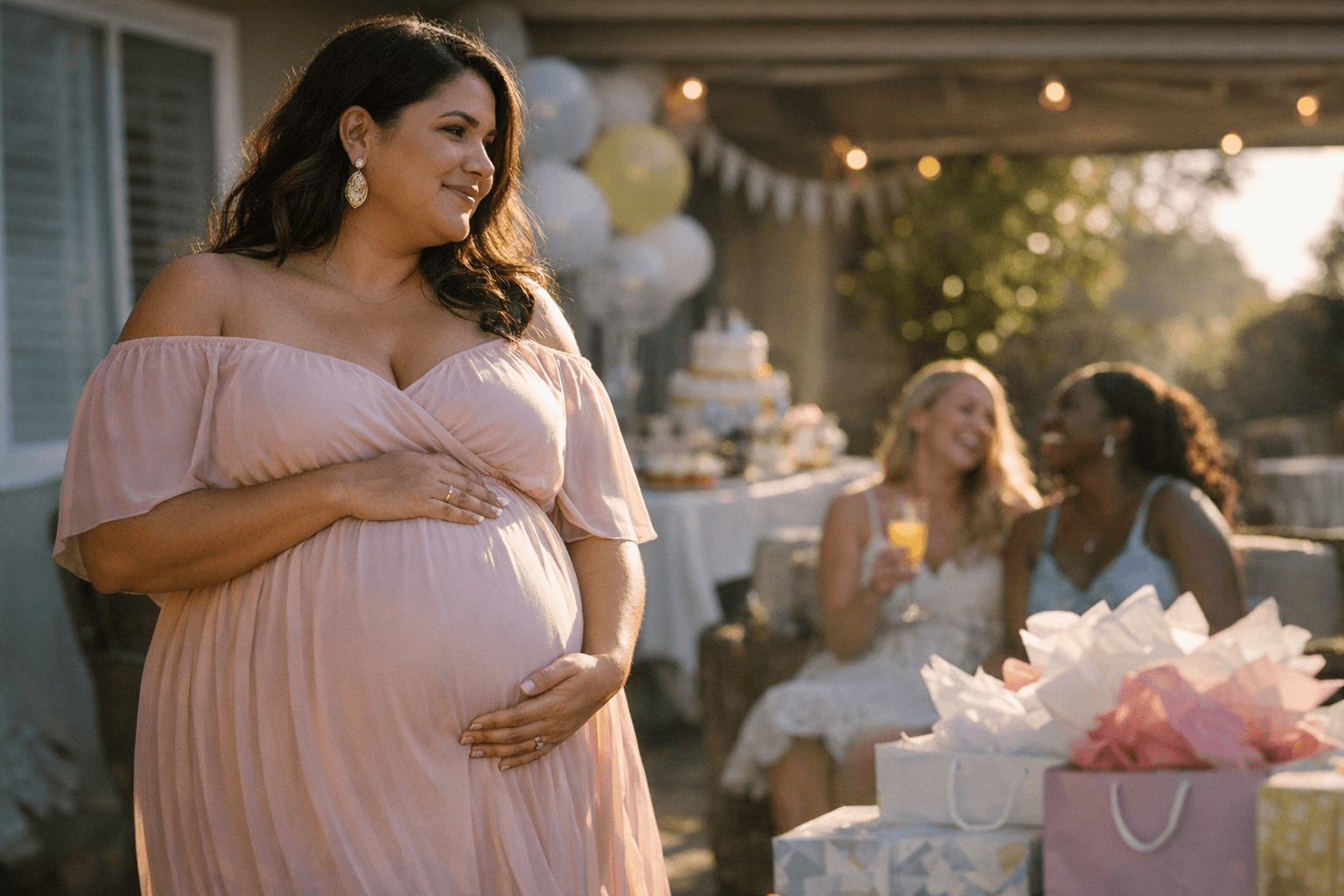
The pitfall is choosing a maxi that is only long on paper but awkward in motion. If the fabric is too heavy, it can drag. If it is too thin, it can cling in ways that make every seam and underlayer visible. The sweet spot is a dress with enough structure to hang well and enough movement to avoid looking rigid when you walk, sit, or stand for pictures.
Lace works when you want formality without the squeeze
Lace maternity dresses are the best option when the shower has a more polished dress code. Lace gives you texture, and texture photographs better than a flat, featureless fabric under indoor lighting. It also gives the dress a sense of occasion, which is useful when the event feels more like a brunch or hosted celebration than a casual get-together.
What makes lace work for maternity wear is not the lace itself but the cut underneath it. A maternity lace dress should still respect your changing shape through the bust, waist, and hips. If the lace is decorative but the lining is too tight or the seams sit in the wrong place, the dress will look formal and feel miserable. That is the exact kind of fit frustration worth avoiding.
Comfort is not a backup plan
The best baby-shower dress is one you can wear for the full duration of the event without counting the minutes until you can change. That means thinking about how the dress behaves while you are seated for gifts, standing for photos, reaching for food, and moving through conversations. A dress that looks good only when you are standing still is not doing enough.
This is where maternity fashion starts to look less like a niche and more like performance wear for real life. You are not dressing for a runway. You are dressing for a mixed-use day that asks your clothes to be flattering in photos, forgiving on the body, and stable enough to stay comfortable while the bump keeps changing. The right dress should reduce the number of times you have to adjust it.
Sizing is usually simpler than shoppers expect
There is a common sizing question that keeps coming up, and the answer is refreshingly practical: in most cases, go with your pre-pregnancy size. Motherhood Maternity says its maternity sizes generally match pre-pregnancy size, and its own chart is built around a 6-month belly. Its range runs from small to 3X and includes plus-size options, which is useful because it shows that inclusive sizing is built into the category, not added as an afterthought.
There is still one important caveat. If you are between sizes or already in the third trimester, sizing up can improve comfort. That is not about abandoning your normal size logic. It is about giving your body a little more room when the dress needs to accommodate both shape and movement. Seraphine’s guidance reinforces that approach by telling shoppers to choose their pre-pregnancy size for the best fit throughout pregnancy, while still recognizing that maternity cuts are designed to adapt.
Inclusive sizing is growing, but the range is still uneven
The market signal here is clear. The Bump notes that many maternity brands have expanded plus-size options, but choices can still be limited. That is the real shopping problem behind this guide: there are more options than there used to be, but not enough consistency across brands, styles, and size ranges.
Some brands are pushing farther. Today’s Parent reports one inclusive maternity brand offering tops and dresses up to 4XL and bottoms in size 30, which gives you a better sense of how far the category can stretch when inclusivity is treated seriously. Even so, shoppers often have to compare measurements carefully because one brand’s plus-size range may be generous while another stops short of what the customer actually needs.
The business case explains why this matters
This is not a tiny corner of fashion. Grand View Research estimates the global maternity wear market at USD 23,422.6 million in 2024 and projects it to reach USD 30,867.5 million by 2030, growing at a CAGR of 4.7% from 2025 to 2030. In the United States, it projects the market will reach USD 5,729.7 million by 2030, with a CAGR of 4.2% from 2025 to 2030.
Those numbers help explain why plus-size maternity baby-shower dressing deserves careful attention. The category is growing because shoppers want clothes that work for specific moments, not just generic comfort. The winning dress is the one that fits the occasion, adapts to the body, and still looks good in the photos people will keep.
Sources:
Know something we missed? Have a correction or additional information?
Submit a Tip