Baby Shower Gift Safety: What Buyers Must Check Before Purchasing
Product recalls in car seats, sleepers, and monitors make baby shower gift-buying riskier than most shoppers realize — here's how to check before you buy.

Buying a baby shower gift used to be straightforward: pick something from the registry, wrap it nicely, show up. That calculus has changed. Recalls and safety alerts now touch nearly every major category new parents rely on, from the car seat they'll use on day one to the sleeper the baby naps in every afternoon. If you're shopping for a shower gift, or building a registry yourself, understanding how to vet a product before purchasing isn't overcautious — it's necessary.
Why recalls hit baby products so hard
Baby gear operates under intense regulatory scrutiny precisely because the stakes are so high. The U.S. Consumer Product Safety Commission (CPSC) issues recalls throughout the year, and infant and toddler products consistently represent a significant share of those actions. The categories most commonly affected aren't obscure accessories — they're the core items that appear on virtually every baby registry: car seats, infant sleepers, baby monitors, clothing and apparel, and certain developmental toys.
The problem isn't limited to off-brand or budget products. Major manufacturers have faced high-profile recalls in recent years across all of these categories. A sleeper that sold hundreds of thousands of units, a car seat with a harness buckle defect, a monitor with a software vulnerability — these aren't hypothetical risks. They're documented cases that underscore why a product's presence on a registry or a retailer's "best seller" shelf tells you nothing about its current safety status.
The categories that deserve the closest scrutiny
Not all registry items carry equal risk, but several categories warrant a specific pre-purchase check every time.
- Car seats: This is the highest-stakes item on any registry. Recall issues have ranged from harness defects to structural failures under crash conditions. Always verify the specific model and manufacture date against the CPSC recall database before purchasing.
- Infant sleepers: This category has seen some of the most consequential recalls in recent memory, tied to infant fatalities from positional asphyxia. Products that appear on registries may have been recalled after the registry was created. Never assume a registry item is safe — check it independently.
- Baby monitors: Both audio and video monitors have been subject to recalls related to electrical hazards, overheating, and in some cases, cybersecurity vulnerabilities in Wi-Fi-enabled devices. If you're gifting a monitor, verify the model against current recall listings.
- Apparel: Infant clothing recalls typically involve drawstring hazards, flammability failures, or choking risks from decorative elements. These recalls often affect specific size runs or colorways of an otherwise fine product line, making model-level verification essential.
- Toys: Developmental and sensory toys marketed for infants can be recalled for small parts, toxic materials, or structural failures that create choking or laceration hazards. Age-range labeling is a minimum check, not a complete safety guarantee.
How to run a pre-purchase safety check
This doesn't have to be complicated, but it does have to be deliberate. Here's a repeatable process you can run on any product before you buy it as a gift.
1. Get the exact product name, model number, and manufacturer.
Don't rely on a registry description alone — look up the product on the retailer's site or the brand's website to confirm the precise model designation.
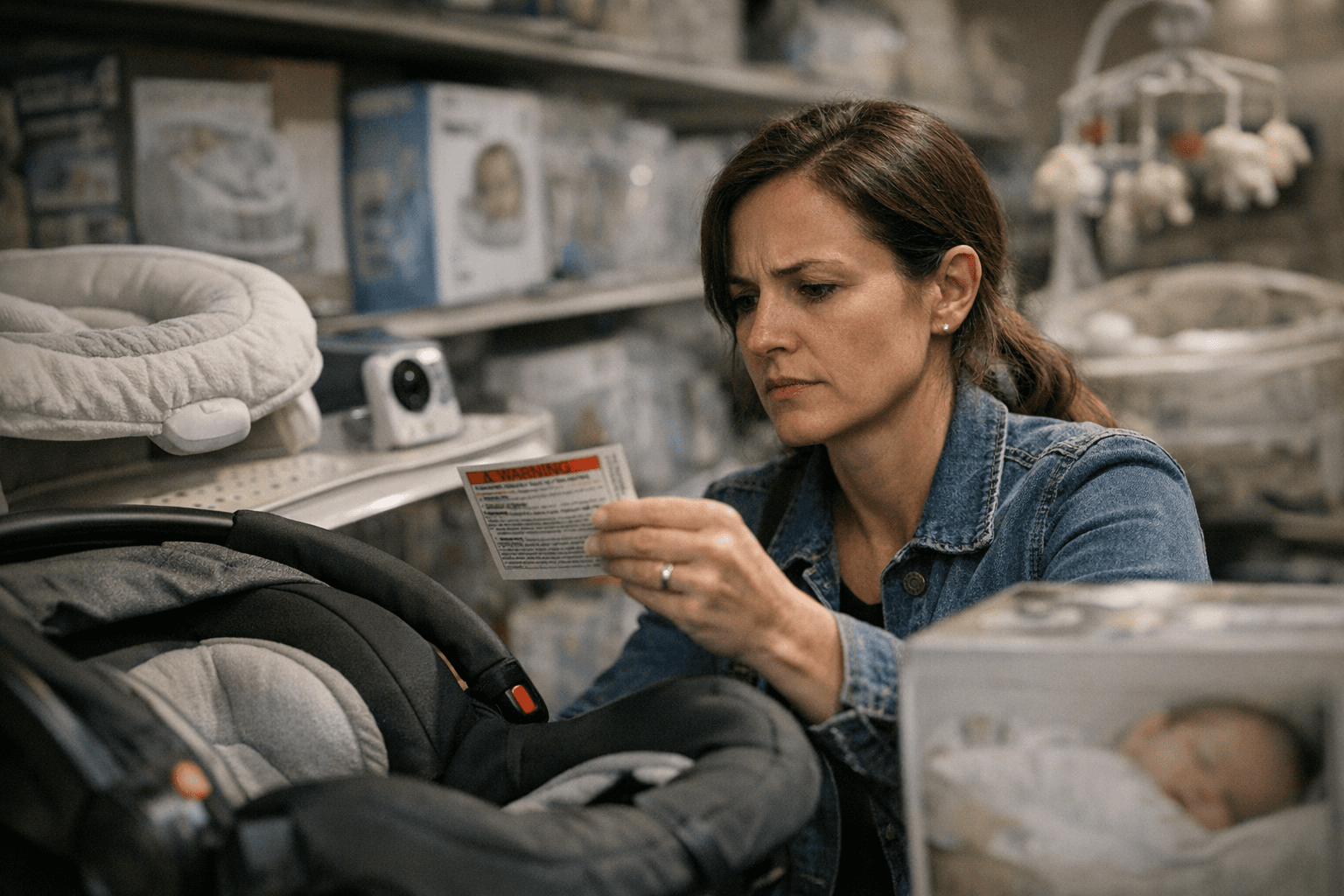
2. Search the CPSC recall database at cpsc.gov/recalls.
You can search by brand name, product category, or keyword. This database is updated in real time and covers recalls issued within the past several years.
3. Cross-reference with the retailer.
Major retailers including Amazon, Target, and Buy Buy Baby are required to notify customers who purchased recalled items, but those notifications aren't always reliable. Checking independently is faster and more accurate.
4. Verify the manufacture date if the product has a long retail history.
Some recalls apply only to units manufactured during a specific window. The manufacture date is typically printed on a label on the product or its packaging — for car seats, it's often on the seat itself.
5. Check for any active CPSC safety alerts that haven't yet reached full recall status.
These appear on the CPSC website and can signal products under investigation before a formal recall is announced.
What to do if a gift you already gave gets recalled
If you purchased a product before a recall was announced, contact the manufacturer directly using the information provided in the recall notice. Most recalls offer one of three remedies: a full refund, a replacement part, or a free replacement unit. If you purchased through a major retailer, check your order history and report the recall to the retailer as well — they may be able to assist with the remedy process and should have your purchase on record.
For the recipient's part, recalled products should be stopped immediately. That's especially true for sleepers and car seats, where continued use carries direct physical risk. A replacement gift may be worth considering if the recalled item was a significant registry priority.
Building a safer registry from the start
If you're the one building the registry rather than buying from it, a few practices reduce your exposure to this problem significantly. Register for products shortly before they're needed rather than months in advance — this shortens the window during which a registry item could be recalled before it's purchased. Include the manufacturer name and model number in your registry notes so buyers can run accurate searches. And when possible, register for items that have been on the market long enough to have a documented safety track record, rather than the newest release in a category.
The instinct to give the most current, feature-rich version of a product is understandable, but in infant safety categories, a proven track record is worth more than a new feature set.
The bottom line
The five minutes it takes to run a CPSC database check before buying a baby shower gift is the single most useful thing you can do with that time. Recalls in car seats, sleepers, monitors, apparel, and toys are ongoing, they affect products from reputable brands, and they don't expire from shelves automatically. A gift that looks right on the registry may already be the subject of a safety action. Checking first is the whole job.
Sources:
Know something we missed? Have a correction or additional information?
Submit a Tip