Backstage Broadway and theater shows blur chaos, truth, and myth
These theater shows trade in backstage chaos, but the real drama is labor, logistics, and the narrow margins behind a Broadway run.
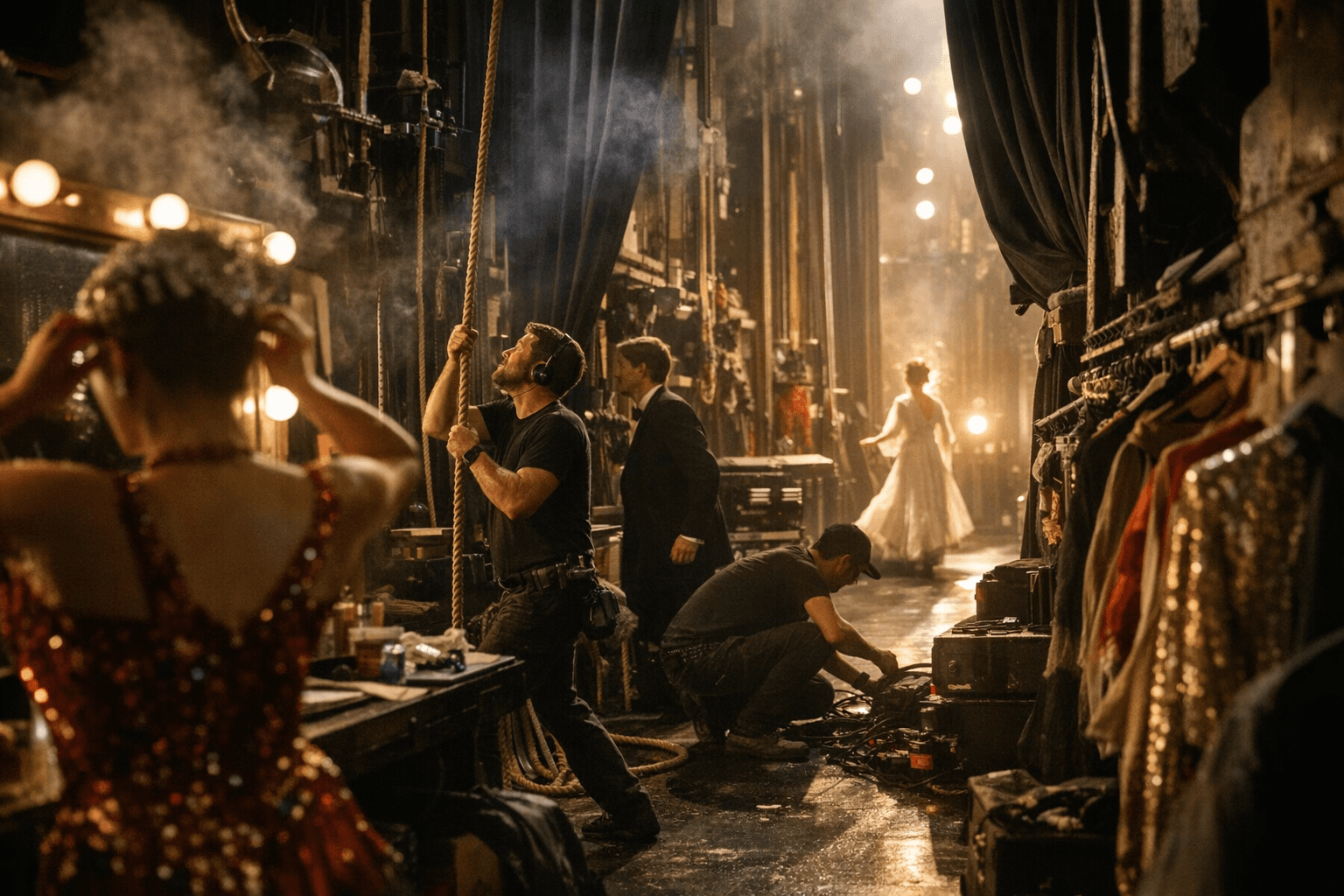
The backstage myth is part of the product
Television and stage versions of theater stories keep returning to the same fantasy: the diva tantrum, the miracle debut, the production saved at the last minute by force of personality. That mythology is sticky because it contains just enough truth to feel plausible, and just enough exaggeration to make the theater world look like a pressure cooker. Shows like *Smash*, *Slings & Arrows*, and *American Classic* thrive on that tension, turning rehearsal rooms, dressing rooms, and family theaters into places where ambition and dysfunction collide.
But the real business of theater is less about a single explosive personality than about coordination. A Broadway show can open, play a few months, and close on a fixed schedule, as *Smash* did at the Imperial Theatre, after 32 previews and 84 regular performances. A major repertory company can juggle 12 productions across three stages in a single season, as Stratford Festival does at full capacity. That contrast tells you almost everything: theater is not sustained by chaos alone, but by systems, labor, and the discipline to keep the machine moving.
Why backstage stories keep selling
The appeal of these shows is easy to understand. *Smash* became a cult favorite on NBC before it was turned into a stage musical, and the Broadway version leaned into the idea that pandemonium is part of the fun. Playbill described it as a behind-the-scenes story about the making of a Marilyn Monroe musical called *Bombshell*, and that framing is pure theatrical bait: a glamorous icon, a show within a show, and the promise that the mess behind the curtain is as dramatic as what happens under the lights.
That same instinct drives *Slings & Arrows*, the Canadian comedy-drama set behind the scenes of a fictional Shakespearean festival. Its awards haul, including three Gemini Awards in 2006 and four major honors at the 2007 Gemini gala, helped cement its reputation as one of the sharpest depictions of artistic ego and institutional strain. These stories endure because they reduce a complicated industry to recognizable emotional shorthand: the brilliant director, the insecure star, the ensemble trying to survive both.
**What Broadway actually looked like in the real run of *Smash***
The stage adaptation of *Smash* offers a useful reality check because its own production history is so concrete. It began previews on March 11, 2025, officially opened on April 10, 2025 at the Imperial Theatre in New York, and played its final performance on June 22, 2025. In total, it logged 32 previews and 84 regular performances, a short run that underscores how quickly a Broadway title can move from event to memory.
That kind of timeline matters. Broadway is often talked about as if success were measured by cultural buzz alone, but the business side is unforgiving. Even a show that arrives with recognizable source material and built-in curiosity still has a finite runway. The publicity around *Smash* sold backstage pandemonium as part of Broadway’s appeal, yet the actual production was bound by the schedule, the audience demand, and the economics of keeping a large show alive in Manhattan.
Regional theater is not a smaller version of Broadway
If Broadway gives you the spectacle of a commercial run, regional and repertory theater reveal the scale of the work underneath the myth. Stratford Festival, in Stratford, Ontario, is described as North America’s largest classical repertory theatre company. At full capacity, it can mount 12 shows on three stages, which makes clear how much planning is required before anyone ever steps in front of an audience.
That is the missing context in most backstage drama. A season built around multiple productions depends on scheduling, scenery changes, cast overlap, technical crews, and the kind of institutional memory that can keep a repertory operation stable. The fantasy version of theater loves crisis because crisis is cinematic. The real version often looks like logistics, repetition, and the careful management of dozens of moving parts.
**The new comedy *American Classic* points to a different truth**
MGM+ is taking a more domestic route with *American Classic*, a half-hour comedy ordered in 2025 and starring Kevin Kline, Jon Tenney, and later Laura Linney. The series follows Richard Bean, an exiled Broadway star who returns to his family’s small-town theater, where old loves resurface and buried secrets emerge. It is a familiar setup, but it points to a deeper theme that stage stories often avoid: theater people do not live only in New York, and their careers do not unfold only in triumph.
The small-town theater setting shifts the focus from opening-night glamour to inheritance, memory, and survival. Instead of making the stage an escape from ordinary life, the premise suggests that theater is embedded in family, local institutions, and whatever financial realities keep a venue open. That makes the show less about sudden stardom than about the long afterlife of a career built on difficult choices.
The real pressures behind the curtain
The shows and productions in this orbit all circle the same contradictions: artistic aspiration, ego, crisis, and ensemble labor. The myths are durable because they are rooted in truth. Theater really can be volatile. Careers really can hinge on one opening. Companies really do balance fragile budgets, union rules, and the daily grind of mounting live performance.
Still, the bigger lesson from *Smash*, *Slings & Arrows*, *American Classic*, and Stratford Festival is that theater survives by being more organized than it looks. The backstage drama is the hook, but the real story is endurance: the long rehearsal process, the calendar pressure of a Broadway run, the institutional discipline of repertory theater, and the stubborn economics that force artists to keep making the work even when the mythology says they are one tantrum away from collapse.
This article was produced by Prism’s automated news system from verified source data, official records, and press releases, then run through automated quality and moderation checks before publishing. The system is built and supervised by the people who set the standards it runs under. Read our full AI policy.
Did this article answer your question?