Why Lena Dunham Still Fascinates, Years After Girls Ended
Girls was never a ratings giant, but it became a millennial touchstone. Dunham still draws attention because her mess, ambition, and self-exposure keep feeling newly current.
The show that became bigger than its ratings
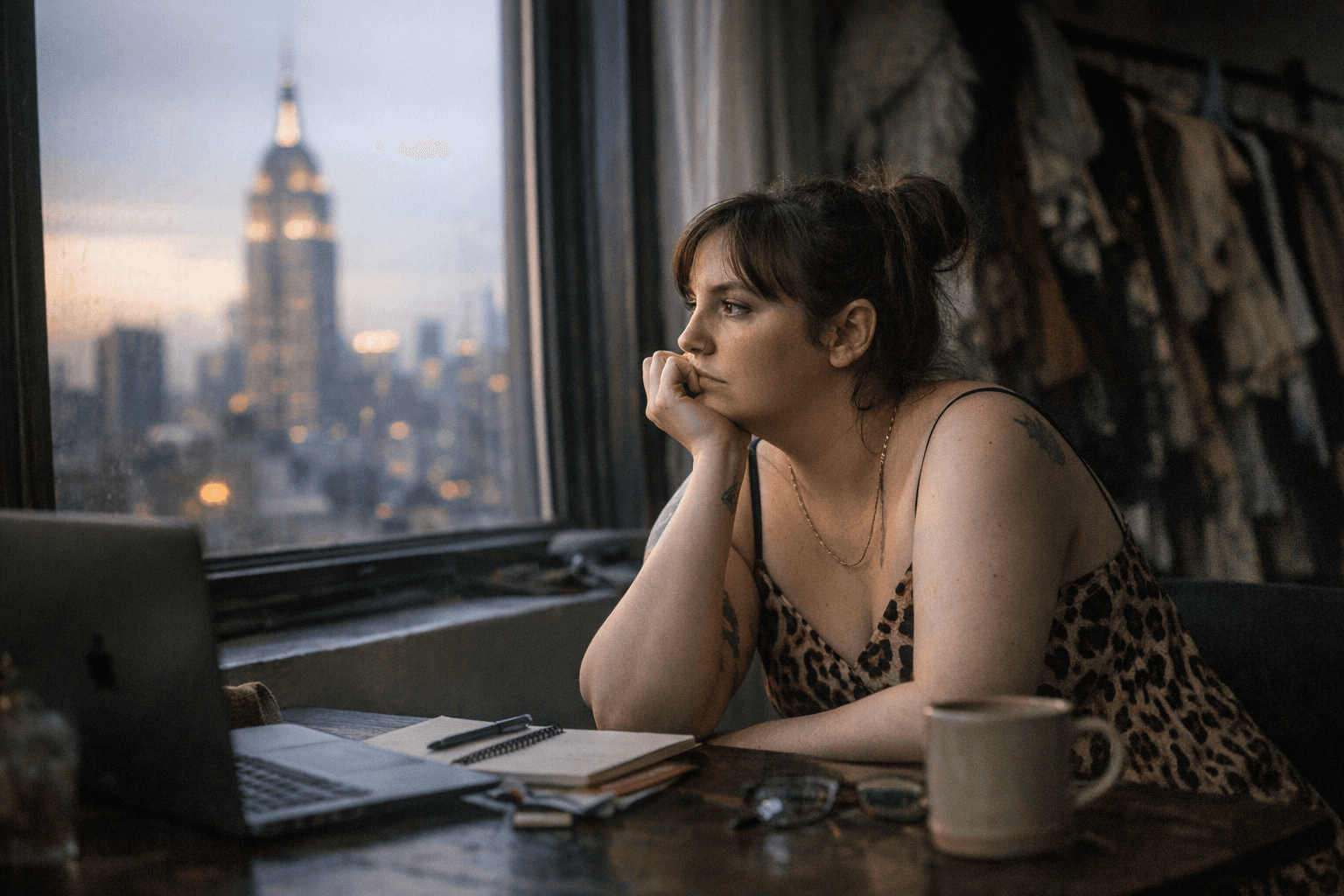
Lena Dunham still fascinates because *Girls* did something rare: it turned a modestly watched HBO series into a permanent reference point for millennial life. The show premiered on April 15, 2012, ran for six seasons, and ended on April 16, 2017, with 62 episodes that kept getting argued over long after they aired. That outsize cultural footprint matters more than its audience size ever did.
At its core, *Girls* followed four young women in New York City, and that premise gave Dunham a way to stage arguments about beauty, body image, propriety, sexuality, work, and adulthood that felt intimate rather than generalized. The show was never a major ratings hit, but it became a cultural touchstone because it made private insecurity look social, and social pressure look structural. That combination is why it still sits in the background of conversations about millennial womanhood.
What Dunham got right about her generation
Dunham, born on May 13, 1986, in New York City, understood how self-exposure had become both a style and a survival strategy for her generation. As the creator, star, writer, and frequent director of *Girls*, she built a world where embarrassment was not a side effect but the point. That approach gave the show its force, because it refused the polished version of young womanhood that had long dominated television.
Britannica describes Dunham as an artist who advanced a feminist perspective colored by millennial experience, and that framing still fits. *Girls* captured the sense that adulthood had arrived without stable scripts, especially for women navigating work, sex, money, and identity in a city that rewarded confidence while punishing vulnerability. The show’s continuing relevance comes from that tension: it made confusion look ordinary, and ordinary confusion turned out to be the defining mood of a lot of 2010s life.
What the series got wrong, or at least left exposed
The same traits that made *Girls* feel honest also made it divisive. Dunham’s version of authenticity was often inseparable from privilege, and that is one reason the series became such a contested artifact of the decade. It was deeply committed to millennial self-scrutiny, yet it was also shaped by a narrow social world that many viewers saw as insulated, self-involved, and conspicuously white.
That tension is part of why the show remains useful as a lens on its era. It helped normalize messy female interiority on television, but it also reflected the limits of who got to be considered representative. In retrospect, *Girls* reads as both an expansion of what could be shown and a reminder of how incomplete that expansion was. Its cultural value lies partly in that contradiction.
Why the themes still land in a post-MeToo, hyper-online culture
Some of *Girls* now feels of its time, especially its specific Brooklyn-era self-seriousness. Yet the larger themes have only become more legible in an environment shaped by social media, public confession, and post-MeToo debates about power and consent. Dunham was early to the idea that women’s bodies, jobs, friendships, and romances could all be treated as interconnected cultural issues, not separate ones.
That is one reason the series still resonates. Hyper-online culture has made self-exposure more common, but not necessarily less fraught. The questions *Girls* raised about who gets to be messy in public, who gets judged for it, and who is allowed to turn that mess into art are even sharper now. The show feels dated in some aesthetic choices, but newly relevant in the way it anticipated a culture where identity is constantly performed and constantly disputed.
Dunham after Girls: controversy, reinvention, and persistence
Dunham did not disappear when *Girls* ended. In 2014, she published the memoir *Not That Kind of Girl: A Young Woman Tells You What She’s ‘Learned’*, extending the same autobiographical impulse that had made the series impossible to ignore. She remained a divisive media figure, but she also stayed visible enough to prove that her public identity had always been larger than one show.
In 2024, Dunham said she was no longer attached to Mattel’s *Polly Pocket* film, a reminder that her projects continue to drift in and out of the entertainment pipeline. Then, in January 2025, Netflix announced a creative partnership with her production company, Good Thing Going, signaling that she still has institutional backing as a maker of serialized television. That partnership helped frame *Too Much*, her Netflix series starring Megan Stalter and Will Sharpe, which premiered on July 10, 2025.
The abortion conversation shows how her work evolved with the moment
Dunham’s later relevance is not just about reinvention; it is also about how her work intersects with changing cultural debates. Variety reported in 2025 that Planned Parenthood’s Caren Spruch worked with Dunham and other creatives to portray abortion sensitively on screen. That detail matters because it places Dunham inside a broader effort to make reproductive-health storylines feel less schematic and more human.
The connection is consistent with the parts of Dunham’s career that have always drawn attention. She has repeatedly returned to bodily autonomy, awkwardness, and the politics of representation, then pushed those ideas into mainstream entertainment. In that sense, her fascination is not only about personality or controversy. It is about the way her work keeps surfacing at the fault line between private life and public debate.
Why Lena Dunham still holds attention
Dunham endures because she is attached to a show that became a shorthand for an entire generation, even though it never dominated the ratings. *Girls* captured the anxieties and contradictions of millennial adulthood with unusual clarity, then left behind a record that is both indispensable and incomplete. That combination keeps the series alive in criticism, in memory, and in the way newer shows still borrow from its confessional DNA.
Her appeal now rests on a paradox. Dunham is still associated with self-exposure, but today that instinct reads less like a novelty and more like a blueprint for internet-era femininity. *Girls* got some things badly wrong, especially around privilege and whose stories counted as universal, but it also saw early that women’s interior lives would become one of the central dramas of contemporary culture. That is why Lena Dunham keeps coming back into view: she made a show that remains easiest to dismiss and hardest to shake.
This article was produced by Prism’s automated news system from verified source data, official records, and press releases, then run through automated quality and moderation checks before publishing. The system is built and supervised by the people who set the standards it runs under. Read our full AI policy.
Did this article answer your question?