Baltimore DPW Launches OOPS Tag Initiative to Reduce Curbside Recycling Contamination
Baltimore DPW crews began placing visible OOPS tags on curbside recycling bins, asking households to remove non-recyclables before their next scheduled pickup to cut contamination.

Baltimore DPW crews began placing visible OOPS tags on curbside recycling bins across the city, asking households to remove non-recyclable items before their next scheduled pickup as part of the OOPS Tag Recycling Initiative announced February 24, 2026. The program is citywide and targets contamination that can render whole truckloads unusable and drive up processing costs.
The Baltimore City Department of Public Works described the effort this way: “The Baltimore City Department of Public Works (DPW) is launching its new OOPS Tag Recycling Initiative, a citywide program designed to reduce contamination in recycling bins, improve recycling efficiency, and strengthen Baltimore’s environmental sustainability efforts.” DPW crews will place the OOPS tags on bins that contain non-recyclable items or heavily contaminated material; tags identify the contamination issue and provide guidance on how to properly recycle the items going forward.
DPW officials and local reporting point to confusion about what is recyclable as a chief cause of the problem. DPW materials and local outlets state that food residue is a major source of contamination because unwashed containers can ruin paper and cardboard, sending otherwise recyclable material to disposal instead of a processing stream. City officials warn that when food residue or non-recyclable items are mixed into a truckload, entire loads may be deemed unusable.
The initiative lists specific common contaminants that prompt tagging: plastic bags and packaging film; batteries; tangling items such as hoses and wires; textiles and clothing; construction and demolition debris; and food-soiled containers. Tags are intended as an educational tool that explains which item triggered the OOPS tag and tells residents how to correct the issue before collection.
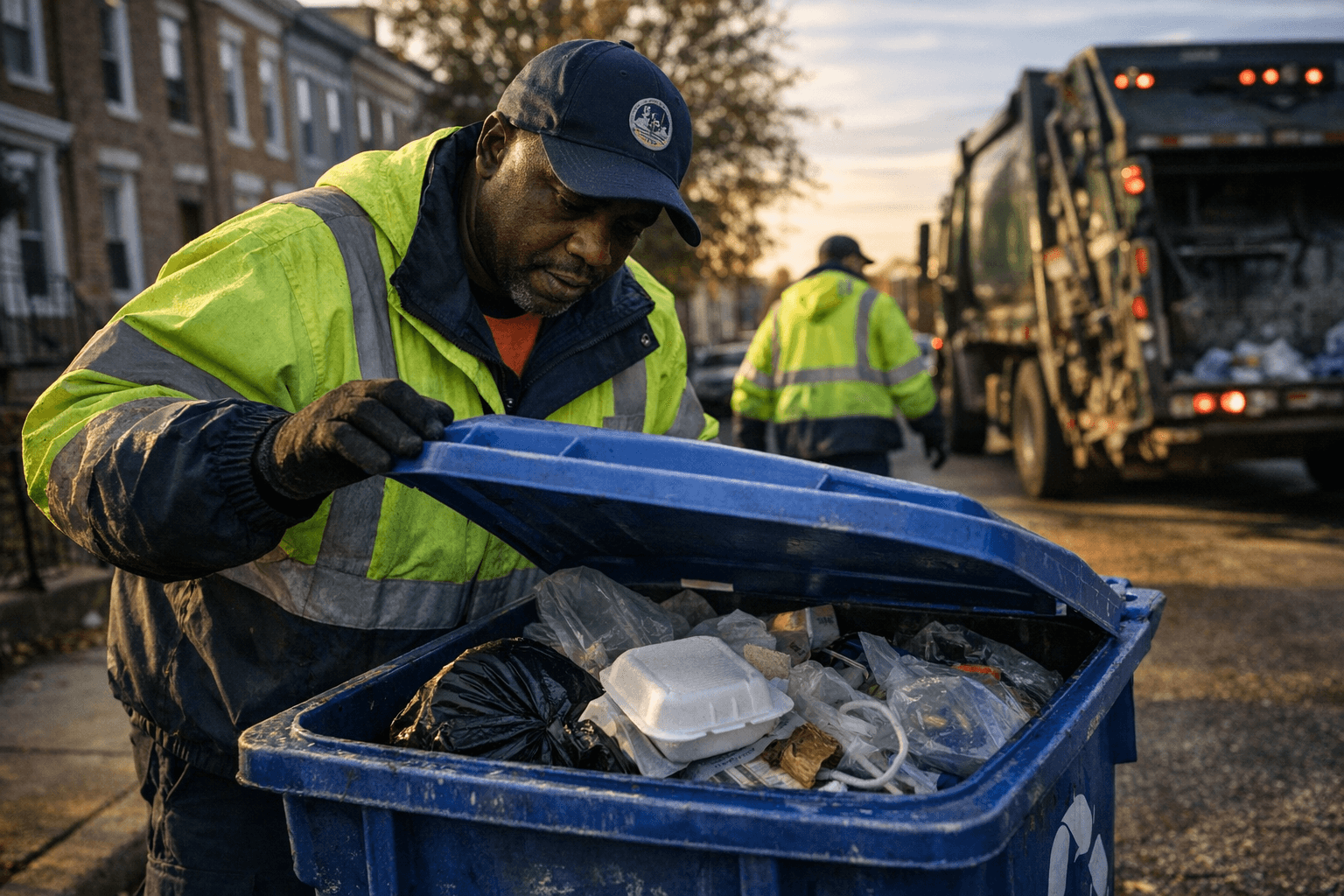
DPW and local coverage also reiterate what should go into curbside recycling: clean paper and cardboard, metal cans, plastic containers, and glass bottles and jars, all empty, clean and dry. For items that do not belong in curbside bins, DPW operates recycling centers that accept additional materials including clothing, mattresses, food scraps and electronics.
Director Matthew Garbark framed the program as both practical and communal: “The OOPS Tag Recycling Initiative strengthens our recycling program, reduces contamination, and helps ensure City resources are used effectively. By working together, residents can make Baltimore a cleaner, more sustainable City for generations to come.” The department emphasizes the OOPS tag is educational rather than punitive and asks residents to remove flagged items prior to the next scheduled pickup.
DPW has not released numeric contamination rates, a neighborhood rollout schedule, or metrics for expected cost savings; the available announcement focuses on the citywide tagging process and behavioral change. For now, Baltimore’s approach centers on on-the-street education and clearer bin-by-bin guidance intended to reduce processing costs and improve recycling efficiency across the city.
Know something we missed? Have a correction or additional information?
Submit a Tip