Bangladesh mourns slain youth leader, election tensions intensify
Tens of thousands attended a state funeral in Dhaka for Sharif Osman Hadi as the interim caretaker government declared a day of national mourning and tightened security. The killing of the 32 year old youth and student leader, who had been due to contest February elections, has deepened political volatility and raised fresh questions about investor confidence and economic stability.
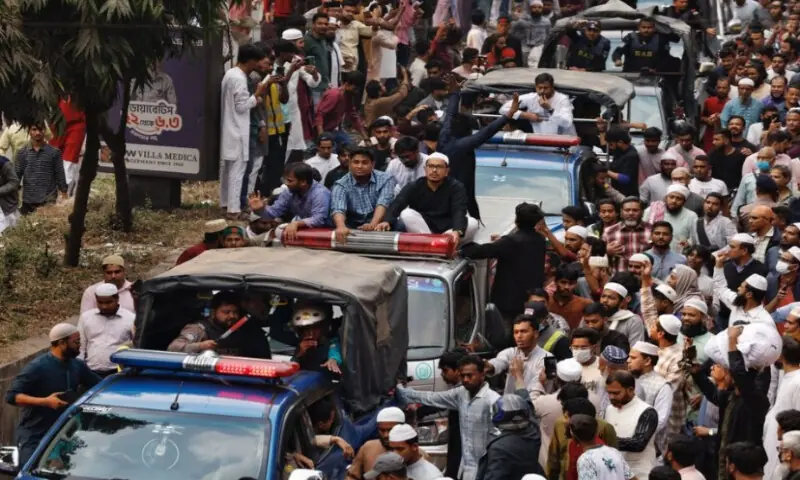
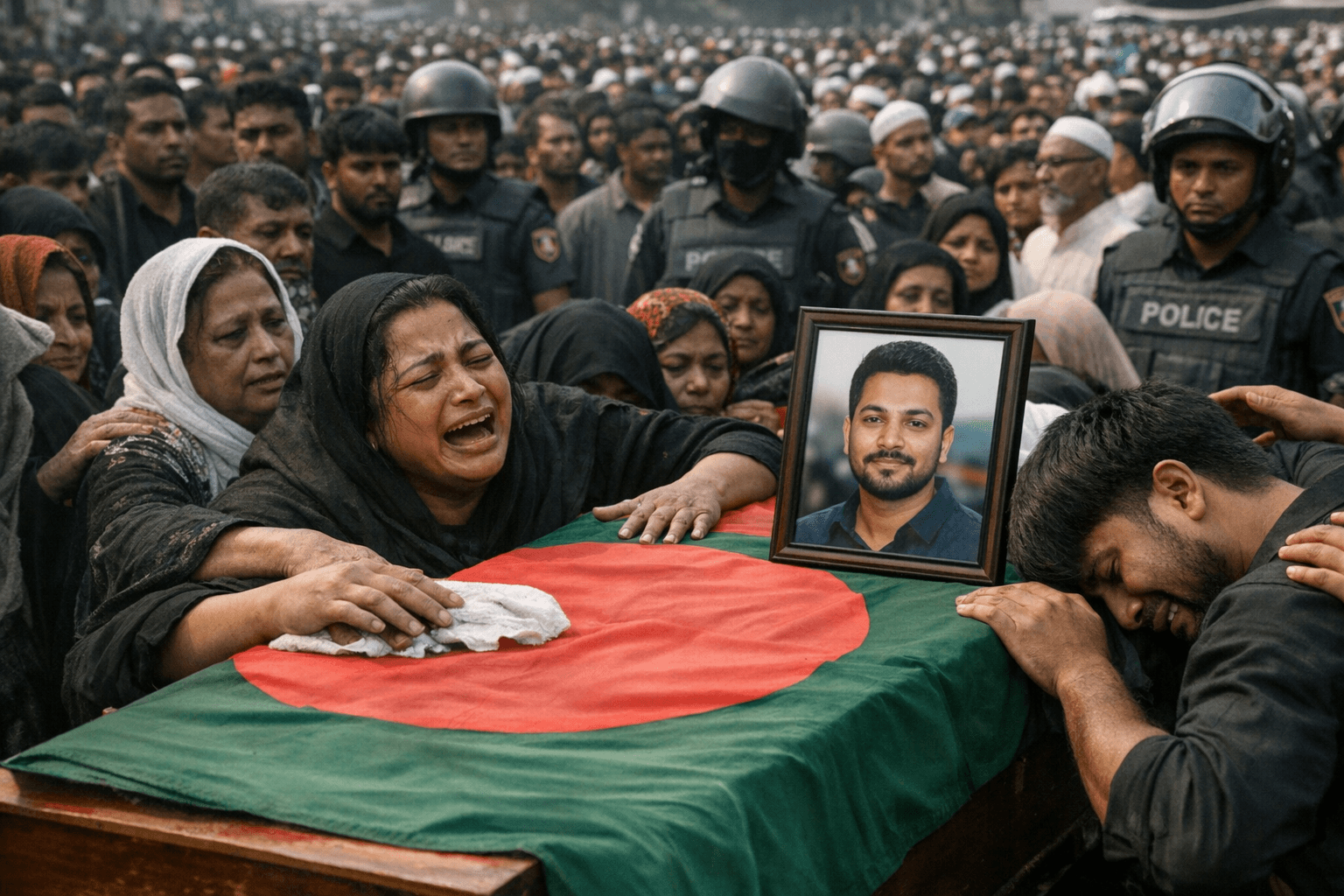
Tens of thousands of people gathered in central Dhaka on December 20 to pay final respects to Sharif Osman Hadi, a prominent youth and student leader shot during a campaign event and flown to Singapore for treatment before his death about a week later. The interim caretaker government declared a day of state mourning, flags were flown at half mast and heavy security sealed off the areas around the parliament compound and Dhaka University where the procession and burial at the central mosque took place.
Police with visible body cameras and other crowd control measures were deployed along the route in a bid to prevent unrest after two days of protests that followed the killing. Authorities also announced the detention of seven suspects in a separate lynching in Mymensingh as part of stepped up efforts to restore order. Specific suspects in Hadi’s shooting were not publicly named, and officials have urged calm while investigations continue.
Muhammad Yunus urged mourners to remain patient and avoid rash actions, and said the shooting was an attempt to "derail the election." Supporters and attendees voiced the belief that Hadi was targeted because of his politics. Iqbal Hossain Saikot said "The millions of Bangladeshi people who love the land and its sovereign territory will carry on Hadi’s legacy." Hadi, 32, was widely seen as a leading figure in the 2024 student led uprising that removed a longtime prime minister and had been preparing to stand as a parliamentary candidate in February, making his killing a flashpoint months before national voting.
The event has immediate political consequences and potential economic repercussions. Bangladesh’s economy has relied heavily on garment exports and remittances, with the ready made garment sector accounting for roughly four fifths of export earnings and remittances remaining a vital source of foreign exchange. Political unrest in an election period can disrupt factory operations, slow export clearances and deter foreign direct investment, particularly at a moment when regional investors watch governance and stability closely.
Market reactions to the killing were muted in the immediate hours after the funeral, but economists say sustained instability could pressure the currency and sovereign financing costs, complicate the central bank’s task of managing inflation and reserves, and force fiscal authorities to reprioritize spending ahead of elections. A protracted security response would also strain public finances through higher policing and potential emergency spending.
The killing and the large public turnout for the funeral underline fractures in Bangladesh’s politics as the country approaches national elections. Some accounts say a prior political shift in 2024 saw a former leader leave the country and take refuge abroad, a fact that has fed narratives on sovereignty and foreign policy among parts of the public. For investors and trading partners, the immediate question will be how quickly the caretaker government can deliver a transparent investigation, secure the campaign environment and set a credible timetable for a free vote.
As mourners dispersed, the broader test for Bangladesh’s institutions will be to balance rights to protest and political contestation with a swift, credible law enforcement response. The outcome will matter not only for domestic politics, but for economic confidence in a country whose growth trajectory has depended on predictable governance and open access to global markets.
This article was produced by Prism’s automated news system from verified source data, official records, and press releases, then run through automated quality and moderation checks before publishing. The system is built and supervised by the people who set the standards it runs under. Read our full AI policy.
Did this article answer your question?