Bank of England cuts rates, signals caution on further easing
The Bank of England reduced the Bank Rate to 3.75 percent on Dec. 18 after a narrow 5 to 4 Monetary Policy Committee vote, marking the central bank's fourth cut in 2025. The move reflects falling inflation and stagnant growth projections, while officials warned that further reductions are not guaranteed and could slow if labour market risks intensify.
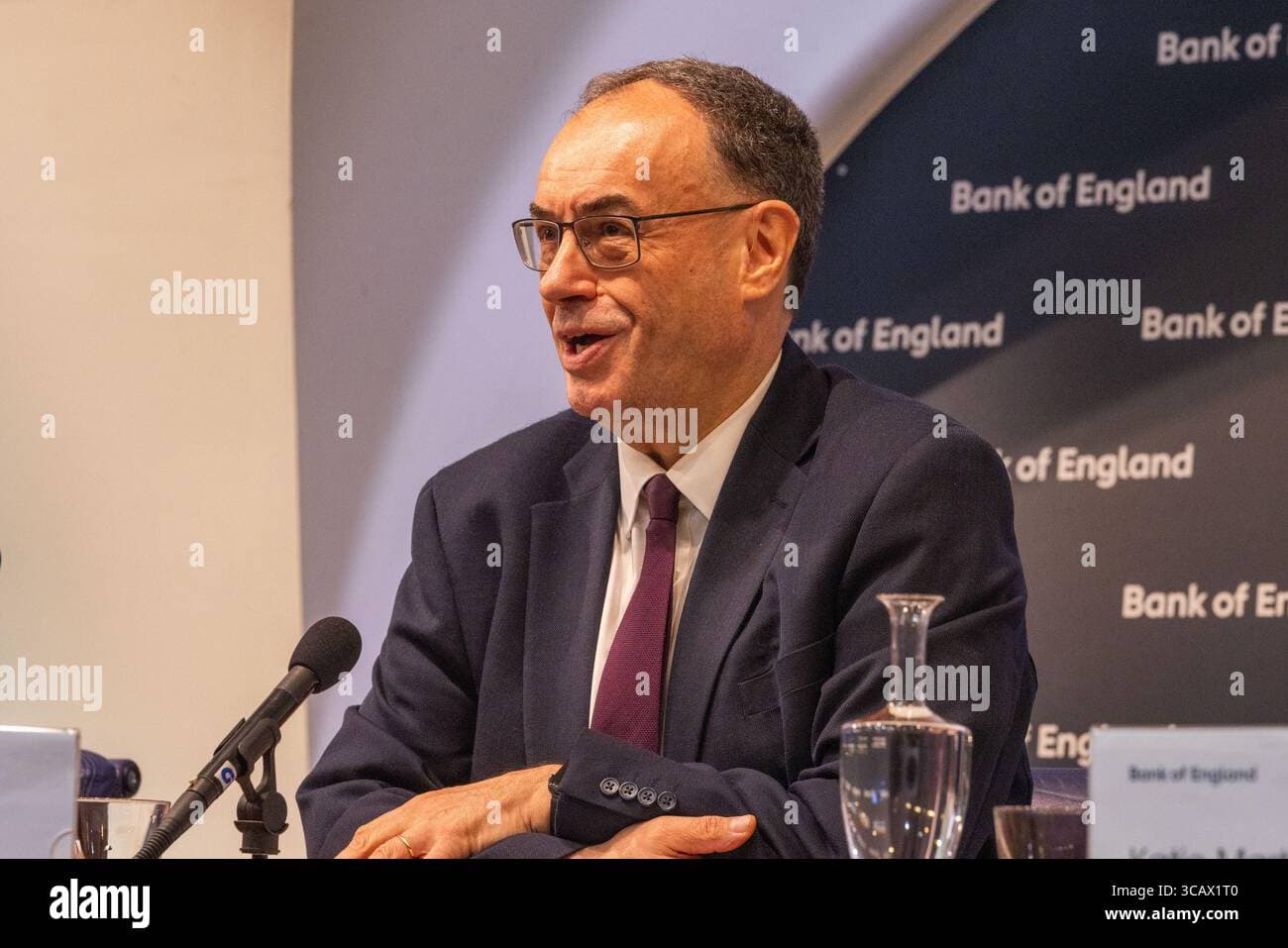
The Monetary Policy Committee voted to lower the Bank Rate by 25 basis points to 3.75 percent, a decision that was carried by a 5 to 4 margin after Governor Andrew Bailey switched to support the cut. The reduction is the fourth this year and brings the policy rate to its lowest level in nearly three years.
Bank of England staff pointed to a sharp recent decline in inflation and produced revised forecasts showing growth stagnating, with near zero expansion expected in late 2025. Those assessments were central to the committee's judgment that some easing was appropriate to support the economy. At the same time the Bank stressed that the path of future cuts would be conditional on data and that the pace of easing may slow going forward, describing the next moves as a "closer call."
The internal dynamics of the vote were tightly contested. The committee was initially split, with four members favouring a hold, four supporting a 25 basis point cut and one advocating a larger 50 basis point reduction, before a second round of voting produced the 5 to 4 majority, according to CNBC. Governor Bailey framed the outcome as reflecting a "finely balanced situation" and flagged a growing risk of a "sharper downturn" in the labour market, noting unemployment is close to its highest level in five years.
Markets reacted quickly to the decision. Sterling strengthened by roughly 0.5 percent against the dollar to about $1.3424 on the news, while money market pricing shifted to imply further easing next year. Traders were pricing a move to 3.5 percent by April and assigning a 78 percent probability of a cut to 3.25 percent by November 2026, according to Yahoo Finance data. The market response suggests investors view the Bank's action as conditional, not a clear signal of an extended cutting cycle.

Policy makers face a familiar trade off. Falling inflation provides scope to reduce rates, but weak growth and labour market fragility argue for caution. Bank staff emphasised that near term support from the government budget had helped ease price pressures, with projected inflation expected to approach the two percent target in the months ahead. Yet the prospect of rising unemployment could amplify downside risks to demand, complicating the Committee's deliberations over the horizon.
The slim margin of the decision underscores the uncertainty surrounding the U.K. outlook and the limits of conventional monetary policy in an economy where fiscal support and global influences are significant. Investors and businesses will be watching the Bank's forthcoming minutes and the full staff projections for clearer signals on the likely timing and scale of future easing. Short term market pricing has moved to reflect more cuts, but the Bank's warning that the pace may slow means each successive data release will have elevated influence on policy direction.
This article was produced by Prism’s automated news system from verified source data, official records, and press releases, then run through automated quality and moderation checks before publishing. The system is built and supervised by the people who set the standards it runs under. Read our full AI policy.
Did this article answer your question?

