Barrow County jurors weigh whether father’s inaction enabled Apalachee High shooting
Jurors are considering a near-30-count indictment alleging Colin Gray’s conduct before the Sept. 4, 2024 Apalachee High School shooting contributed to four deaths and dozens injured.
Jurors at the Barrow County Courthouse are weighing whether Colin Gray’s actions or failures to act before the Sept. 4, 2024 shooting at Apalachee High School contributed to a mass attack that prosecutors say left two students and two teachers dead and dozens wounded. The trial centers on an indictment described by officials as nearly 30 counts, including charges tied to second-degree murder, involuntary manslaughter and cruelty to children; precise count totals and statutory labels remain subject to verification in the court docket.
Prosecutors told jurors their theory is straightforward: Gray ignored repeated warnings about his son’s dangerousness, purchased the AR-15-style rifle used in the attack and therefore committed criminally reckless acts or omissions that had “horrific consequences.” District Attorney Brad Smith summarized the prosecution’s frame in court, saying, “This case is about Colin Gray’s actions and the horrific consequences of them.”
The state presented a mix of forensic and human evidence. Surveillance video of the attack and a 911 call were played for the jury, photos and a weapon image were shown on screen, and prosecutors introduced testimony from students and first responders describing the aftermath. Jurors saw a photograph of a student’s camo shorts that rescuers cut from her at the scene. Prosecutors also plan to present evidence they say links Gray to the rifle purchase and to prior warnings about his son.
Victim testimony underscored long-term consequences. One student identified as Melany recounted being shot in the left shoulder and the lingering emotional toll, telling jurors, “I feel like, just seeing what I saw that day just sticks with me, and not being able to trust certain people.” Another student, Nautica, testified that she fell in and out of consciousness after being shot, can no longer play sports and remains “very paranoid” and depressed.
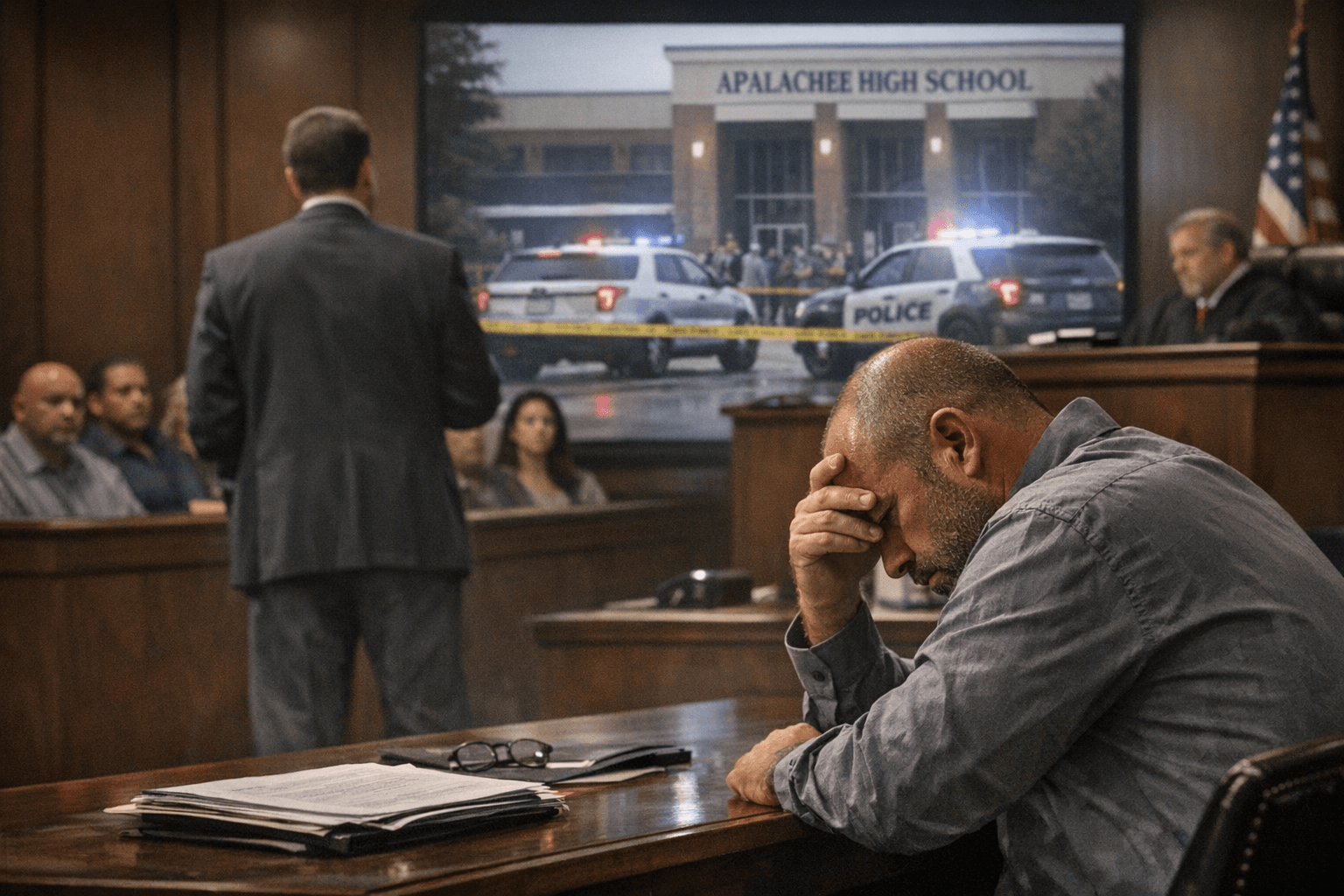
The defense accepted the human tragedy but urged jurors to separate moral outrage from legal culpability. Defense attorney Brian Hobbs pressed jurors to focus on what Colin Gray knew and when, saying in opening remarks, “What happened at Apalachee High School was tragic, it was horrific, it was terrifying and it was heartbreaking. Nothing said in this courtroom can change that. Nothing that I’m going to say is meant to diminish that. But your job is not to decide whether or not that was tragic... Your job is to decide whether or not Colin Gray knew what Colt was going to do.” In closing, defense counsel pointed to the defendant’s son as the actor who “made a conscious decision to do this, a secretive decision,” and argued the shooter, not the father, is the person who must be punished.
Colin Gray took the witness stand and testified that he never envisioned his son carrying out such an attack, telling jurors, “There’s this whole other side of Colt I didn’t know existed,” and “Could I have done better? Yes, I could have done more. I see that now.” Prosecutors also plan to present an allegation that Gray told deputies at the house after the shooting, “I knew it,” which the state frames as evidence of awareness; that statement is presented as a prosecution allegation.
The case is being closely watched as part of an emerging national approach that seeks to hold parents criminally responsible for acts committed by their children. Legal observers note precedent from a 2021 Michigan prosecution in which parents were convicted after a school shooting. Jurors in Barrow County must now determine whether the state has proved that Colin Gray’s conduct met the threshold for criminal responsibility under Georgia law; a conviction would expose him to penalties tied to the indicted counts. Courtroom proceedings will continue as attorneys complete closing arguments and judges instruct jurors on the applicable law.
This article was produced by Prism’s automated news system from verified source data, official records, and press releases, then run through automated quality and moderation checks before publishing. The system is built and supervised by the people who set the standards it runs under. Read our full AI policy.
Did this article answer your question?