BART Equipment Trouble on SF Line Causes Morning Delays
On the morning of Jan. 8, 2026, BART crews responded to an equipment problem on the San Francisco line that disrupted service between Balboa Park and Daly City, producing delays for trains to SFO/Millbrae, Daly City and the East Bay. The interruption, initially reported as about a 10-minute delay, highlights how even brief breakdowns can ripple across commutes and essential travel for San Francisco residents.

BART reported equipment trouble on Jan. 8, 2026, affecting trains on the San Francisco line and slowing service to SFO/Millbrae, Daly City and destinations across the East Bay. Transit officials identified the problem as originating on the tracks between Balboa Park and Daly City and said crews were on site diagnosing and repairing the equipment to restore normal service for the main morning commute. Early reports indicated delays of roughly 10 minutes on the line while work proceeded.
The disruption underscored how a single point of failure on a busy corridor can stretch across multiple directions, complicating commutes for downtown workers, airport travelers and shift employees who rely on predictable transit times. Riders connecting to flights at SFO, those transferring to buses or Muni, and people headed to medical appointments faced added uncertainty during a peak travel window. For people with limited alternatives, including many low-income riders and essential workers, even short delays can mean missed work, delayed care and added financial strain.
Public health and safety concerns also arise when delays concentrate passengers on platforms and trains. Short-term crowding increases the challenges of physical distancing and can make it harder for older adults and people with disabilities to board or exit safely. BART crews worked to limit disruption and kept riders informed through agency alerts while technicians troubleshot the malfunction.
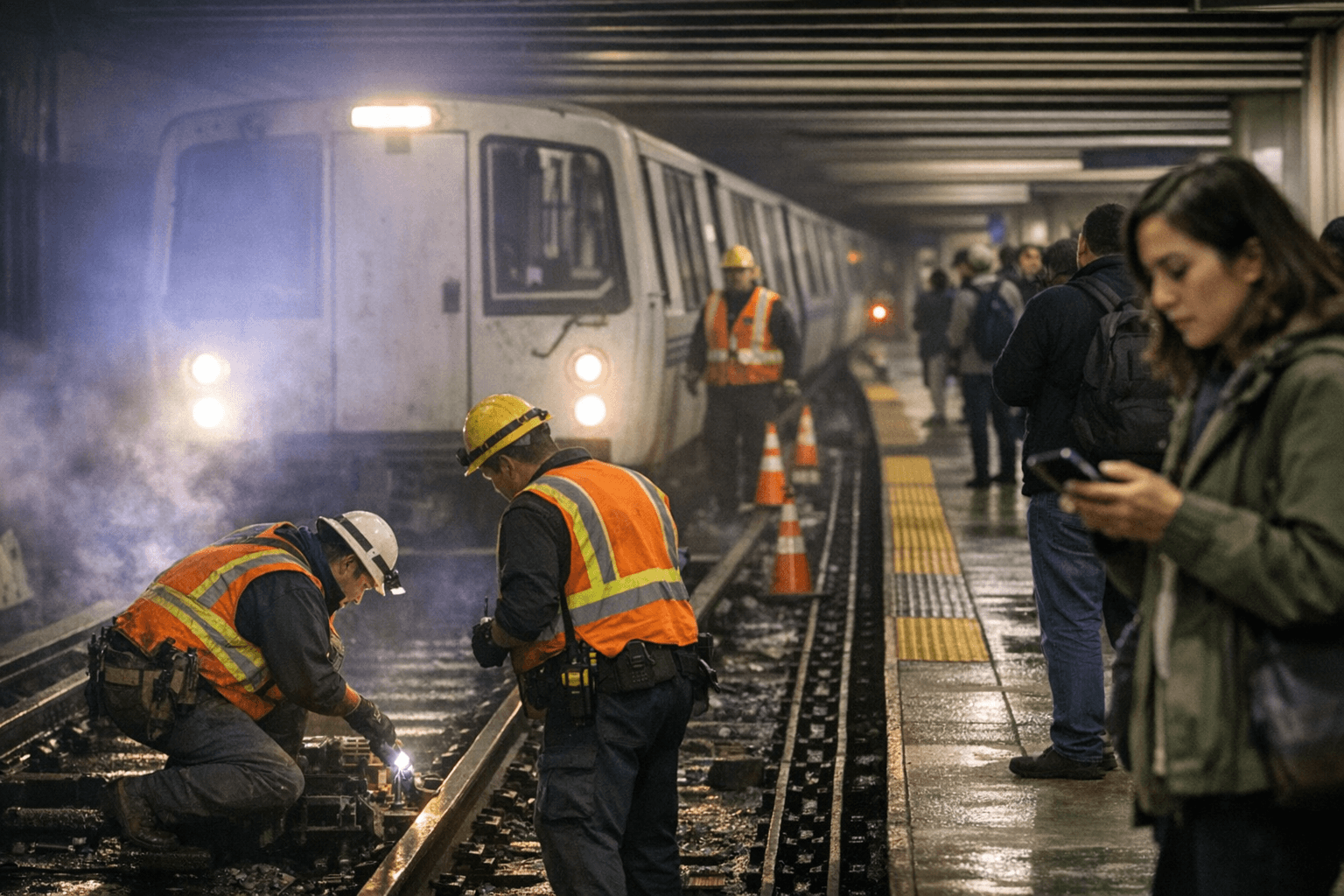
The incident is a reminder of the ongoing need for investment in transit reliability and system resilience. Aging infrastructure and complex equipment require steady maintenance, prompt parts replacement and contingency planning to avoid cascading impacts across a regional system. For a county that depends on BART for access to jobs, education and health care, strengthening reliability is a matter of economic mobility and social equity.
For riders, the practical takeaway is to allow extra travel time during recovery periods, monitor BART alerts for the latest service information and consider backup plans when traveling to time-sensitive destinations like the airport or medical appointments. Transit officials said service was expected to be restored for the main commute after crews completed repairs, and the episode highlighted both the agency’s rapid response procedures and the broader community need for dependable, well-maintained public transit.
Sources:
Know something we missed? Have a correction or additional information?
Submit a Tip