Battle of Copenhagen Left Thousands Dead in One of Nelson's Greatest Victories
A sailor's jawbone pulled from 15 meters of Copenhagen Harbor sediment is offering the first physical glimpse into the ship that defined Nelson's 1801 victory.
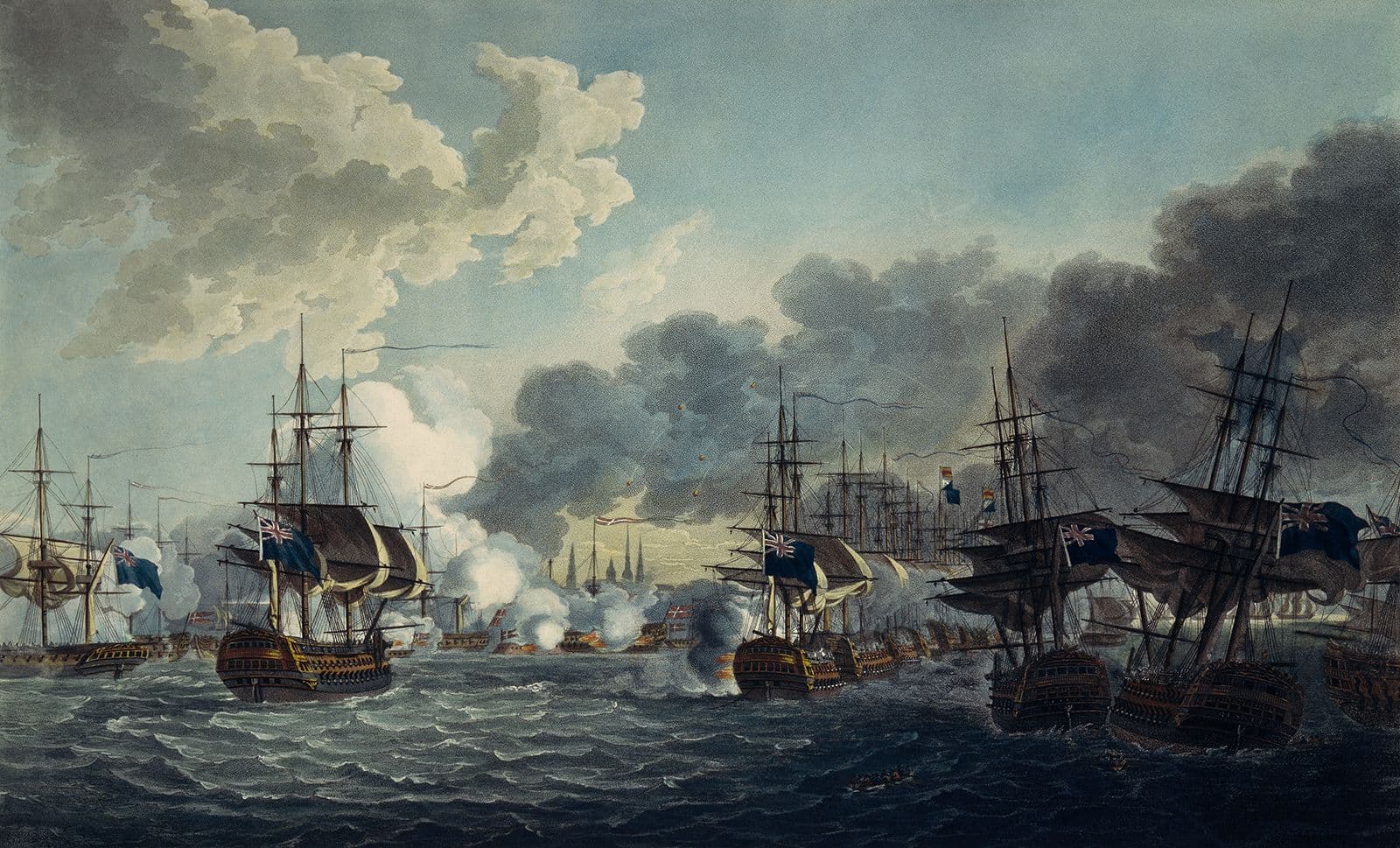
A fragment of a human jawbone, recovered from 15 meters of murky sediment on the floor of Copenhagen Harbor, is the most intimate artifact yet to surface from the 1801 Battle of Copenhagen, one of the engagements that cemented Adm. Horatio Nelson's legend. Marine archaeologists from Denmark's Viking Ship Museum announced the discovery on April 2, 2026, exactly 225 years to the day after the battle was fought.
The jaw fragment was found alongside the wreck of the Dannebroge, the Danish fleet's flagship, which took concentrated fire from Nelson's British squadron and exploded that afternoon in 1801, killing an estimated 250 of her crew in a single detonation. Thousands more were killed and wounded across the broader engagement, which the British navy has long counted among Nelson's greatest victories. The Dannebroge had remained lost for more than two centuries, preserved in dense harbor sediment at near-zero visibility.
The bone may belong to one of 19 crew members whose deaths were never formally recorded, according to the Viking Ship Museum. Along with the jaw, divers retrieved two cannons, military insignia, uniforms, shoes, and bottles from the site, each artifact adding texture to a battle documented exhaustively at the level of fleet maneuvers but rarely from the perspective of the men aboard.
Morten Johansen, the museum's head of maritime archaeology, said the wreck offers something the written record cannot. A great deal has been written about the battle "by very enthusiastic spectators, but we actually don't know how it was to be" on those ships, he said. He described the discovery as "a big part of the Danish national feeling," acknowledging that the battle, a defeat for Denmark, has never fully faded from national consciousness.
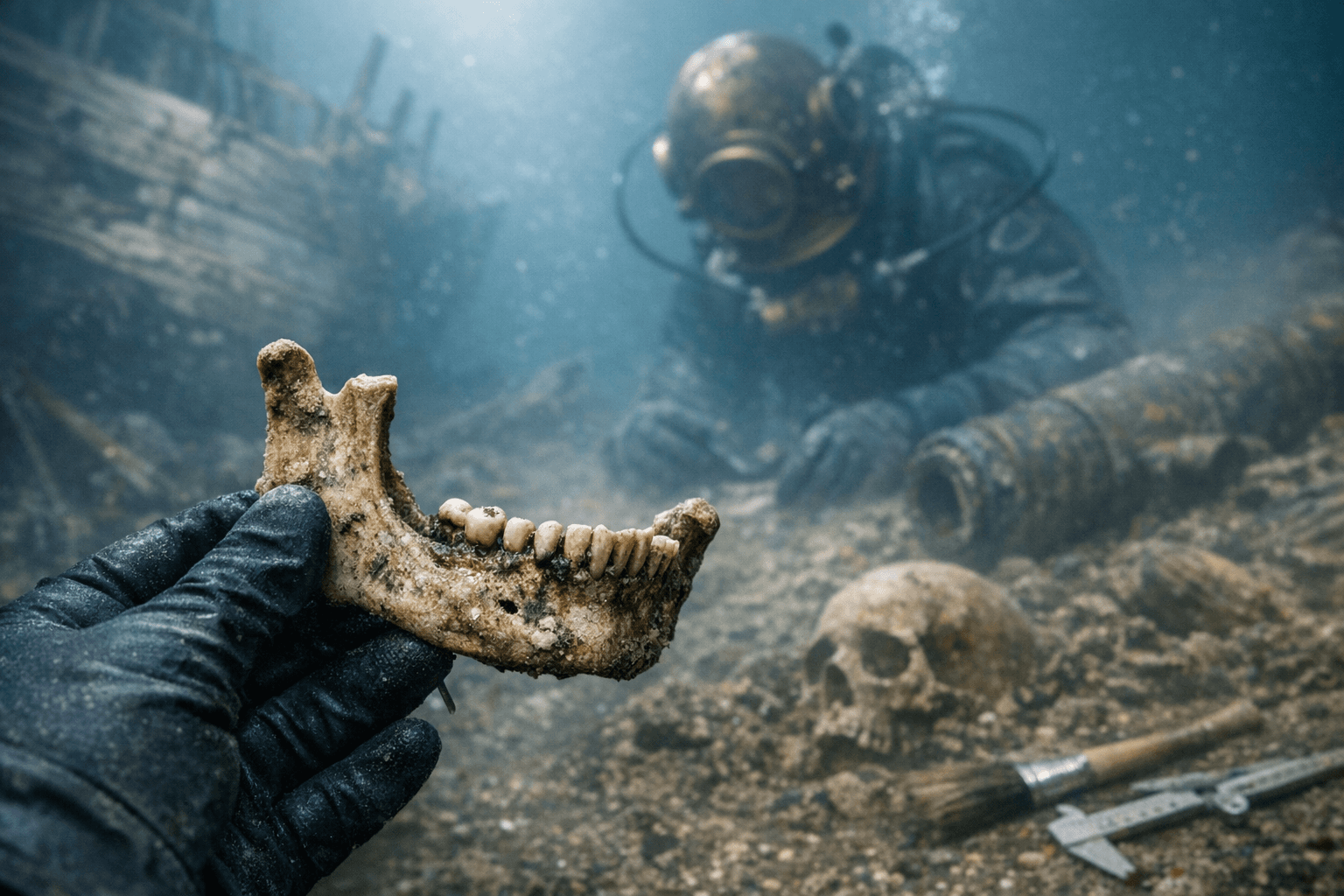
The excavation is racing against a construction deadline. The wreck site will soon fall within the footprint of Lynetteholm, a major land-reclamation and housing project under construction in Copenhagen Harbor, expected for completion around 2070. The Viking Ship Museum is leading the monthslong underwater operation to extract as much material as possible before the construction envelope reaches the site.
The recovered jaw will undergo further forensic analysis. Whether age, dental wear, or eventual DNA testing can identify the individual remains an open question; Danish heritage law and museum protocol will govern decisions about where any confirmed human remains are ultimately interred. For Denmark, those decisions carry particular weight. The Dannebroge is bound up in a larger story of Napoleonic-era geopolitics and national memory, a ship lost on the day Nelson negotiated terms ashore with Crown Prince Frederick. A named sailor recovered from that wreck would be more than an archaeological finding.
What the site cannot yet answer is what the Dannebroge's final hours looked and felt like from the gun deck. Reconstructing that, fragment by fragment, before Lynetteholm's construction reaches the site, is now the team's central task.
This article was produced by Prism’s automated news system from verified source data, official records, and press releases, then run through automated quality and moderation checks before publishing. The system is built and supervised by the people who set the standards it runs under. Read our full AI policy.
Did this article answer your question?


