Bay Area AI startups turn to theatrical marketing amid boom
Lavish AI hype videos are becoming Bay Area status symbols, as startups sell mood and myth alongside code. The real test is whether the spectacle is moving investors, recruits, and customers.

A new kind of startup pitch
A Mad Hatter and a giant rabbit sitting around a table to discuss an AI startup would once have looked like a joke. In the Bay Area today, it reads more like a market signal, a reminder that some founders are selling atmosphere as aggressively as software. The New York Times captured that shift in a May 27, 2026 story about tech startups spending heavily on hype videos, framing the region’s AI boom as a competition for attention as much as product adoption.
The Bay Area has turned into an AI billboard economy
San Francisco’s streets now function like an outdoor demo reel for artificial intelligence. KQED described the city’s bus shelters, buildings, and billboards as unofficial chroniclers of the region’s AI boom, packed with Silicon Valley shorthand such as SaaS, SOC 2, and vibe coding, aimed at potential employees, customers, and investors. For everyone outside tech, the message can feel less like a product pitch than a declaration that a separate economy is already underway.
Artisan helped set that tone. In December 2024, the San Francisco startup ran billboard and bus shelter ads that explicitly urged companies to replace people with “AI employees,” turning a recruitment and sales message into a provocation. KQED later noted that Artisan’s anti-human campaign was deliberate ragebait, while KRON4 reported that the ads around San Francisco were part of a broader push to sell AI replacement software in public view.
Why theatrical marketing is spreading now
The pitch works because the market is crowded. Y Combinator’s Bay Area AI directory listed 917 AI startups in the San Francisco Bay Area in May 2026, a number that helps explain why founders are leaning on spectacle to cut through the noise. In a region with this much competition, a surreal video, a billboard, or a viral stunt is not just branding. It is a shortcut to signal momentum, confidence, and inevitability before the company has fully proven any of those things.
That logic is visible in the growth of AI video startups, where the medium itself has become the message. Reuters reported on January 15, 2026 that San Francisco-based Higgsfield raised $80 million in a Series A extension at a valuation above $1.3 billion and said it had reached a $200 million annualized revenue run rate. Reuters also reported that about 85% of Higgsfield’s usage came from social media marketers, a sign that AI-generated video is already being bought as a commercial tool, not just admired as a technical showcase.
What the spectacle is trying to move
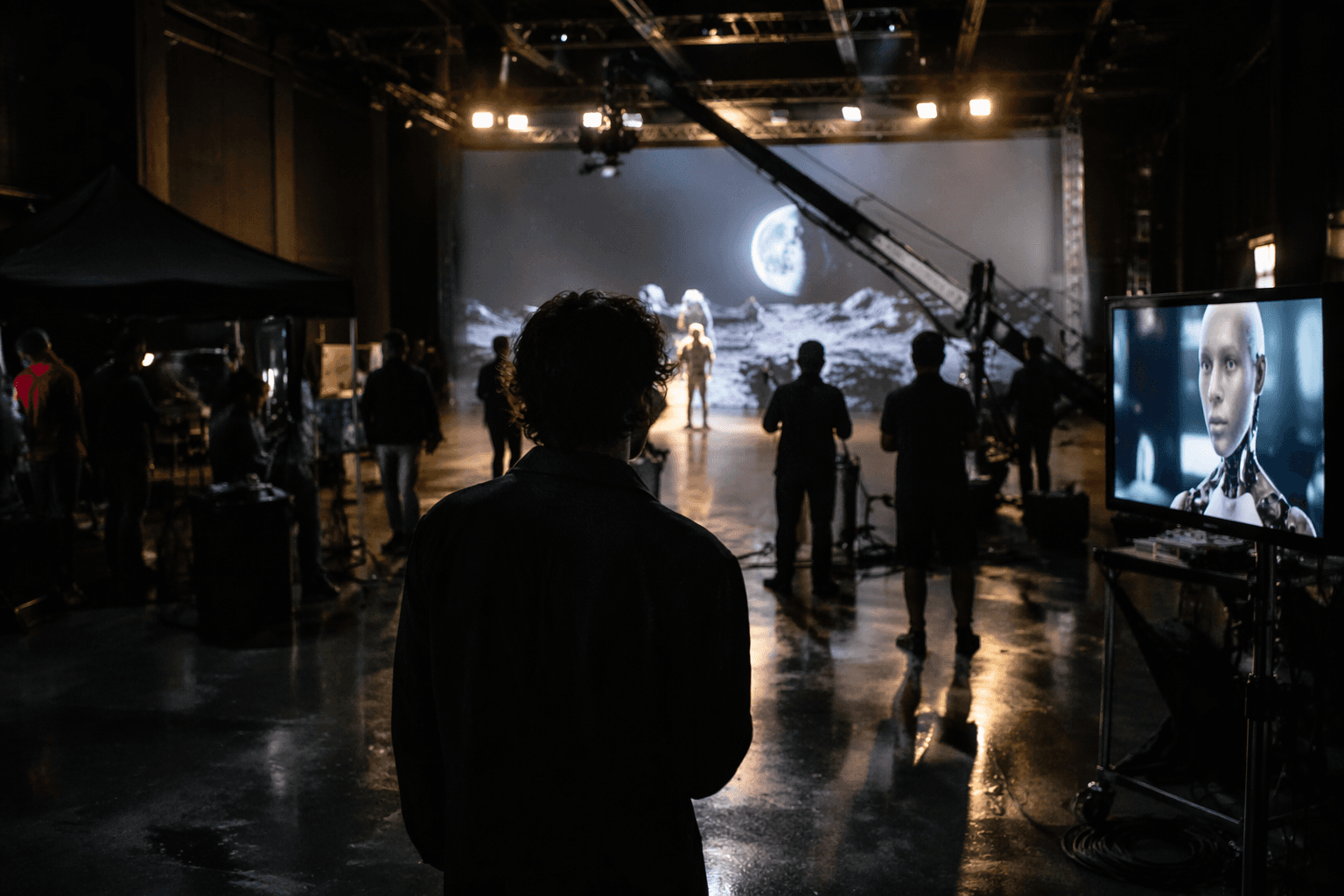
The crucial question is whether this kind of theater actually changes behavior. Startups are not merely trying to impress onlookers. They are trying to move capital, recruit talent, and convince customers that they are the company everyone else will soon have to reckon with. In a saturated market, a well-produced AI video can function like a shorthand for scale, even when the underlying product is still early.
Artisan’s own account suggests that the strategy can translate into business outcomes. The company later said its “Stop Hiring Humans” billboard campaign generated millions of impressions and drove $2 million in new ARR. Read alongside the surge in AI advertising across San Francisco, that claim points to a familiar boom-cycle pattern: companies use shock, novelty, and mythmaking to accelerate awareness while the underlying market is still sorting winners from hopefuls.
Bubble-era signaling, Bay Area style
That is what makes the current moment feel bigger than a marketing trend. The AI boom has created conditions where theatrical promotion can be read as proof of seriousness, even when it is built on outrage, irony, or fantasy. Bay Area startups are not only selling tools. They are selling the feeling that they are already part of the next industrial order, and that mood itself has become a commodity.
The deeper lesson is that this is classic bubble-era signaling with a 2026 sheen. When a startup world is crowded enough, wealthy enough, and anxious enough, it begins to stage its own mythology in public. In the Bay Area, that mythology now arrives in the form of lavish AI hype videos, billboard stunts, and surreal characters around the table, all competing to answer the same question: who looks like the future before the future has even arrived?
This article was produced by Prism’s automated news system from verified source data, official records, and press releases, then run through automated quality and moderation checks before publishing. The system is built and supervised by the people who set the standards it runs under. Read our full AI policy.
Know something we missed? Have a correction or additional information?
Submit a Tip