Beginner Painting Guide, Get Tabletop Ready Faster in Warhammer 40k
This primer presents a complete, practical workflow to move models from unbuilt plastic to tabletop ready quickly, covering tools, surface preparation, colour selection, basic brush techniques, a speed painting approach, and stepwise basing. The guidance focuses on accessibility, batch methods, and ways to improve skills without expensive gear so you can field painted armies for games and events sooner.
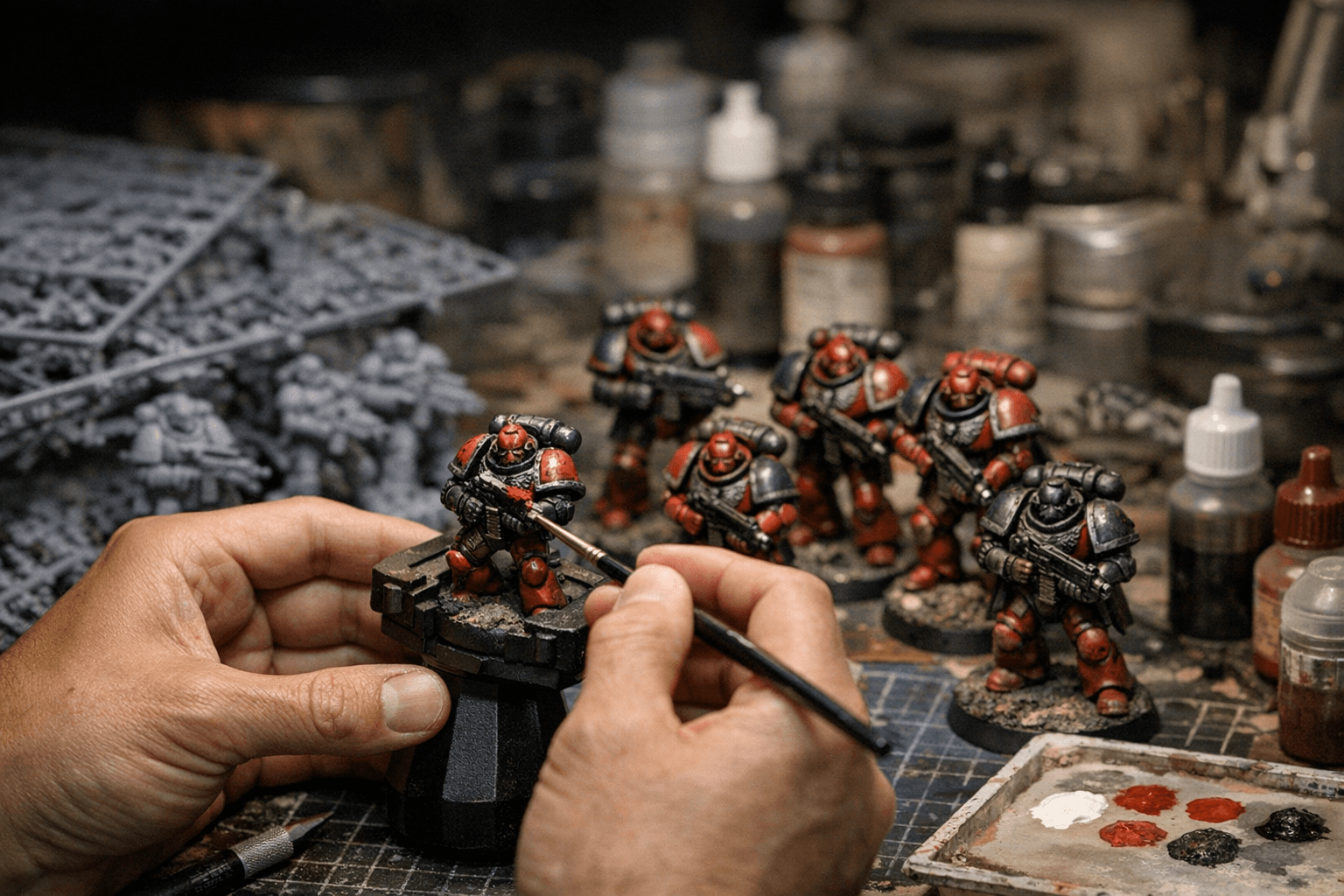
Start with the essentials. Gather a small kit of basic tools, a few reliable brushes, and a starter palette of paints. Clean mould lines and flash from parts, file or trim rough edges, and use a light wash of soapy water to remove release agents before assembly. Surface preparation matters more than perfect technique when you need usable models on the table.
Choose colours with a plan. Pick a primary, secondary, and a trim or accent tone for each unit type. Limit the palette for initial batches so you can paint multiple models consistently. Thin paints with a little water until they flow without dragging. Thinning improves coverage and preserves detail when you apply basecoats and washes.
Master four core brush techniques first. Basecoating lays down solid coverage on each area. Apply a wash into recesses to create instant depth and to unify colours quickly. Use simple layering to bring back highlights on raised areas, and drybrushing to pick out texture and edges in a single pass. These techniques combine to make models read well from gaming distance with minimal time investment.
Adopt a speed painting workflow for armies. Work in stages across a whole unit rather than finishing one miniature at a time. Assemble and prime a block of models, then basecoat all of them. Follow with washes across the batch, then apply focused highlights and edge work to bring selected pieces forward. This assembly line approach reduces set up time and keeps momentum going.
Finish with basing that reads at arm length. Start with a neutral base coat, add a textured layer or simple flock, drybrush a lighter tone to suggest relief, and glue on a single scenic piece for variety. Basing ties armies together and makes individual models look complete.
Plan your time and progression. The primer recommends breaking sessions into repeatable tasks, using batch painting to reduce overhead, and practicing one new technique per project rather than chasing gear. You can make measurable progress with modest supplies, steady practice, and a focus on tabletop readability rather than studio polish. This approach gets you playing with painted armies sooner, while leaving room to refine skills over time.
Know something we missed? Have a correction or additional information?
Submit a Tip