Belgium's record potato harvest meets tariff-hit frozen fry exports
Belgium’s potato crop hit a record 5 million tonnes in 2025, but tariffs and weaker export demand left frozen fry makers with too many potatoes and too little relief.
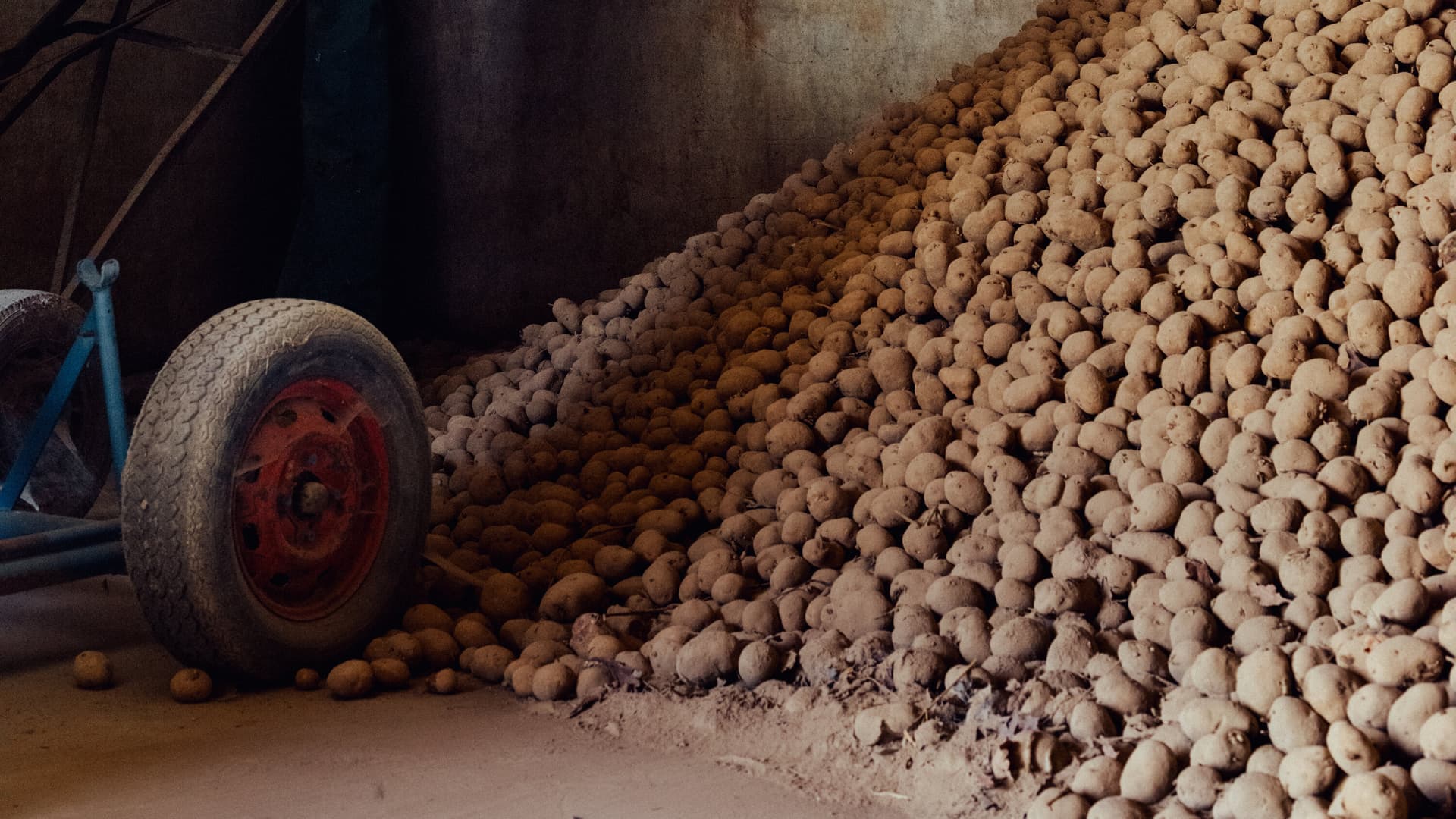
Belgium’s potato boom has become a warning sign for Europe’s fry industry. The country was expected to produce about 5 million tonnes of potatoes in 2025, up 11% from 2024, after acreage rose 7.2% to its highest level since 1980. Statbel said the larger crop was driven by optimal spring weather and strong demand from the potato-processing industry in 2024, but that same surge now threatens to swamp a market facing weaker overseas sales.
Frozen fries are a major industrial export for Belgium. Belpotato says processing capacity has nearly tenfold increased over a few decades to about 5 million tonnes of potatoes a year, supporting about 5,000 direct jobs and more than 1.5 billion euros in turnover. Belgian processed potatoes are shipped to more than 150 countries, making the sector far more than a national food symbol. It is a large manufacturing business tied to trade flows, currency shifts and tariff policy.
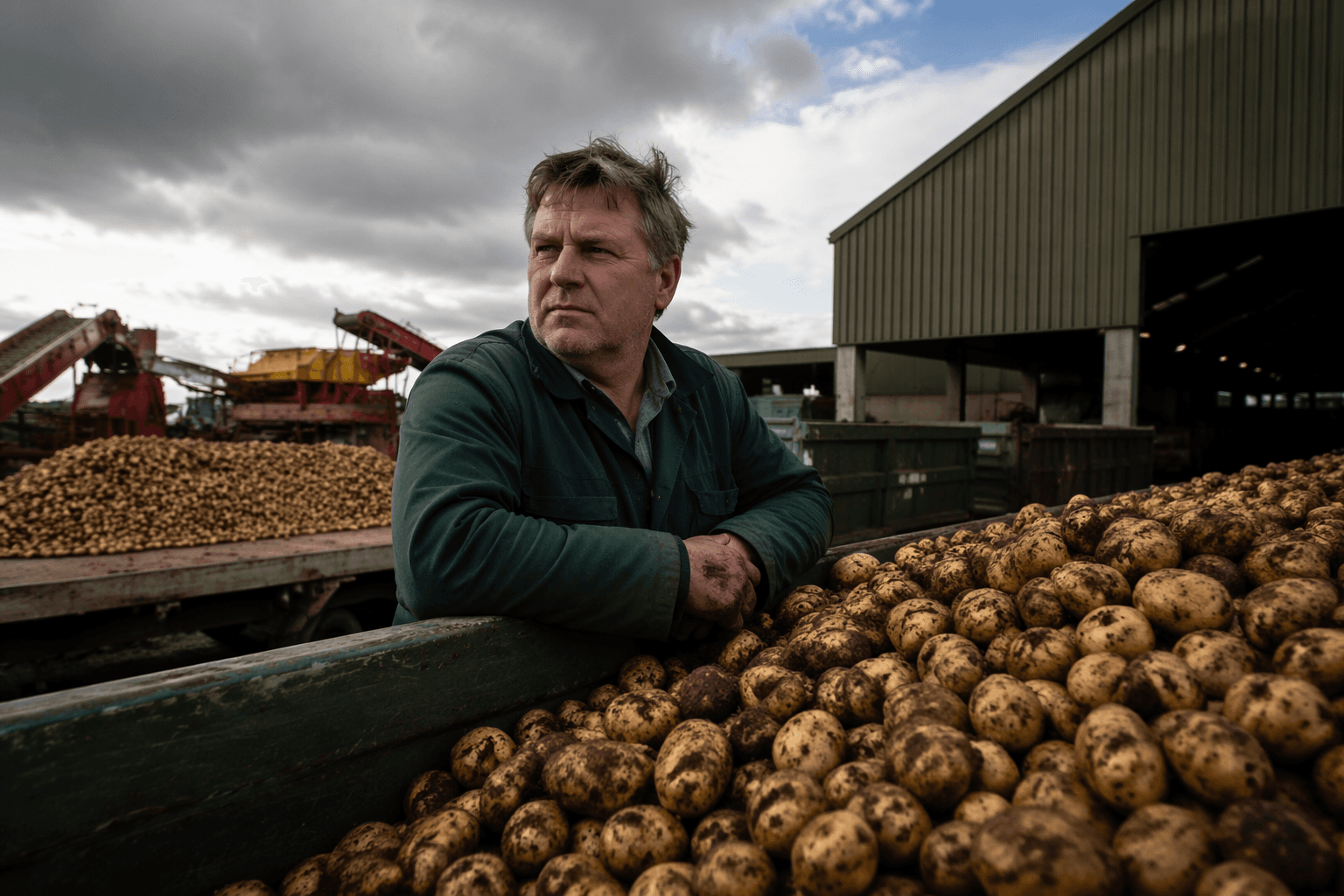
That model is under strain. Pierre Lebrun, secretary of Belpotato, said the sector was at a “tipping point” because global markets were buying fewer European fries. The pressure is coming from multiple directions at once: U.S. tariffs, a strong euro and faster growth from competitors in China, India, Egypt and Turkey. For a sector built on scale and exports, that combination is especially punishing.
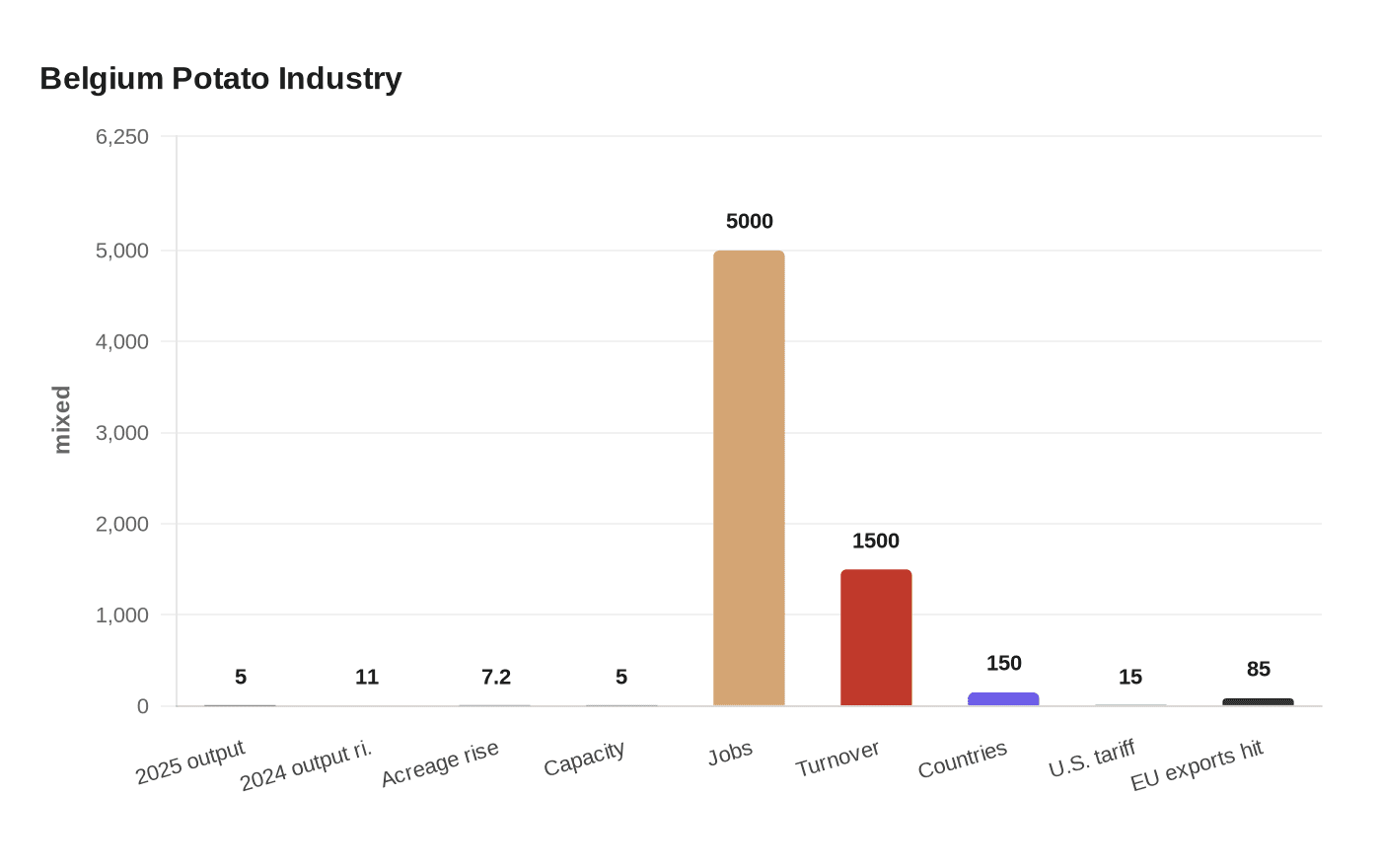
The trade squeeze is already visible in the United States and elsewhere. Washington and Brussels reached a tariff framework agreement on 21 August 2025, under which the U.S. said it would apply a 15% tariff on originating EU goods. At the same time, the European Commission says Colombia’s anti-dumping duties on frozen fries from Belgium, Germany and the Netherlands affected nearly 85% of EU exports in that dispute. Colombia first imposed those measures in November 2018 and later extended them until 30 September 2027.
Farmers are partly insulated in the short term because annual contracts with chip manufacturers shield them from immediate price shocks. But once those contracts are renegotiated, weaker export demand and rising supply can push prices down. What began as a record harvest has exposed a harder truth for Belgium’s potato economy: when the world buys fewer fries, abundance can quickly turn into pressure on growers, processors and the supply chains that depend on them.
This article was produced by Prism’s automated news system from verified source data, official records, and press releases, then run through automated quality and moderation checks before publishing. The system is built and supervised by the people who set the standards it runs under. Read our full AI policy.
Did this article answer your question?