Bemidji's 1937 Paul Bunyan and Babe Statues Remain Tourism Icons
Bemidji’s 18-foot Paul Bunyan and Babe the Blue Ox, erected in 1937, still anchor the Tourist Information Center plaza at 300 Bemidji Ave and draw visitors year round.
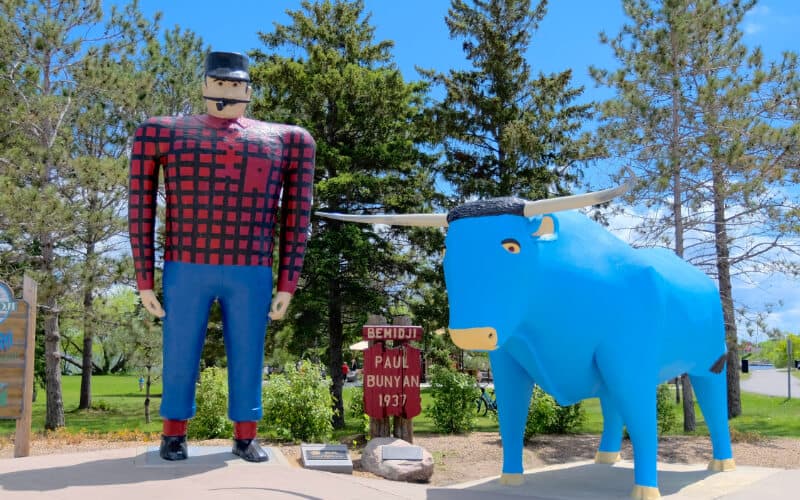
The 18-foot Paul Bunyan and his companion Babe the Blue Ox continue to shape Bemidji’s lakefront identity, standing on the shore of Lake Bemidji and anchoring the Tourist Information Center plaza at 300 Bemidji Ave, Bemidji, MN 56601. The center, a state of Minnesota travel affiliate, lists phone 218-759-0164 and displays Paul Bunyan memorabilia plus the Fireplace of States constructed using 900 rocks from every U.S. state and every Canadian province.
The statues were erected in 1937 as part of a winter carnival revival sponsored by local Rotarians. The Minnesota Historical Society records that the figures were “originally conceived as a gimmick to promote tourism during the city’s 1937 Winter Carnival,” and that the Paul and Babe duo “became the second-most-photographed sculptures in the country in the 1940s.” MNHS also calls them the prototypical “roadside colossus” that inspired similar works across Minnesota and the Midwest in subsequent decades.
Archival material from the Bemidji Pioneer captured the statues’ early publicity. A 1937 Bemidji Pioneer caption archived at MNHS recounts an August appearance when Babe was taken to Minneapolis: “Darlene Gary, drum major for the Bemidji, Minn., ‘On-to-Nicollet’ deegation [sic], battles ‘Babe,’ Paul Bunyan’s big blue ox in the loop as the fans from out-of-town paraded on their way to Nicollet park this noon. ‘Babe’ stopped marching near the West hotel, Bemidji headquarters, and refused to budge until Little Miss Gary prodded him and told him he would be late for the Miller game.”
The statues’ 20th century fame led to formal preservation steps. MNHS notes that “in 1988 the Paul and Babe statues—once created as temporary tourism gimmicks—are added to the National Register of Historic Places, signaling that they are worthy of long-term preservation. This sets the stage for extensive (and often expensive) restoration work in the years ahead and sparks an often heated community debate as to how the statues may be best preserved.” Local planning and restoration efforts have recurred in municipal records and newspaper coverage, and a 2022 construction project to improve drainage in the plaza temporarily limited photo opportunities for visitors during work in August 2022.
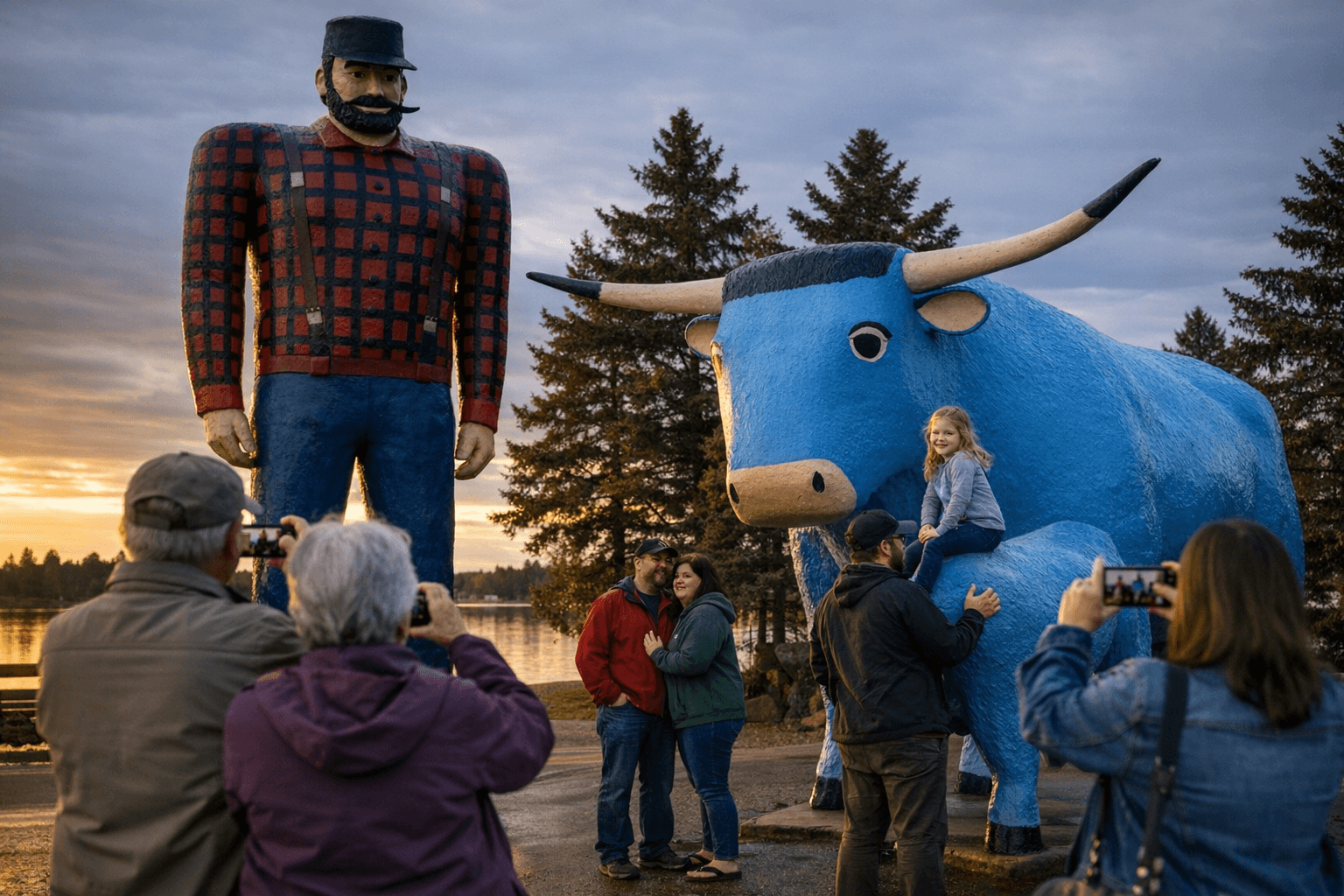
The Paul Bunyan imagery extends beyond Bemidji into trails and events that bring visitors past the lakefront icons. Compiled materials note the Bemidji Blue Ox Marathon, started in 2013, runs along the Paul Bunyan State Trail and around Lake Bemidji past the statues, and that a paved Paul Bunyan Trail spans long-distance cycling routes that connect to Lake Bemidji State Park. The duo have also drawn national attention in aerial and magazine features and occasional film and television appearances.
Critics and historians have urged fuller context for the Bunyan story. Aaron Brown wrote that folkloric retellings and marketing “gave Minnesotans a simple story that masked the plight of Indigenous people and early labor unions, glossing over the rampant environmental destruction and capitalist machinations that girded the state’s history. And tourists loved Paul. Still do.” Brown also notes there are 11 Paul Bunyan statues in Minnesota and an ongoing local rivalry over whether Bemidji or Brainerd is the “real” hometown of Paul.
Visitors planning photos or group events at the Tourist Information Center should note the plaza has undergone periodic maintenance; call 218-759-0164 to confirm access and any temporary restrictions before arriving.
Know something we missed? Have a correction or additional information?
Submit a Tip