Benavidez Challenges Ramirez in Mexico vs. Mexico Cruiserweight Showdown
Benavidez moved up to cruiserweight for Ramirez, and the Mexico vs. Mexico matchup carried three-division stakes, two titles and a crowded title picture.
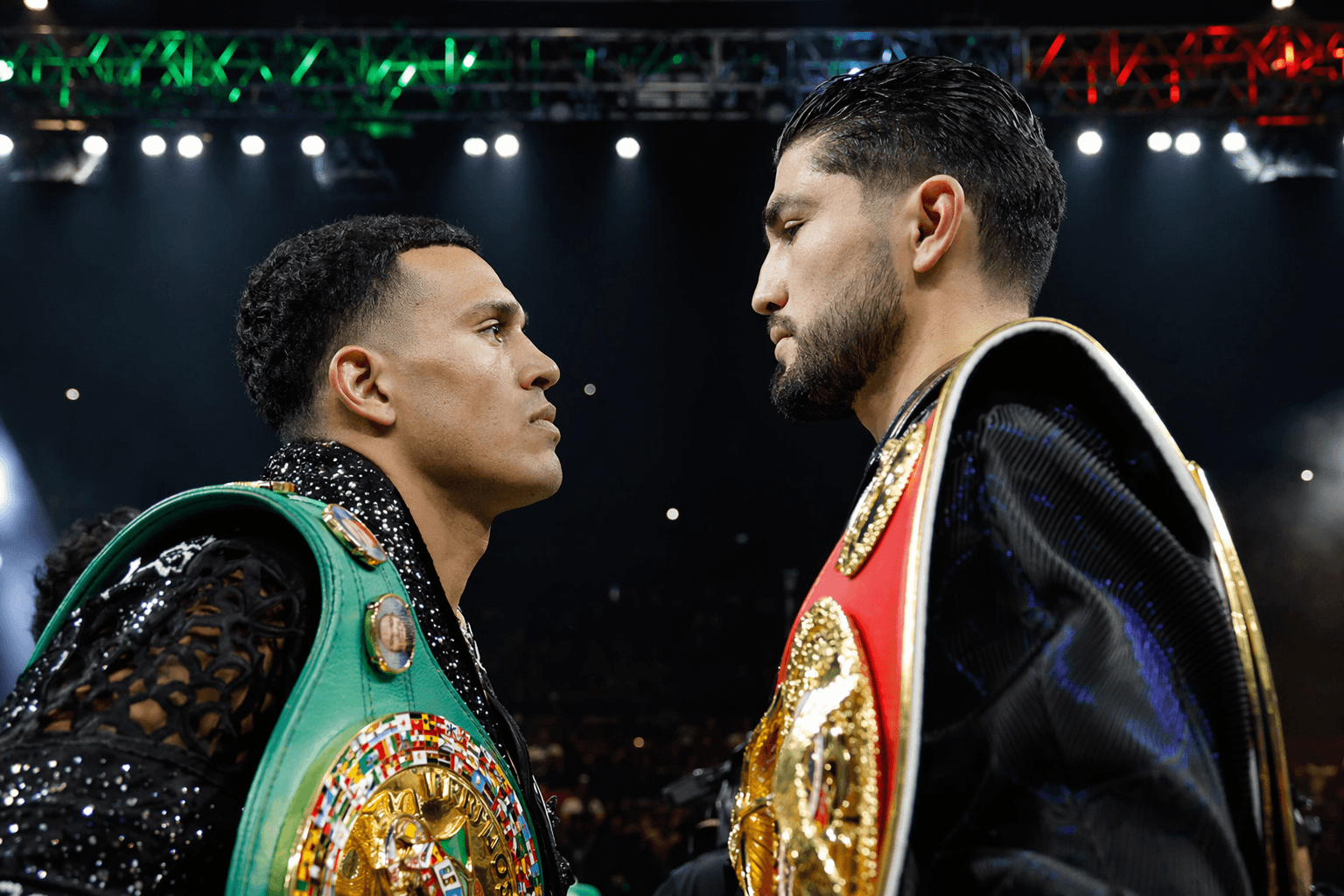
David Benavidez’s move into cruiserweight turned a marquee fight into a division-defining test, with Gilberto Ramirez defending the unified WBA and WBO titles in a Mexico vs. Mexico showdown that carried title, legacy and sanctioning-body consequences. The bout was officially announced at a Feb. 21 press conference in Las Vegas, went forward on Cinco de Mayo weekend, and entered the ring with a combined record of 79-1 and 55 knockouts.
The card headlined a Premier Boxing Champions pay-per-view on Prime Video from T-Mobile Arena in Las Vegas, promoted by Golden Boy Promotions and Sampson Boxing in association with TGB Promotions. Free prelims began at 5:30 p.m. ET, the main PPV card at 8 p.m. ET and 5 p.m. PT, and the main event was projected for ring walks around 11:20 p.m. ET. That late-night placement fit the scale of the fight: Benavidez was chasing a third world title in a third weight class, while Ramirez entered as the first Mexican cruiserweight world champion in history, a distinction the WBC has recognized as historic for Mexico.
What made the matchup matter beyond one result was the leverage it carried over the entire 200-pound division. A Benavidez win would have immediately reshaped the cruiserweight title picture by adding another major Mexican champion to the class and putting his power, volume and unbeaten status into a new market of opponents. A Ramirez win would have strengthened his hold on the belts and cemented his place as the standard-bearer at cruiserweight, especially with Benavidez arriving as one of the sport’s most aggressive title seekers.

The fight week also exposed how fragile modern championship politics can be. In March, BoxingScene reported that the WBO and WBA were prepared to withdraw sanctioning after the WBC introduced a special “Tollan Tlatequi” belt for the winner, with the two organizations reportedly unwilling to recognize their belts if the special belt was included. That dispute underscored how one high-profile matchup can alter not just who leaves with hardware, but which belts are even considered legitimate in the first place.
The undercard gave the event added depth. Armando Resendiz faced Jaime Munguia in the co-main event after Munguia replaced the suddenly unavailable Jermall Charlo, and the lineup also included Oscar Duarte against Angel Fierro at junior welterweight, Isaac Lucero against Alan Sandoval at junior middleweight, and Jorge Chavez against Tito Sanchez at super bantamweight. For Benavidez and Ramirez, the night was never just about the final bell. It was about who would leave Las Vegas with control of the division’s future.
Sources:
Know something we missed? Have a correction or additional information?
Submit a Tip