Benavidez, Ramirez meet in Mexico-versus-Mexico cruiserweight title fight in Las Vegas
Benavidez moved up cleanly to cruiserweight, but Ramirez’s belts and experience made the Mexico-versus-Mexico clash a real title and business test.
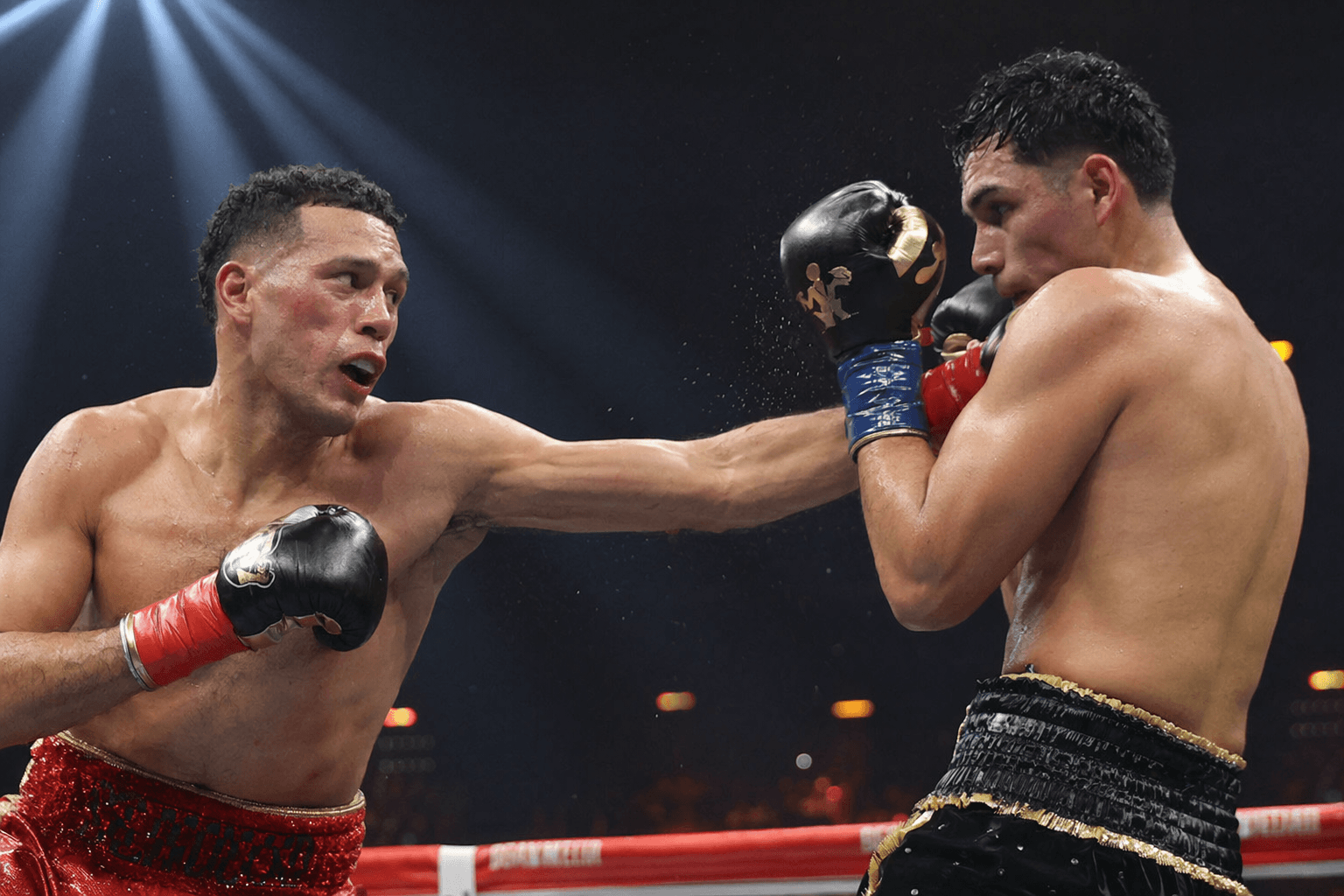
David Benavidez arrived at cruiserweight with a clear message: he was not visiting the division, he was trying to claim it. Benavidez made the 200-pound limit for his first fight at the weight, then stepped into T-Mobile Arena in Las Vegas on Saturday night for a 12-round title bout against Gilberto “Zurdo” Ramirez, the WBA and WBO unified champion.
The matchup carried unusual weight even by Cinco de Mayo weekend standards. Ramirez entered as the first Mexican cruiserweight world champion in history, with a 48-1 record and 30 knockouts, while Benavidez came in unbeaten at 31-0 with 25 knockouts and was chasing a title in a third weight class after moving up from light heavyweight. That combination made the fight more than a belt defense. It was a referendum on whether Benavidez’s speed and pressure could travel up a division, or whether Ramirez’s size, experience and championship composure would hold the line.
The broadcast and promotion reflected the stakes. The main event was scheduled for PBC pay-per-view on Prime Video with an 8 p.m. ET start, positioning the bout as one of boxing’s major spring properties for a national audience. The event also leaned hard into the Mexico-versus-Mexico storyline, turning the undercard into a showcase of similar matchups rather than a standard supporting slate.
Jose Armando Resendiz and Jaime Munguia fought for the WBA super middleweight title in one of the card’s most attractive bouts, while Oscar Duarte met Angel Daniel Fierro Barrera at junior welterweight. Isaac Lucero opposed Ismael Flores at junior middleweight, Jorge Chavez met Jose Tito Sanchez at junior featherweight, and Daniel Blancas fought Raul Salomon at super middleweight. The depth mattered commercially: the card was built to sell on identity, stakes and national interest, not just one main event.
The belt politics around the fight added another layer. There had been reporting that the WBO and WBA considered withdrawing sanctioning because of unexpected WBC involvement, a reminder that title fights at this level are also corporate negotiations over who controls the championship landscape. That uncertainty only increased the value of the outcome for future promoters and rivals.
For Benavidez, a win would sharpen the path toward becoming a champion in a third division and make him a major cruiserweight attraction overnight. For Ramirez, a successful defense would reinforce his status as the division’s standard-bearer and strengthen his hand in any future unification or high-value rematch talks. Either result shaped the next round of matchups in a division that suddenly had a marketable center.
Know something we missed? Have a correction or additional information?
Submit a Tip