Bending Spoons goes public after turning startup failure into empire
Bending Spoons turned $40,000 from a failed app into a $25.7 billion debut after its IPO jumped nearly 40% on the Nasdaq.
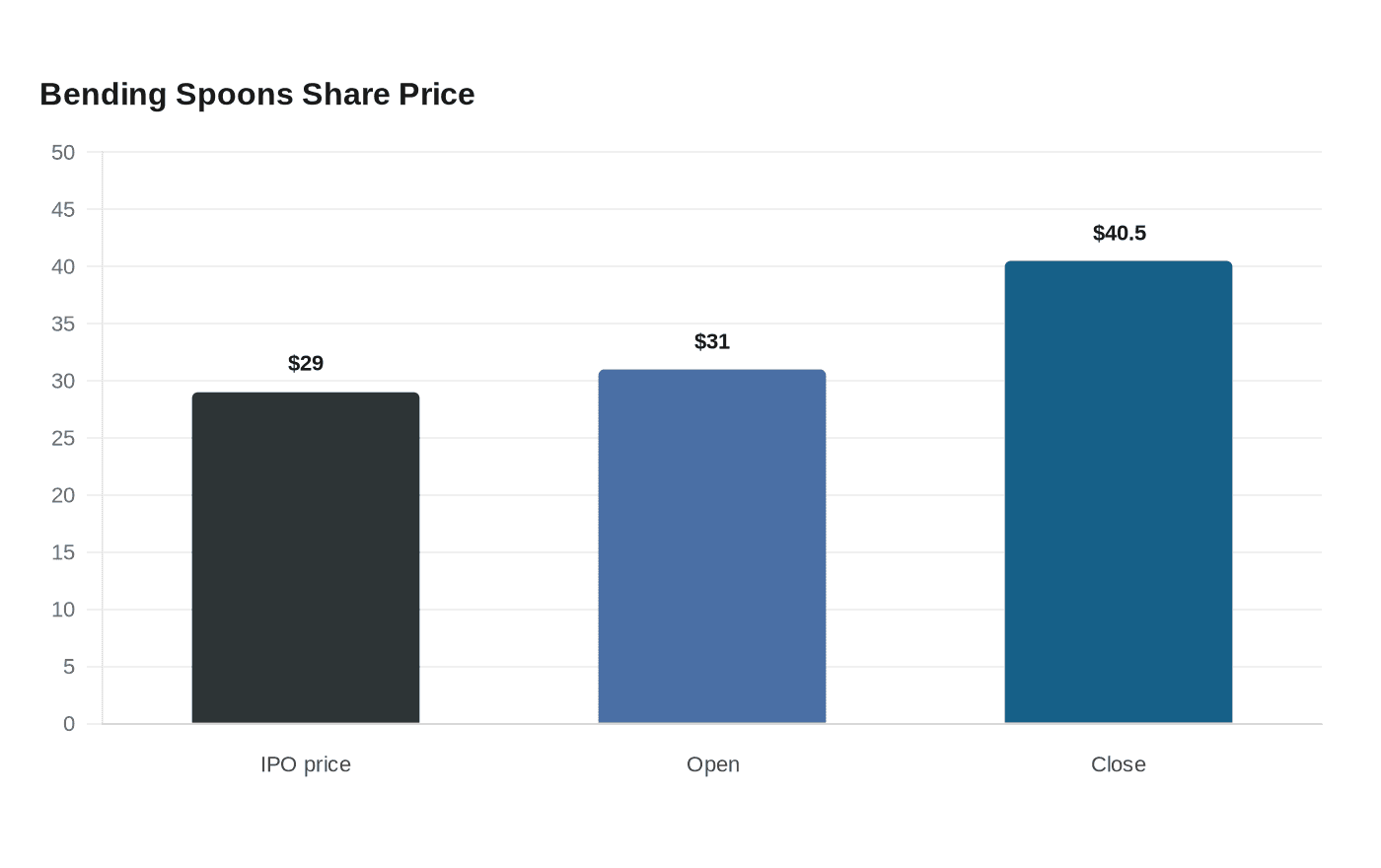
Bending Spoons shares surged nearly 40% in their U.S. market debut, closing at $40.50 and giving the Milan company a market value of about $25.7 billion. The IPO priced at $29 a share and raised about $1.68 billion, after the stock opened at $31 and briefly valued the company at more than $18 billion.
That result traces back to failure. The company was founded in 2013 after Evertale, the founders’ earlier photo-sharing and diary app, collapsed and left them with about $40,000. Luca Ferrari and his co-founders used that cash to start over in Milan, building a business that would grow by acquiring aging digital brands instead of trying to create the next consumer breakout from scratch.

The strategy has been relentless. Bending Spoons has bought more than 50 stalled apps and websites since its founding, accumulating names that once defined internet habits: AOL, Evernote, Eventbrite, Vimeo, WeTransfer and Meetup. The company’s name comes from a scene in The Matrix, a fitting signal for a firm that has long worked with unusual secrecy even as its products reached more than a billion people, including more than 300 million monthly active users and 10 million paying customers.
The numbers behind the offering helped justify the listing to public investors. Bending Spoons said first-quarter 2026 revenue reached $601 million and that it swung from a $112 million loss to a profit. The deal also came as software listings regained momentum in the United States, even as investors weighed whether artificial intelligence could weaken older digital business models.
What Bending Spoons is selling now is more than growth. It is a test of whether buying neglected internet brands, stripping out uncertainty and pushing them through a repeatable operating system can produce durable returns at scale, or whether the model is just a more polished form of financial engineering. With its shares now trading publicly, the company’s most unusual pitch is no longer private.
This article was produced by Prism’s automated news system from verified source data, official records, and press releases, then run through automated quality and moderation checks before publishing. The system is built and supervised by the people who set the standards it runs under. Read our full AI policy.
Did this article answer your question?