Bergvall’s late strike gives Spurs slender League Cup semifinal lead
Lucas Bergvall’s late goal gives Tottenham Hotspur a 1-0 edge over Liverpool in the first leg of the League Cup semifinal, handing Thomas Frank’s side momentum ahead of the return tie. The result deepens a volatile rivalry defined by high scores, disciplinary flashpoints and tactical skirmishes, with implications for squad management, club finances and fan expectations as the competition enters its decisive phase.
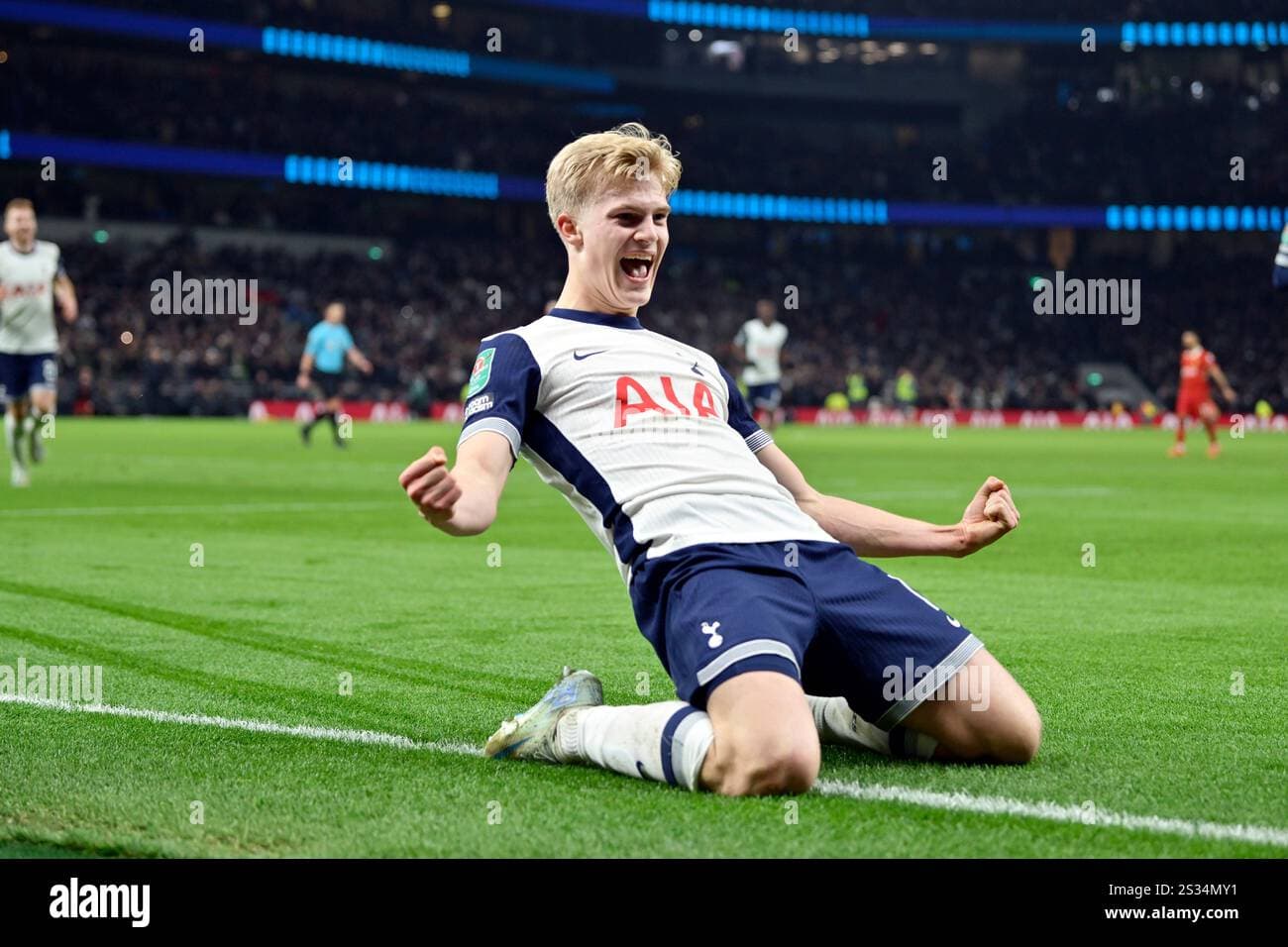
Tottenham Hotspur take a slender 1-0 first-leg advantage in the League Cup semifinal after Lucas Bergvall scored a late winner on 8 January 2026. The narrow victory at Tottenham Hotspur Stadium hands Thomas Frank’s team a precious lead to protect in the second leg and injects fresh life into a domestic cup run that could yield meaningful revenue and momentum during a congested season.
The match itself was cagey, with Bergvall’s late intervention providing the decisive moment in an encounter dominated by fine margins. Liverpool, managed by Arne Slot, were unable to find a way through a compact Spurs defence that held firm under sustained pressure. With only a single goal separating the sides, the tie remains very much alive and will demand different tactical approaches from both managers in the return fixture.
This result must be read against a recent run of explosive encounters between the clubs. Historical statistics show Liverpool v Tottenham is the Premier League’s highest-scoring fixture overall, 206 goals, and their meetings have often produced dramatic, high-octane football. Recent matches underline that volatility: Liverpool recorded a 5-1 league win and a 4-0 League Cup win earlier in the 2025 calendar year, while the sides produced a 2-1 Liverpool victory in December 2025 that featured two Tottenham red cards and late drama. Those previous encounters expose tactical fault lines for both teams and underscore the disciplinary risk that can swing tightly poised ties.
Disciplinary issues have been a consistent subplot in the rivalry. In the December 2025 Premier League meeting, John Brooks upgraded a player’s yellow card to red after a VAR review for a studs-up challenge, and another Tottenham player was later dismissed after a second booking. That match left Spurs reduced to nine men yet competitive until the final whistle, demonstrating how sending-offs and suspensions can alter tactical plans, squad selection and longer-term availability across competitions. Managers now must weigh the intensity of selection against domestic cup priorities and league demands.

Beyond the pitch, the tie carries business and cultural significance. Progressing to a League Cup final can boost matchday income, broadcast exposure and commercial interest at a time when clubs juggle multiple revenue streams. For Tottenham, a cup run offers a tangible platform to galvanise a passionate local fanbase that has endured mixed home form; records show Spurs suffered a heavy number of home league losses in 2025, making high-profile knock-out success an important balm for supporters and sponsors alike. For Liverpool, a failure to overturn the deficit would complicate squad rotation plans as the team pursues multiple objectives.
Socially, the fixture highlights continuing debates around VAR, player welfare and disciplinary standards in a game that increasingly blends athletic risk with entertainment premium. The narrow first-leg scoreline promises a gripping second act, with both clubs aware that small tactical adjustments or momentary lapses could decide who reaches the final.
This article was produced by Prism’s automated news system from verified source data, official records, and press releases, then run through automated quality and moderation checks before publishing. The system is built and supervised by the people who set the standards it runs under. Read our full AI policy.
Did this article answer your question?
.jpg&w=1920&q=75)