Best Buy names longtime insider Jason Bonfig as next CEO
Best Buy picked 27-year veteran Jason Bonfig as CEO as sales slip and the retailer leans harder on digital marketplace and ad growth.

Best Buy turned to a company lifer to lead its next chapter, naming Jason Bonfig as chief executive officer and setting up a handoff that begins with Corie Barry’s exit on Oct. 31 and ends with Bonfig joining the board on Nov. 1. Bonfig, 49, has spent 27 years at Best Buy, starting as an inventory analyst in 1999, and will inherit a retailer still trying to prove that its latest growth bets can offset a sluggish consumer-electronics market.
The choice reflects continuity at a moment when the business is under pressure. Best Buy’s board said it considered both internal and external candidates before settling on Bonfig, signaling a preference for an executive who already knows the company’s stores, vendors and supply chain over a disruptive outsider. Barry, who became Best Buy’s first female CEO in 2019 after nearly three decades at the company, will remain a strategic adviser for six months after stepping down from both her CEO and board roles.
Bonfig arrives with direct oversight of the parts of Best Buy’s model that now matter most: merchandising, ecommerce, supply chain, marketing, Best Buy Ads and Best Buy Canada. He has also been closely tied to the company’s push into a U.S. digital marketplace, which more than doubled the number of products available to shoppers, and to Best Buy Ads, which nearly doubled the number of ad partners from a year earlier. That makes the promotion less like a simple succession plan and more like a referendum on whether the retailer’s future lies in selling more hardware or in selling access, data and advertising around the hardware.
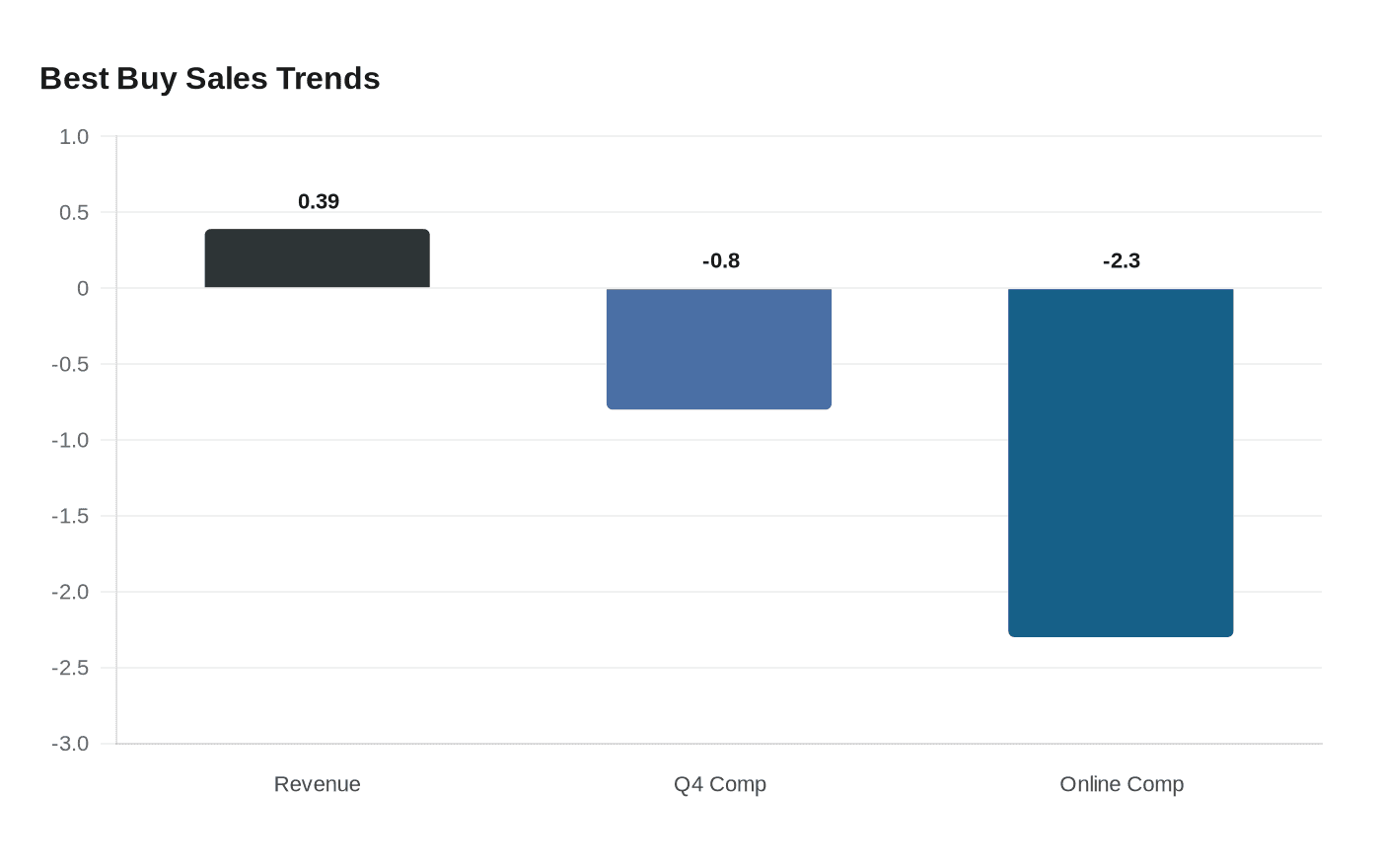
The timing is hardly accidental. Best Buy has more than 1,000 stores across North America, but the consumer-electronics market has cooled after the pandemic-era surge in TVs, laptops and appliances. Inflation and higher borrowing costs have made those purchases harder to justify, and Best Buy said sales have fallen in 14 of the past 16 quarters. In fiscal 2026, revenue rose just 0.39% to $41.691 billion, while comparable sales in the fourth quarter fell 0.8% to $13.814 billion and domestic online comparable sales dropped 2.3%.
The company also said higher expenses tied to Marketplace and Best Buy Ads weighed on results, even as it expanded both businesses. Best Buy now expects fiscal 2027 adjusted diluted earnings per share of $6.30 to $6.60. Investors will be watching whether Bonfig can turn those investments into durable profit growth, or whether the company will need a deeper reinvention as weaker upgrade cycles and tougher online competition reshape consumer electronics retail.
This article was produced by Prism’s automated news system from verified source data, official records, and press releases, then run through automated quality and moderation checks before publishing. The system is built and supervised by the people who set the standards it runs under. Read our full AI policy.
Did this article answer your question?