Best CD rates still hover near 4%, with short terms leading
CD yields are still near 4%, with Bankrate’s top tracked rate at 4.25% APY. Short-term terms still lead as Fed policy stays put.

Certificates of deposit are still paying close to 4% APY, and the strongest offers remain concentrated in shorter terms. Bankrate’s top tracked CD rate in June 2026 is 4.25% APY from First National Bank of America, while its best 1-year CDs reach 4.11% APY and its best 4-year CDs go up to 4.15% APY.
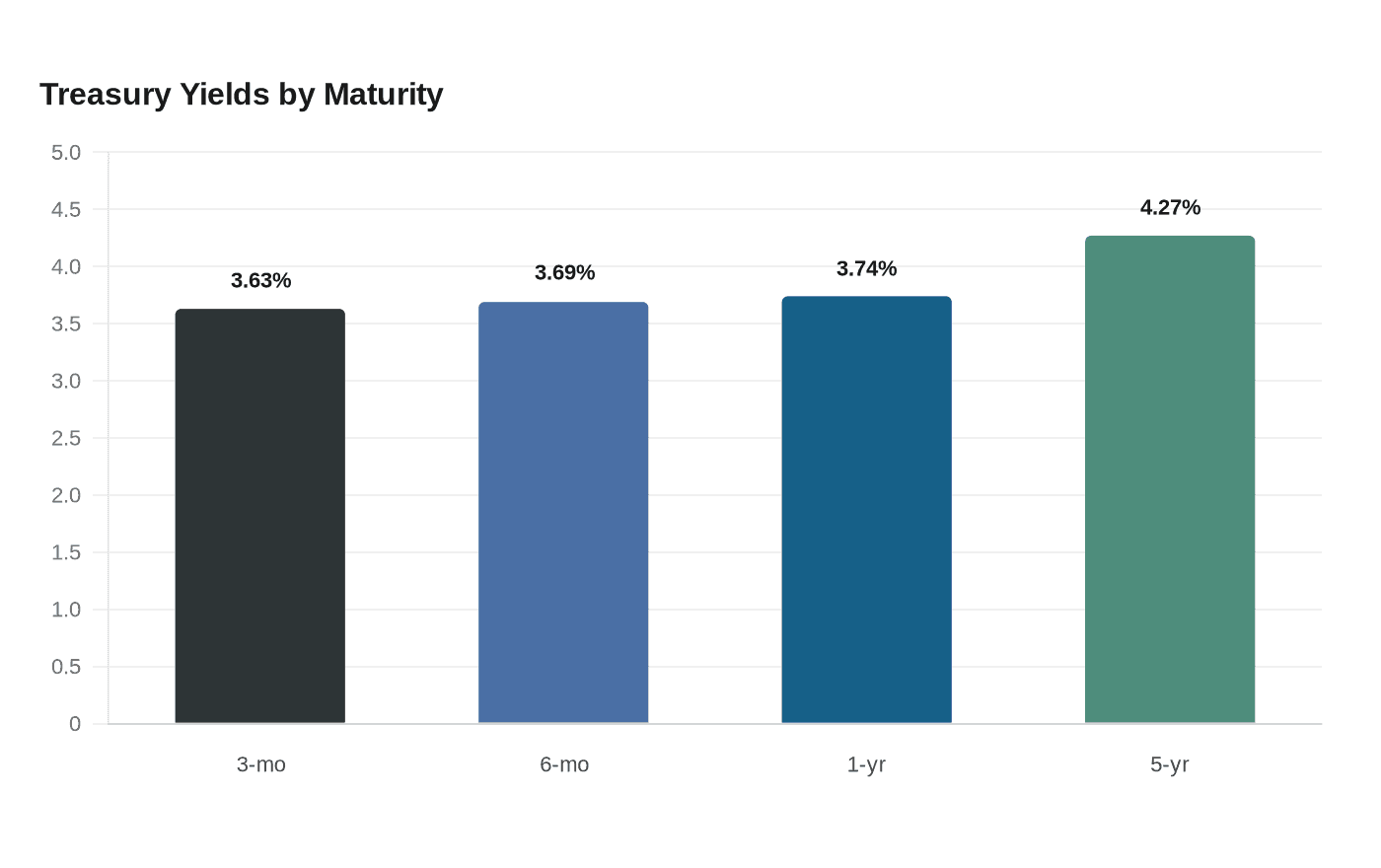
That pattern fits a market still shaped by a cautious Federal Reserve. The Fed has held its policy rate steady so far in 2026, and its H.15 data released June 11 showed Treasury bill yields of 3.63% for 3-month bills, 3.69% for 6-month bills and 3.74% for 1-year bills. The 5-year Treasury constant maturity yield stood at 4.27% on June 10. Those levels help explain why short-term and intermediate CDs remain attractive, but not evenly priced across maturities.

For savers, the choice now is less about chasing the highest headline rate and more about matching the term to when cash will be needed. Shorter CDs offer more flexibility if money may be needed in the next year, and they also reduce the risk of being locked into a lower yield if rates move up again. Longer terms can still make sense for funds that can stay untouched, especially when the difference between a 1-year and a 4-year CD is only a few basis points. Bankrate says the best CD rates are still around 4% APY and are highest on short-term CDs, which keeps the front end of the market in focus.
The broader trend points to some caution on waiting. NerdWallet said CD rates are generally trending down in 2026, although there was a brief lift in late March to late April when a handful of online banks raised competitive 1-year offers. That makes today’s offers more valuable for savers who want certainty before the next Fed move. A CD ladder, which mixes maturities, can bridge the gap between locking in now and keeping part of a portfolio available for a future reset in rates.
This article was produced by Prism’s automated news system from verified source data, official records, and press releases, then run through automated quality and moderation checks before publishing. The system is built and supervised by the people who set the standards it runs under. Read our full AI policy.
Know something we missed? Have a correction or additional information?
Submit a Tip