SpaceX debut makes Elon Musk the world’s first trillionaire on paper
SpaceX’s first Nasdaq session briefly lifted its value above $2.18 trillion and pushed Elon Musk’s wealth to about $1.1 trillion on paper.

SpaceX’s Wall Street debut briefly turned Elon Musk into the first person to cross the trillion-dollar mark on paper, as the rocket maker’s shares surged and pushed the company’s value above $2.18 trillion intraday. The listing showed how a single public market event can crystallize private-company wealth at staggering scale, especially when the founder still holds near-total control.
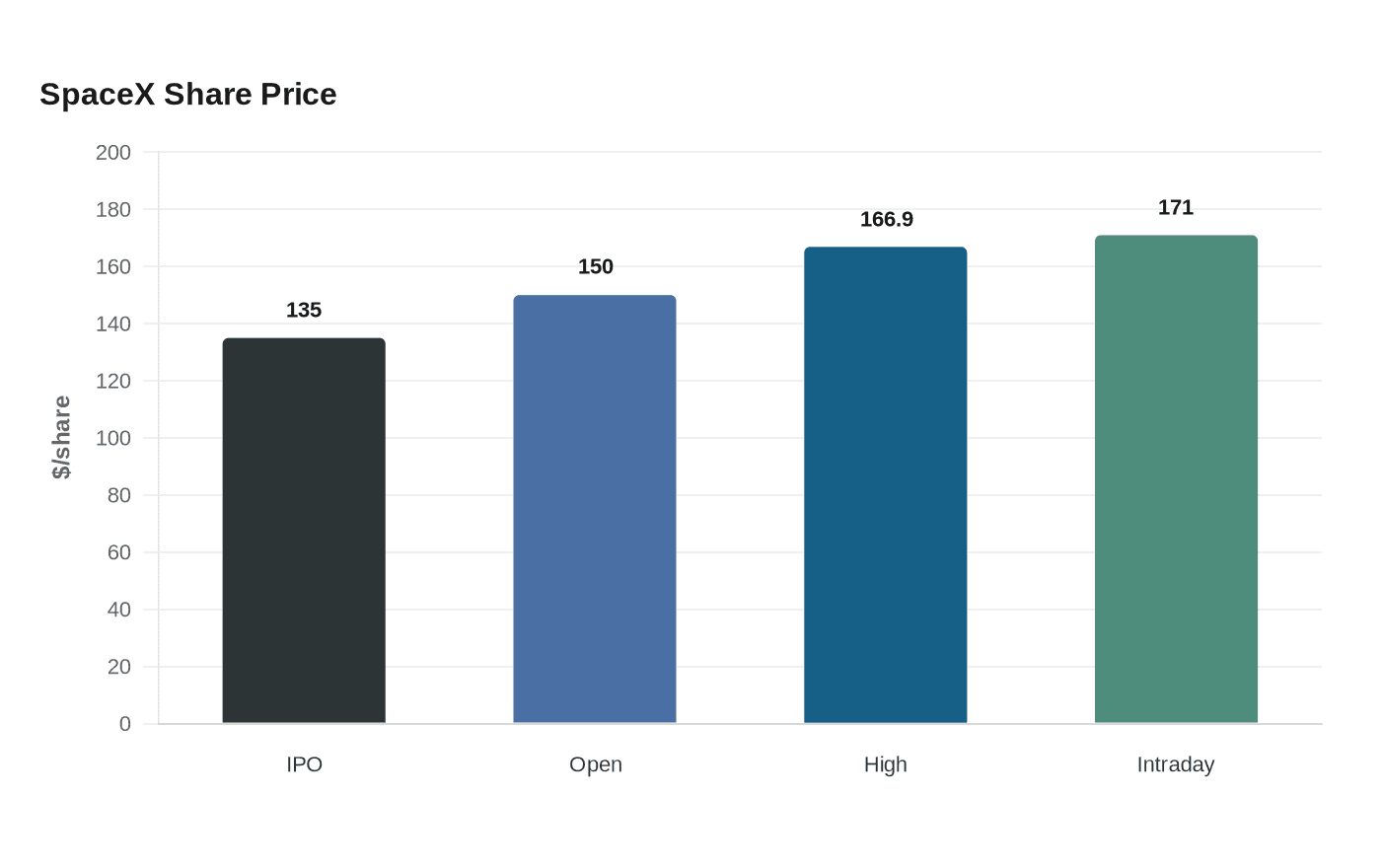
SpaceX priced its initial public offering at $135 a share on Thursday and sold 555.6 million shares, raising about $75 billion in what sources described as the largest IPO ever. The offering valued the company at about $1.77 trillion at pricing, already putting it among the world’s biggest listed companies before the first trade even hit Nasdaq on Friday.
The stock opened at $150 a share and later climbed as high as roughly $166.90, a jump that gave the company a market value above $2.18 trillion at one point. AP News said shares rose 23% in their debut, while CNBC reported the stock was still trading sharply higher intraday at about $171 a share, implying a market capitalization around $2.22 trillion.
That surge translated directly into Musk’s personal balance sheet. Forbes estimated his net worth at about $1.1 trillion after the debut, and Reuters-based reporting said his SpaceX stake alone was worth more than $766 billion at the opening price. Add in his Tesla holding, reported at about $280 billion, and his combined wealth from the two companies came to roughly $1.05 trillion.
The number matters not just because it is large, but because of how little the public listing changes Musk’s grip on the company. Reporting said he holds roughly 85% of shareholder voting power, and SpaceX’s dual-class structure gives him 10 votes per share. In practice, that means new public investors are buying exposure to the company’s growth without meaningfully diluting Musk’s control.
The deal also highlights how aggressively investors are still rewarding scale, scarcity and long-dated narrative over near-term profits. SpaceX is not profitable, yet demand for the offering was strong enough to absorb a record-sized sale and send the shares sharply higher on the first day. The company’s ambitions now stretch beyond rockets and communications into AI data centers in space, a vision that helps explain why the market is willing to value the business like a national-scale asset rather than a conventional aerospace firm.
This article was produced by Prism’s automated news system from verified source data, official records, and press releases, then run through automated quality and moderation checks before publishing. The system is built and supervised by the people who set the standards it runs under. Read our full AI policy.
Know something we missed? Have a correction or additional information?
Submit a Tip