Big funds pour billions into mining as commodity supercycle gains traction
Mining ETF assets more than doubled to $87.4 billion, as investors bet AI, defense and grid buildouts could keep metals in demand for years.
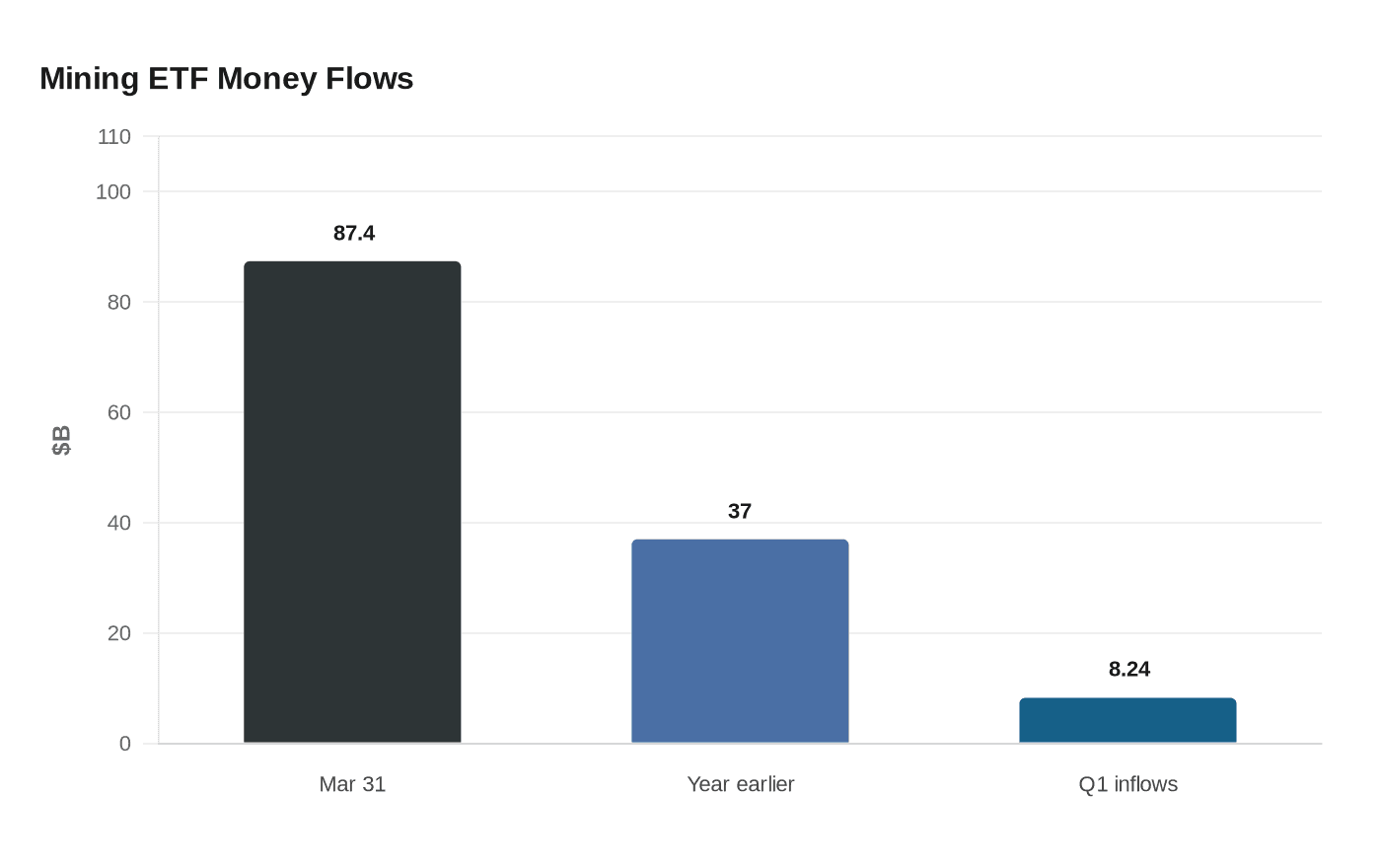
Large asset managers have been pouring money into mining and metals, with assets under management in mining exchange-traded funds more than doubling to $87.4 billion by March 31 from $37 billion a year earlier. Investors added $8.24 billion in the first quarter, a sharp reversal from the opening months of 2025, when tariffs announced by President Donald Trump triggered outflows.
The flow of capital reflects a broader rotation into hard assets as investors step away from expensive technology shares. BlackRock portfolio manager Evy Hambro said money is moving out of high-valuation tech names and into mining, a sign, he argued, that the market is in the early stages of a commodity supercycle. That view has been reinforced by performance: Morningstar’s U.S. Technology Index fell 9% in the first quarter, while shares of BHP and Rio Tinto, the two largest mining companies, both hit record highs this year.
The case for mining rests on more than a short-term trade. Hambro pointed to rising material intensity in global GDP, driven by spending on grid infrastructure, data centers, electric vehicles and charging stations. Those projects require copper, aluminum, nickel and other industrial metals at a scale that is difficult to match with existing supply growth, especially as developers race to build out the physical backbone of artificial intelligence and electrification.
Fidelity’s Taosha Wang said the supercycle has already arrived, arguing that governments are putting supply security at the center of policy after years of geopolitical shocks. That shift has turned minerals into a strategic asset class, not just an industrial input, and it is drawing in investors who once treated mining as a narrow cyclical play.
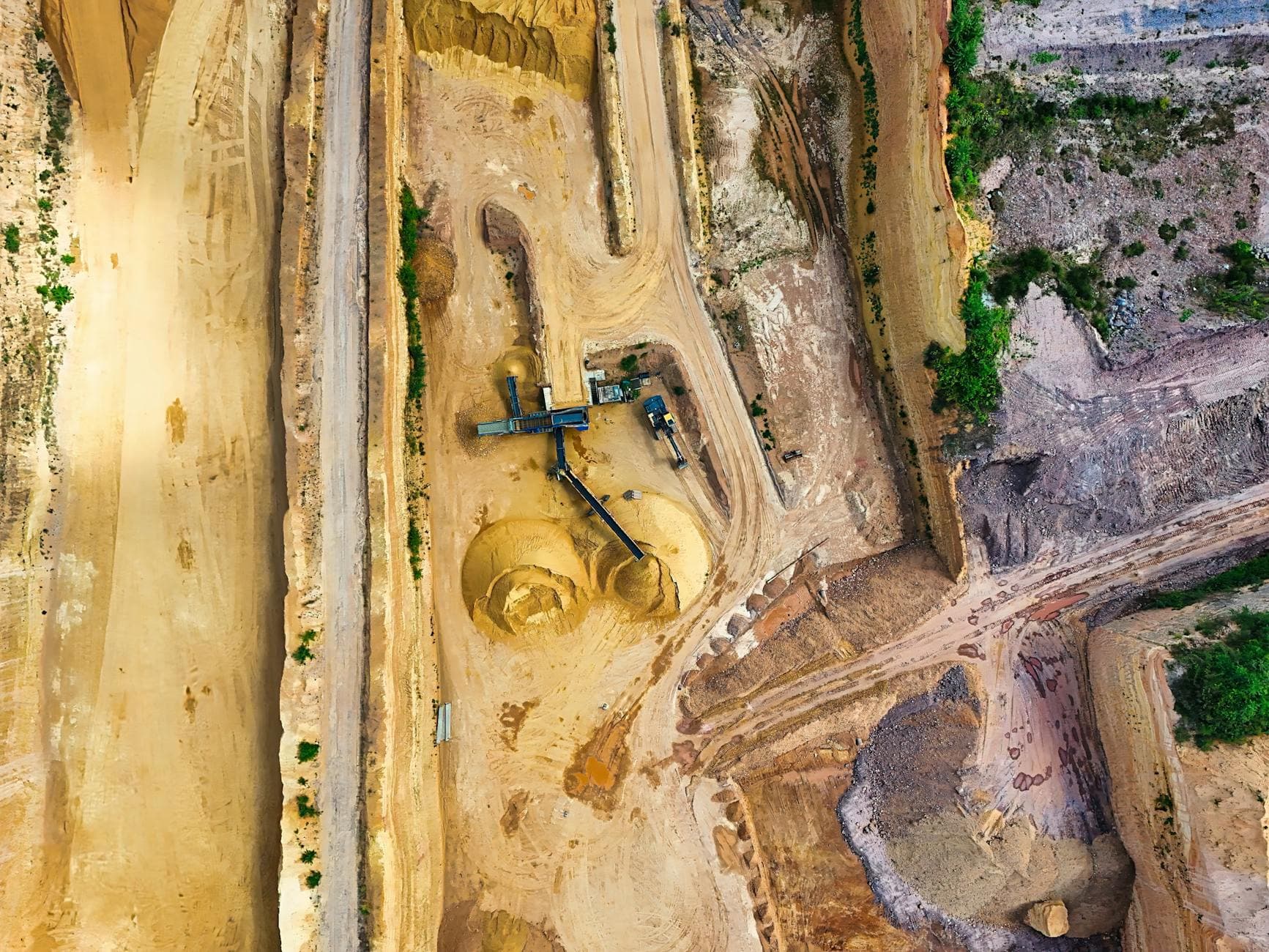
The bet is not without risk. Metals markets are far smaller than global equity and bond markets, which leaves them exposed to abrupt price swings if mining, refining or transportation bottlenecks emerge. Copper funds attracted new inflows in March, while some gold investors locked in profits after a strong rally, underscoring how quickly sentiment can turn even inside a bull market.
Still, the scale of the money moving into the sector suggests investors are rethinking the role of mining in the next phase of the economy. Rather than a sleepy corner of the market, it is increasingly being treated as a structural beneficiary of electrification, artificial intelligence, defense rearmament and supply-chain security. That makes metals one of the clearest tests of whether the AI boom is also becoming a long-running industrial and resource boom.
This article was produced by Prism’s automated news system from verified source data, official records, and press releases, then run through automated quality and moderation checks before publishing. The system is built and supervised by the people who set the standards it runs under. Read our full AI policy.
Did this article answer your question?

%3Amax_bytes(150000)%3Astrip_icc()%2FCertificate-of-deposit-2301f2164ceb4e91b100cb92aa6f868a.jpg&w=1920&q=75)
