Mastercard beats profit estimates as consumer spending stays resilient
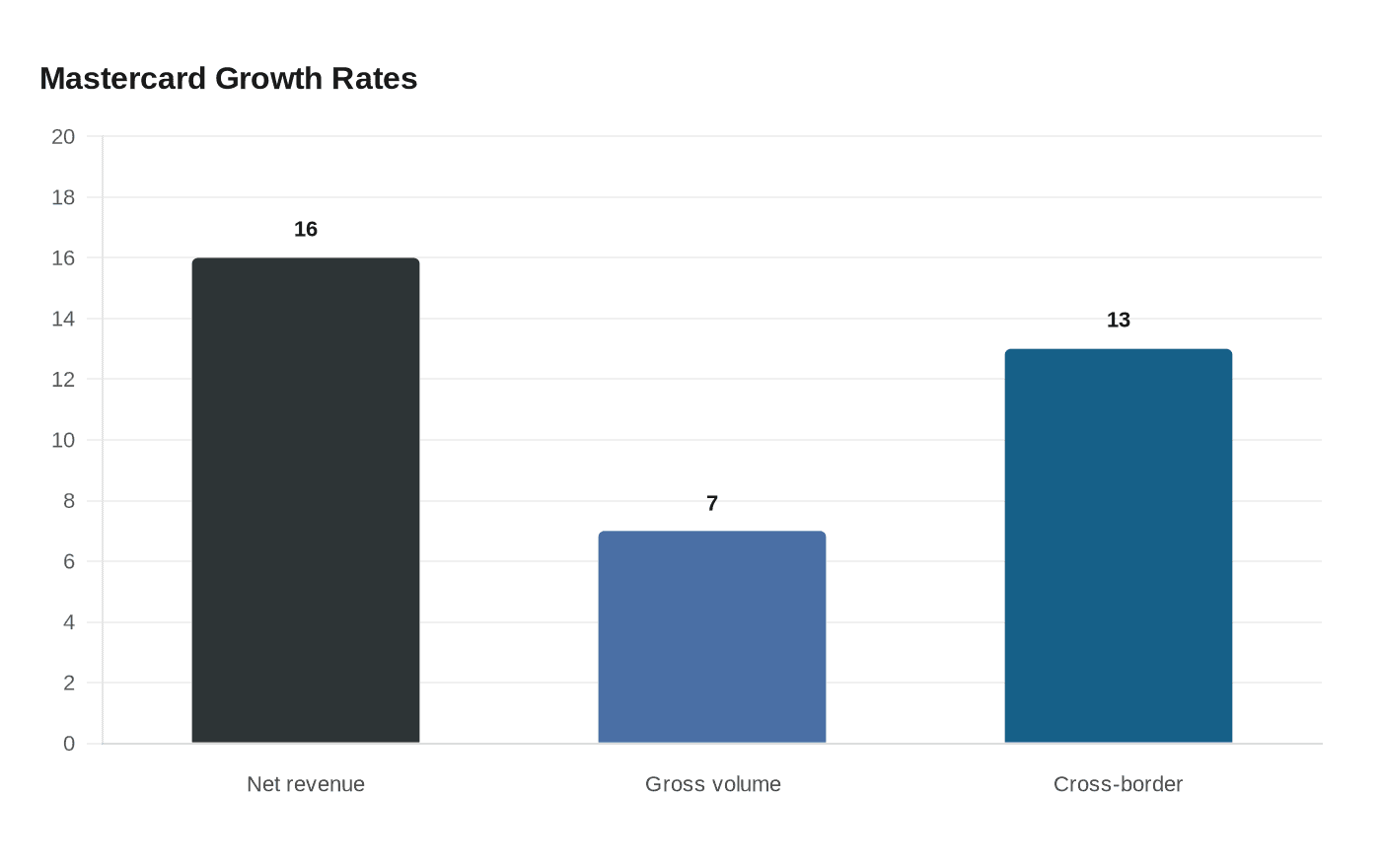
Mastercard’s first-quarter profit topped expectations as gross dollar volume rose 7% and cross-border spending climbed 13%, even as lower-income households pulled back.

Mastercard’s latest quarter offered a sharp read on the American consumer: spending did not break, but it looked increasingly uneven. The payments company said adjusted profit reached $4.60 a share, above Wall Street expectations, while net revenue rose 16% to $8.4 billion and gross dollar volume climbed 7%. For investors trying to judge whether households are still spending through higher prices, tariffs and broader uncertainty, Mastercard’s network remains one of the earliest gauges.
That matters because card processors see transaction flows before many retailers or banks do. Mastercard’s numbers suggested that everyday commerce held up in the period, even as consumer behavior diverged by income. Wealthier households continued to travel, dine out and buy discretionary items, while lower-income families kept trimming back non-essential purchases. The split has become a defining feature of the economy, with spending strength concentrated at the top and restraint more visible farther down the income ladder.

Cross-border volume, which tracks spending on cards used outside the country where they were issued, rose 13%. That increase came despite disruptions to airspace and major flight routes in the Middle East, underscoring that international travel and overseas commerce still moved forward even as geopolitical stress forced reroutes and cancellations. The result suggested that travel demand remained resilient enough to absorb some operational strain, at least for now.
Executives and market watchers are also keeping a close eye on gasoline prices and inflation expectations, two forces that can quickly squeeze discretionary budgets if energy costs stay elevated. For now, card spending has not shown the kind of broad crack that would signal a sudden pullback. Visa and American Express have also delivered strong results, reinforcing the view that payment networks are still benefiting from healthy transaction activity across travel, dining and other discretionary categories.
Mastercard’s report did more than clear a quarterly hurdle. It pointed to an economy in which nominal spending is still being supported by higher prices, premium consumers and steady travel demand, while pressure remains visible in lower-income households that are making sharper tradeoffs. That balance may keep transaction volumes firm in the near term, but it also leaves the consumer base more dependent on the upper end of the income spectrum than a simple earnings beat would suggest.
This article was produced by Prism’s automated news system from verified source data, official records, and press releases, then run through automated quality and moderation checks before publishing. The system is built and supervised by the people who set the standards it runs under. Read our full AI policy.
Did this article answer your question?