Big Tech Courts SK Hynix with Investments for AI Chip Supply
Big tech is offering to help fund SK hynix's production lines and ASML tools as AI memory shortages tighten and buyers race to lock in supply.
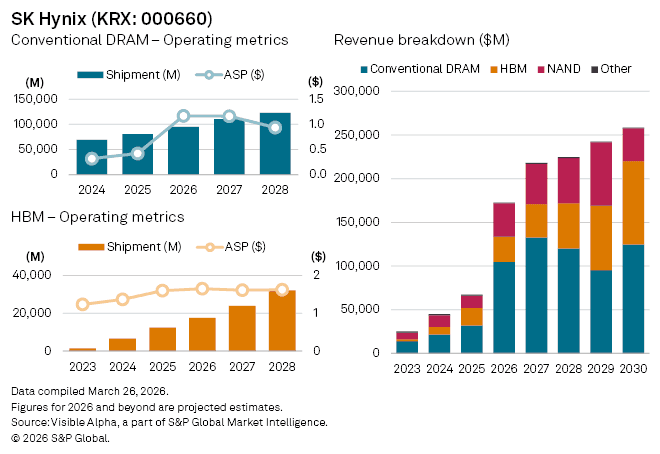
The scramble for AI memory has moved beyond purchase orders. Major technology companies are now offering to invest in new SK hynix production lines, and even help finance ASML extreme ultraviolet lithography tools that can cost hundreds of millions of dollars, as desperate buyers try to secure chip supply in a market where available capacity is essentially zero.
The offers show how much leverage has shifted toward suppliers like SK hynix. Buyers want steadier access to memory chips used in AI data centers, smartphones and PCs, while SK hynix is resisting arrangements that could lock capacity to particular customers or force it to trade lower prices for longer-term guarantees. The company has the cash to stay selective: its first-quarter 2026 cash and cash equivalents reached 54.3 trillion won, up 19.4 trillion won from the prior quarter.
Demand has stayed strong because of AI infrastructure buildout, especially for HBM, high-capacity server DRAM modules and eSSDs. SK hynix said in its 2026 market outlook that the global semiconductor market could approach $1 trillion this year, with memory growth expected to outpace the broader market and HBM3E and HBM4 demand set to drive an AI memory supercycle. The company also said it plans to expand capacity, underscoring why customers are trying to secure commitments now rather than wait for later production.
The pressure is not easing. In late April, Samsung Electronics and SK hynix warned that the memory shortage could last through 2027 as AI demand keeps climbing. Industry reporting in April also pointed to a shift away from one-year deals toward three- to five-year supply agreements, a sign that buyers are no longer treating memory procurement as a short-term exercise but as a strategic fight for access.
SK hynix’s own results help explain the urgency. The company reported record 2025 revenue of 97.1467 trillion won and operating profit of 47.2063 trillion won, reflecting the strength of the current cycle. Its stock has risen 154% this year to a record, powered by investor bets that AI demand will keep memory pricing and margins elevated.
For customers, the message is clear: supply is scarce enough that some are willing to help finance the factories themselves. For SK hynix, the challenge is preserving pricing power while deciding which long-term commitments, if any, are worth taking. The result is a semiconductor market where access to next-generation AI memory may depend as much on capital promises as on chip orders.
This article was produced by Prism’s automated news system from verified source data, official records, and press releases, then run through automated quality and moderation checks before publishing. The system is built and supervised by the people who set the standards it runs under. Read our full AI policy.
Did this article answer your question?