Big Tech earnings test whether massive AI bets are paying off
Markets await Microsoft, Meta and Apple results as investors seek proof that heavy AI spending is translating into revenue and margin gains.
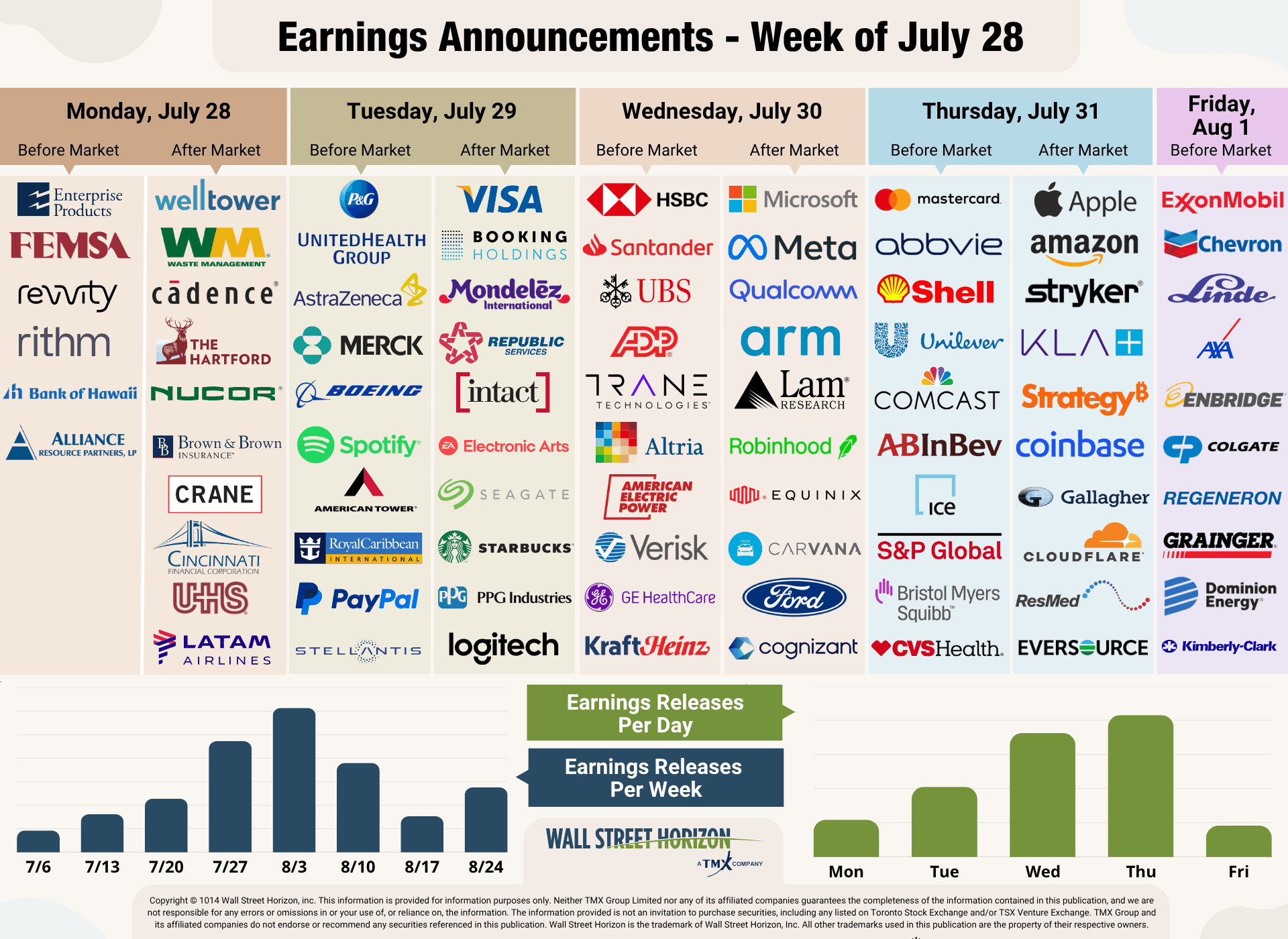
Investors are treating this earnings week as a referendum on whether last year’s colossal investments in artificial intelligence are beginning to show up on the bottom line. Microsoft, Meta and Tesla are reporting results as the Federal Reserve meets, with Apple due to report Thursday and Alphabet and Amazon slated for the following week. The timing gives markets an unusually direct read on AI-driven revenue growth, capital spending plans and near-term profit pressure.
Consensus estimates place cloud growth at the center of scrutiny. Azure is expected to show roughly 38.8 percent growth for the Oct.–Dec. quarter, Google Cloud around 35 percent and Amazon Web Services about 21.1 percent. Those rates would represent continued strong expansion but also signs of deceleration from earlier quarters for some platforms, intensifying focus on guidance and whether scale advantages are beginning to convert into healthier margins.
Microsoft faces particular pressure to show cost discipline as it expands data-center capacity to meet generative AI demand. The company has introduced a new in-house AI processor, the Maia 200, which company briefings describe as delivering about 30 percent higher performance for the price and as being tightly integrated with a software stack called Triton. Investors will watch capital expenditure plans and comments from management on the pace of chip and data-center builds to judge whether Microsoft can reconcile rising capex with margin improvement.
Meta’s heavy hiring and infrastructure spending in 2025 make its report one of the most closely watched. Company statements disclose plans to build “tens of gigawatts” of AI power in the coming decade and eventually to scale to “hundreds,” a roadmap that underscores how energy and real-estate demands factor into profitability. Reports also list large cloud arrangements that would support that buildout, including deals tied to Google’s cloud and Oracle that industry sources value in the tens of billions of dollars. Investors will gauge whether advertising and nascent AI services are offsetting the near-term profit drag from those investments.
Alphabet enters the week with momentum after a strong market run in recent months and a growing ecosystem advantage. Google Cloud growth is expected to accelerate modestly, and analysts point to Google’s proprietary stack and strategic ties across devices and search as durable competitive strengths. The company’s work powering third-party voice assistants and integrating large language models into consumer products will be assessed for both revenue implications and the potential to widen ecosystem lock-in.

Amazon and AWS are on deck next week, with AWS growth forecast near 21 percent for the quarter, a figure that speaks to ongoing enterprise demand even as customers diversify compute sources. Apple’s upcoming report and its confirmed work with third-party models for Siri will be watched for clues about how device-level AI translates into services revenue.
The broader picture is one of a circular, interdependent AI economy: companies race to build chips, data centers and models while also buying capacity and software from rivals and partners. That complexity has heightened investor anxiety about an “AI bubble” as spending, estimated to have reached hundreds of billions in 2025 and on track to top $500 billion in 2026, shows few signs of abating. David Wagner, head of equities at Aptus Capital Advisors, captures a common view: “Alphabet has the upper hand in the AI race.”
Markets will parse not only headline growth rates but guidance, capex pacing and commentary on margins. With the Fed expected to hold policy at roughly 3.5–3.75 percent, investors will weigh macro stability against the industry’s long, expensive bet on generative AI and decide whether the investment cycle is finally turning into sustainable returns.
This article was produced by Prism’s automated news system from verified source data, official records, and press releases, then run through automated quality and moderation checks before publishing. The system is built and supervised by the people who set the standards it runs under. Read our full AI policy.
Did this article answer your question?