Bighorn Sheep Wake to Sunrise in Washington’s Asotin Creek Wildlife Area
Sunrise over Asotin Creek showed one of Washington’s last bighorn strongholds, where small herds still face disease risk, poaching and fragmented habitat.
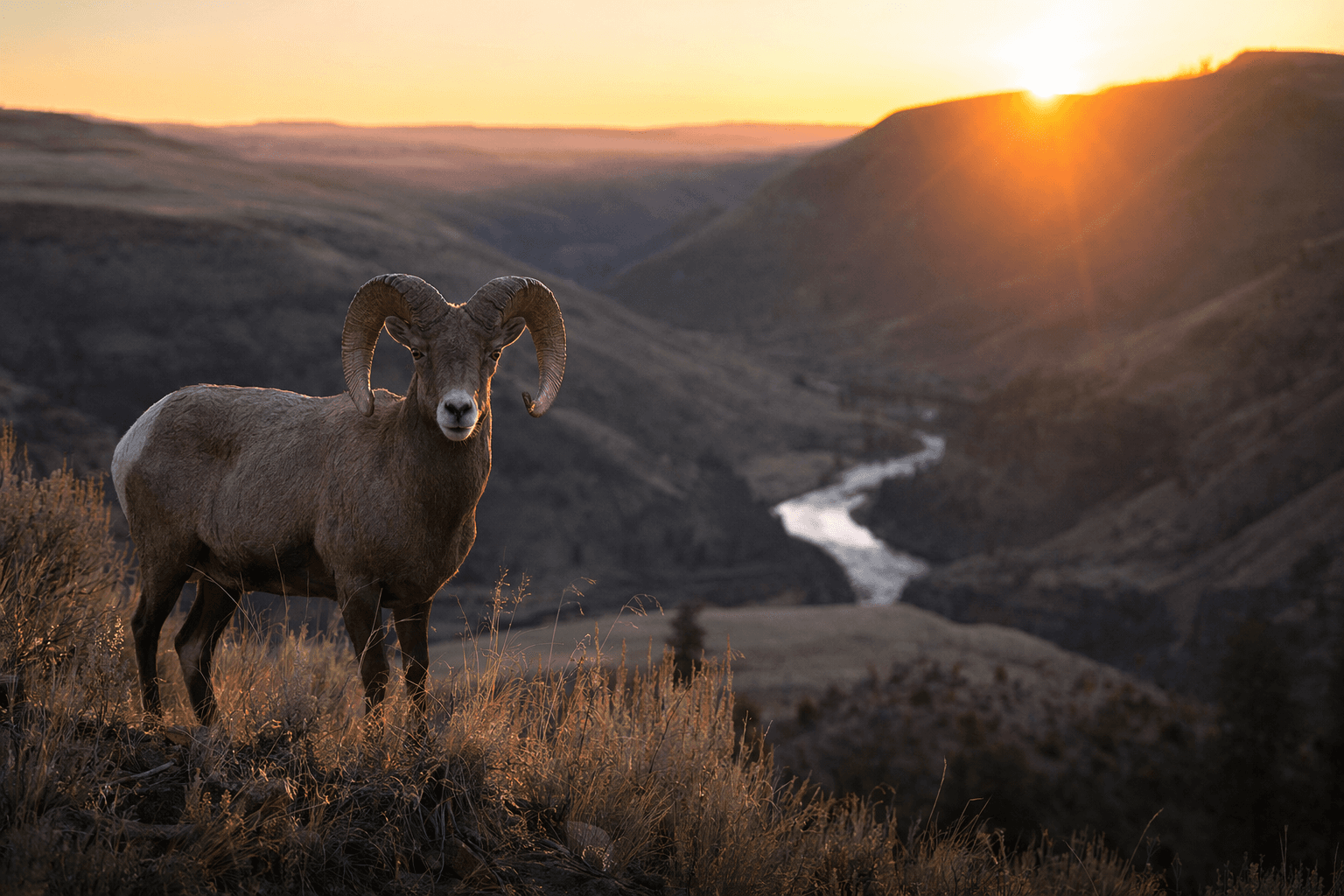
Bighorn sheep greeted dawn at the Asotin Creek Wildlife Area near Asotin, a quiet start in one of southeast Washington’s most important refuges for the state’s wild sheep. The scene underscored how fragile the population remains: Washington’s bighorns do not move as one continuous herd, but as scattered, isolated groups in places such as Asotin Creek, Joseph Creek, the Wenaha-Tucannon Wilderness, Cottonwood Creek and the Wooten Wildlife Area.
That patchwork range is central to the species’ outlook. Wildlife managers and conservation groups have long treated those separate bands of sheep as a sign of both opportunity and risk. Small, discrete herds can persist in rugged country, but they are also more vulnerable to disease, habitat disruption and local losses. The biggest biological concern remains contact with domestic sheep, which can spread illnesses that are difficult to recover from once they enter a wild herd.
Washington Department of Fish and Wildlife has responded by continuing helicopter surveys in southeast Washington to track population health and size. In late 2024, the agency said its flights would focus on the Joseph Creek and Grande Ronde River areas, including the Black Butte and Mountain View sub-herds. Those surveys give biologists a clearer picture of whether the sheep are holding steady, growing or slipping in the country they still occupy.
The threats are not only biological. In 2025, Washington and Idaho officials asked the public for help after two illegal bighorn sheep killings, including one outside Asotin. Non-governmental organizations offered rewards ranging from $30,000 to $45,000 for information leading to convictions, a measure of how seriously the states treat poaching in a species already constrained by habitat and disease pressures.
Even so, the sheep continue to carry outsized symbolic weight in Washington. Asotin County produced a state record ram in 2021, when Gary Guerrieri took a 202 4/8 Boone and Crockett bighorn, according to the Wild Sheep Foundation. That trophy highlights the appeal of the same landscapes where managers are trying to preserve healthy herds, protect habitat and avoid the conflicts that come with human use of the West. In Asotin County, the future of bighorn sheep will depend on whether that balance can hold.
This article was produced by Prism’s automated news system from verified source data, official records, and press releases, then run through automated quality and moderation checks before publishing. The system is built and supervised by the people who set the standards it runs under. Read our full AI policy.
Did this article answer your question?

