Biosynthetic Polymers and Circular Business Models Reshape Textile Industry
Kalman, Alpár and Tóth published an unedited open-access review on March 7, 2026 that maps progress on bio-based polymers and flags region-specific scaling as the next phase for textiles.
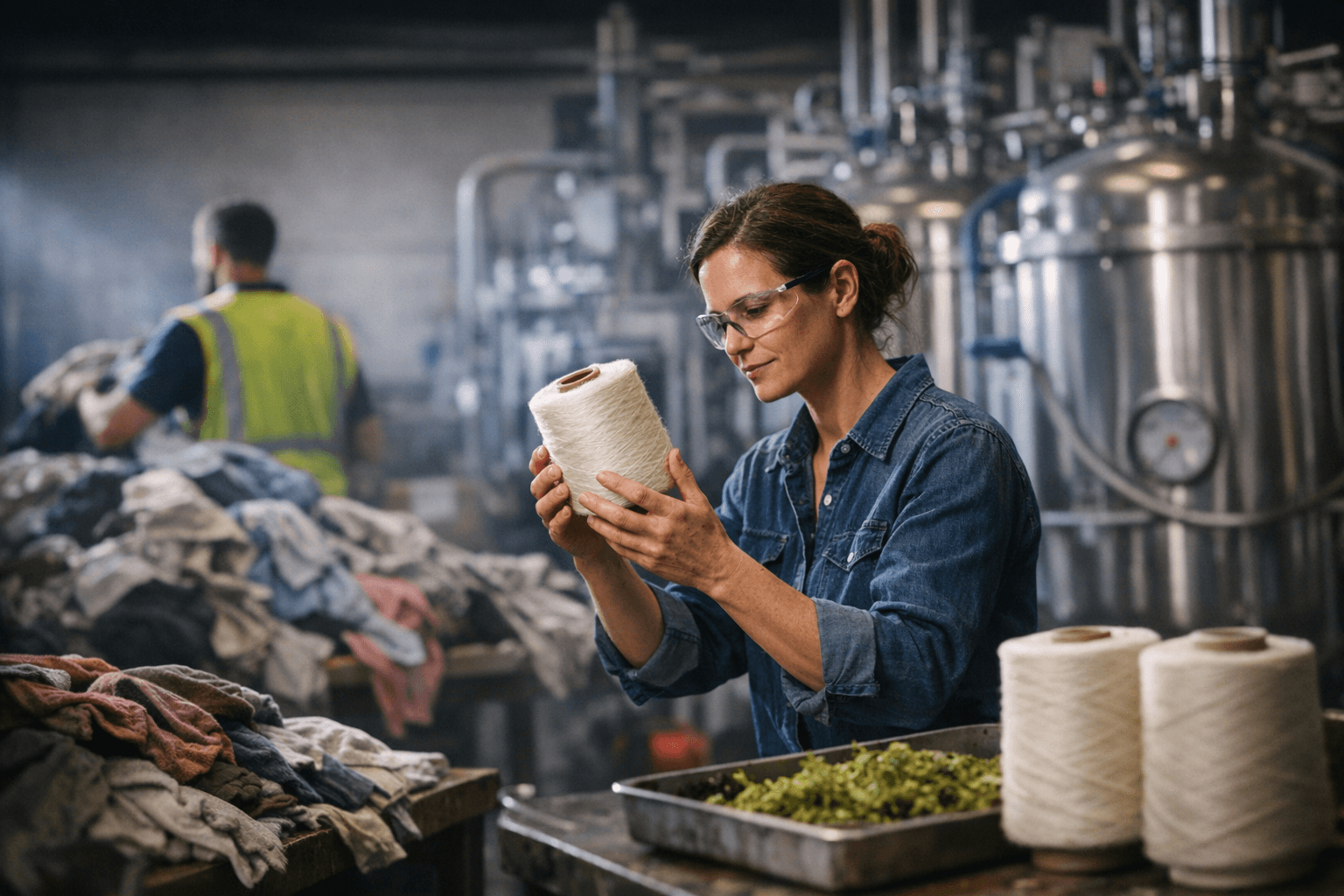
Kalman, K.; Alpár, T.; and Tóth, A. published a full open-access review in Discov Sustain that was received 15 October 2025, accepted 16 February 2026 and published 07 March 2026, with the stated aim to "map current progress and limits for biosynthetic (bio‑based) polymers as alternatives to fossil‑based polyesters in textiles" and to evaluate how those material shifts interact with circular business models. Springer makes clear the copy available is an unedited early version: "We are providing an unedited version of this manuscript to give early access to its findings. Before final publication, the manuscript will undergo further editing. Please note there may be errors present which affect the content, and all legal disclaimers apply."
The review’s multi-level approach combines polymer material analysis, ecodesign, recycling systems, business management and market behavior, using cross literature review, descriptive review and modelling methods for efficiency analysis. The paper poses a direct research question on whether biosynthetic polymers can fully replace fossil-based polymers in textile applications. Its chief, explicit finding is concise: "material development pacing local needs is expected to increase in the near future considering the regional economy and environmental conditions."
That finding sits beside broader technical context drawn into the manuscript. A Nature review excerpt included in the article frames bioplastics as plastics manufactured from bio-based polymers that can contribute to more sustainable commercial plastic life cycles within a circular economy, where virgin polymers come from renewable or recycled raw materials, carbon-neutral energy is used for production and products are reused or recycled at end of life. The Nature text also notes that some bio-based plastics can have a lower carbon footprint, advantageous material properties and compatibility with existing recycling streams, and that biodegradation is an end-of-life scenario only in controlled or predictable environments.
Technical progress gets detailed further through an ACS-style summary quoted in the review: processing technologies have advanced to refine biomass feedstocks into bio-based monomers and to produce more versatile chemical structures for polymers with tailored properties. The review explicitly names three bio-analog polymers under development for engineering and textile applications: Bio-polyethylene (Bio-PE), bio-polypropylene (Bio-PP) and Bio-poly(ethylene terephthalate) (Bio-PET). It also flags that reprocessing-induced degradation mechanisms for polyethylene, polypropylene, polystyrene and poly(vinyl chloride) are topics of study, alongside strategies to improve recycling, polymer blending in mixed waste streams and applications of lower quality recyclate.
Practical limits remain: the manuscript does not supply a DOI in the copy provided, a shareable link is not available and Springer advises readers to "Check for updates. Verify currency and authenticity via CrossMark." For designers and brands that track material transitions, the paper’s concrete takeaway is operational: expect an acceleration of region-specific material development and pilot deployments of Bio-PE, Bio-PP and Bio-PET as supply chains and policy environments diverge, with final outcomes contingent on the edited, final version of the review.
Know something we missed? Have a correction or additional information?
Submit a Tip