Fast or Fair Fashion cues alter perceived sustainability, boost consumption intent
Klaka and Schlittmeier found material, price and design cues in online vignettes shifted perceived sustainability and purchase intent; Experiment 1 used n1 = 116 and n2 = 114.
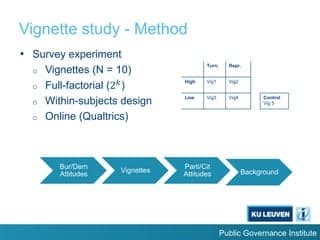
Kristien Klaka and Sabine Janina Schlittmeier test a simple, consequential idea: what you label a garment and how you present it—material, price and design—can change whether shoppers call it sustainable and whether they intend to buy it. Their peer-reviewed Frontiers in Sustainability article, accepted 04 March 2026 with DOI 10.3389/frsus.2026.1736995, reports two online experimental vignette studies that manipulated material (polyester, recycled polyester, cotton, organic cotton), price (low, high) and design (trendy, timeless) in an online shop scenario to measure perceived sustainability and purchase intention. Experiment 1, reported in the journal fragment, used sample sizes n1 = 116 for perceived sustainability and n2 = 114 for purchase intention, and the excerpt includes the line, "Garments made of cotton were perceived as more sustainable and more likely [...]".
The methods are deliberately straightforward: two online vignette experiments where participants saw product pages varying the four material levels, two price points and two design framings. The Frontiers snippet notes the authors’ affiliations at Technische Universitat Braunschweig and RWTH Aachen University, that the article was received 09 January 2026 and accepted 04 March 2026, and that the final formatted version will be published soon under a CC BY license. The article page shows 55 Views and that it was reviewed by two anonymous reviewers.
Klaka and Schlittmeier’s experimental approach sits on a broader theoretical scaffold. A summary in F1000research frames the psychological mechanism through the Stimulus-Organism-Response model and the Theory of Planned Behavior, and proposes hypotheses H1 and H13: that perceived scarcity of products positively influences attitudes toward fast fashion brands and that perceived behavioral control positively influences those attitudes. The same literature summary reports cross-study correlations between perceived scarcity and favorable brand attitudes, with r values ranging from 0.232 to 0.49 across studies in Taiwan, the U.S., China, Turkey and Indonesia, and cites stronger correlations for brand congruity in examples such as Fu et al. (2017) at r = 0.81 and Setyaningsih & Asnawi (2022) at r = 0.532.
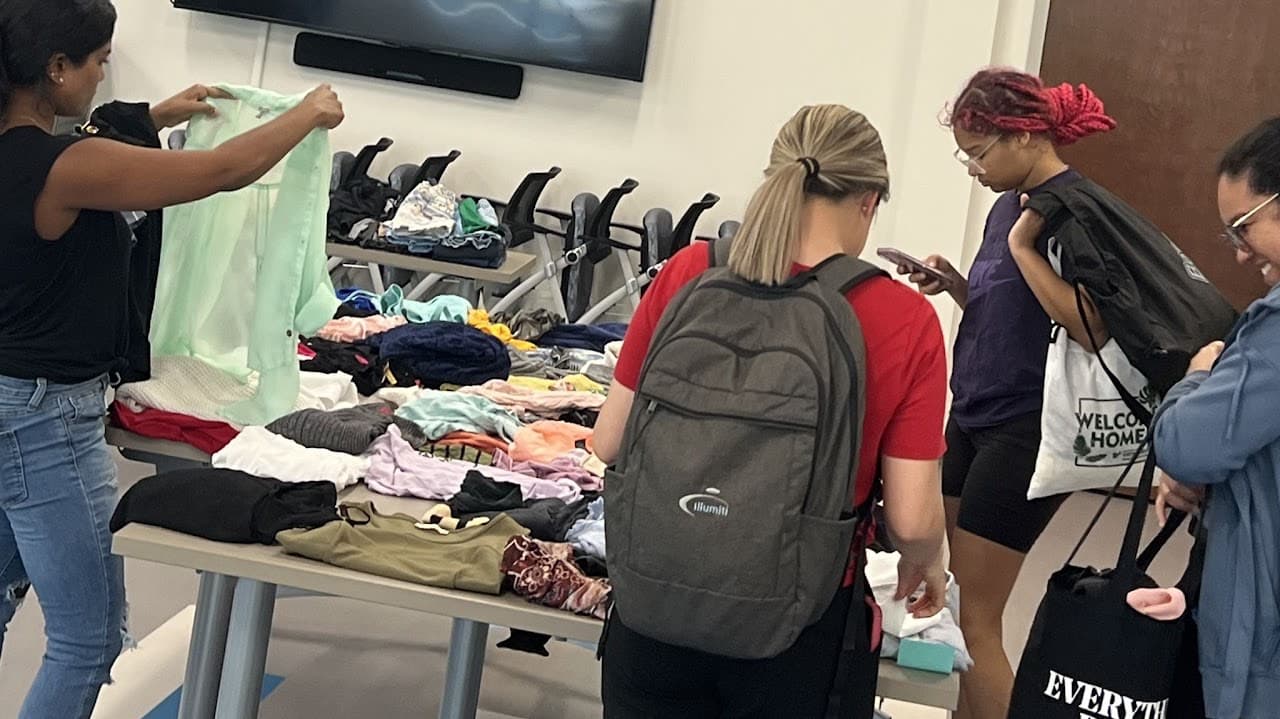
The cultural mechanics behind those correlations are evident in popular coverage. EarthDay’s reporting highlights social-media "haulers" on Instagram, TikTok and YouTube who showcase low-cost fast fashion; Tricia Palanqui began posting at age 15 and switched to fast fashion hauls because they garnered the most views. Emma Edwards of The Broke Generation crystallizes the psychology: "We all know that fast fashion’s low prices are intentional. It’s all about volume, after all. But psychologically, low prices mean we place less value or expectation on the item. So, if it’s poorly made or wears quickly, we’re not so fussed because it was so cheap. Likewise, if something extremely similar gets released in 2 weeks, we’re more likely to buy it even though we already bought something just like it, because hey, it’s only $25. Why not?!"
The evidence package is persuasive in outline but incomplete in detail. The Frontiers fragment leaves key statistical results and Experiment 2 sample sizes unreported, and the literature summary presents different numeric ranges across constructs that require reconciliation with original studies. The most important next step is publication of Klaka and Schlittmeier’s final formatted article to reveal effect sizes and whether cotton, recycled polyester or organic cotton cue sustainability to the same degree.
If the final article confirms the sketch here, the practical implication is clear: material labels and retail cues do more than describe clothes, they reframe value and can boost consumption intent. For designers, merchandisers and conscientious shoppers, that means the language around fabric and price is itself a sustainability lever worth watching.
Know something we missed? Have a correction or additional information?
Submit a Tip