Politecnico di Milano Researchers Propose Ecodesign Material Selection Tool for Circular Fashion
Politecnico di Milano researchers Papile and Del Curto published a March 3, 2026 paper with an Adobe XD mock-up to help designers embed life‑cycle thinking into material choices and navigate EU ESPR/EPR rules.
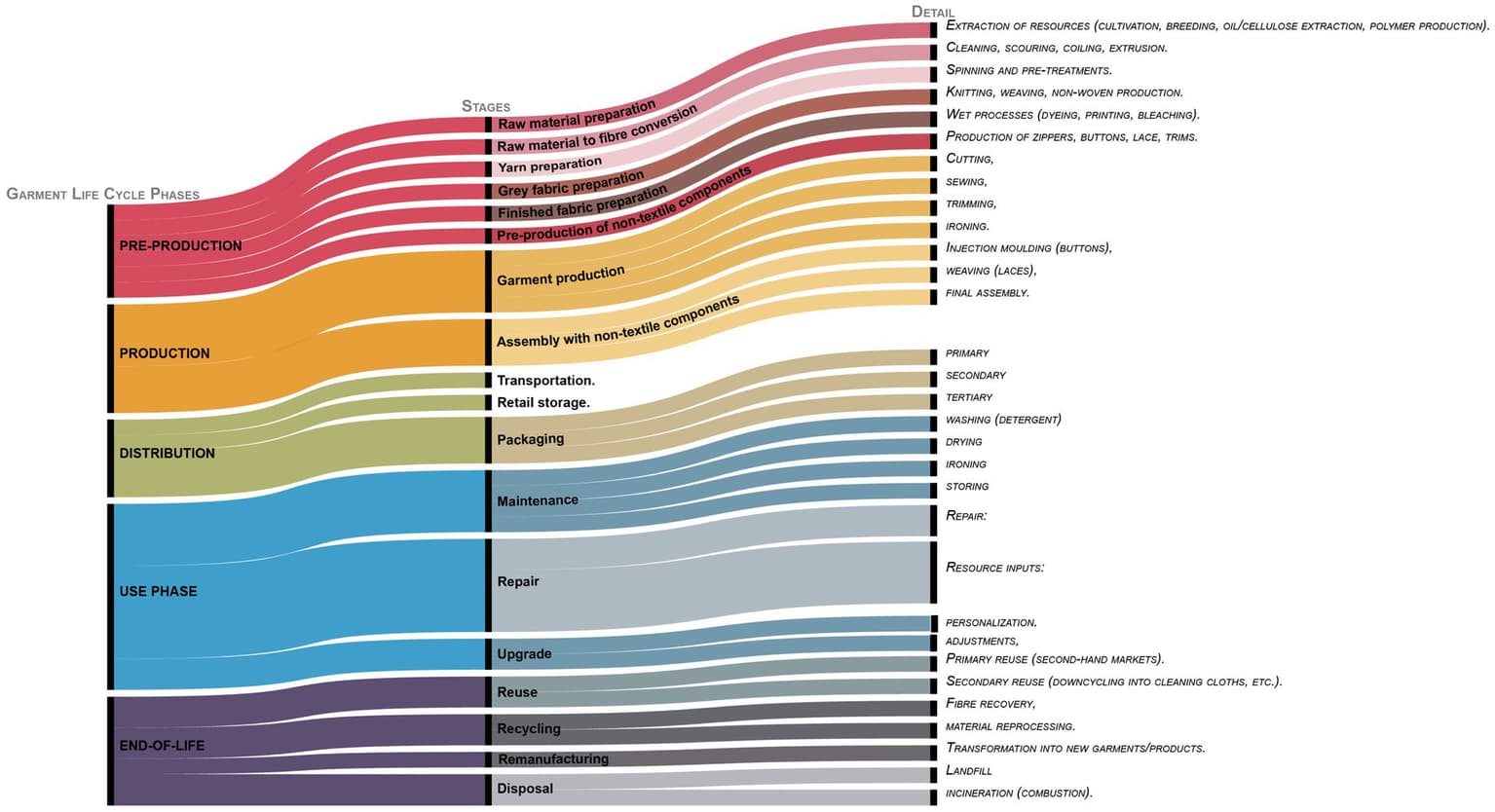
Politecnico di Milano researchers Flavia Papile and B. Del Curto published an open‑access original research paper in Frontiers in Sustainability on 03 March 2026 that presents a structured methodology and a mock‑up digital tool to embed ecodesign, or life‑cycle thinking, into material selection for fashion designers, DOI 10.3389/frsus.2026.1773542. Correspondence is listed to Flavia Papile at flavia.papile@polimi.it; the manuscript was received 22 December 2025, revised 25 January 2026, accepted 06 February 2026, and edited by Giovanni Maria Conti of the Polytechnic University of Milan.
The authors set out to “bridge textile material information (technical and sensory) with ecodesign criteria for fashion designers,” grounding their proposal in a state‑of‑the‑art analysis of existing material selection tools and databases that evaluated data accessibility, usability, and the integration of circular metrics. The paper synthesised that review into a design rationale and then “integrated the synthesised information into the design of a mock‑up tool,” positioning the work as a replicable framework that can “bridge the gap between scientific data and creative design practice.”
Technically, the mock‑up was built in Adobe XD, described in the paper as “a vector design software developed by Adobe for creating interactive prototypes, wireframes, and user interfaces (UI/UX), which can be particularly useful for digital mock‑ups in the context of ecodesign and textile material selection.” The tool, the authors write, “aligns with the established material selection process, employs terminology familiar to the fashion industry, and implicitly supports the management of diverse fibre and textile information during the design phase.” Its stated purpose is clear: to “assist fashion designers in making informed material choices that can enhance durability and support circular product design strategies.”

A practical throughline of the study is regulatory and economic pressure: the paper and associated Tecnotex It guidance map EU regulation and stress the interplay of ESPR and EPR. Tecnotex It frames EPR as directly translating design choices into cost for manufacturers, noting, “The more ‘eco‑friendly’ a garment is, the less the manufacturer pays in terms of mandatory contributions; The more difficult a product is to recycle, composed of mixed or untraceable materials, the higher the cost will be.” The methodology explicitly seeks to help companies optimise EPR costs through eco-modulation mechanisms already active in member states such as France and to integrate Ecodesign Strategies developed within the European project RegioGreenTex.
The paper’s discussion “highlights the opportunities and challenges associated with the proposed approach,” and cites design scholarship including Vezzoli et al. 2022 and Woodward 2007. What the published excerpts do not provide are validation metrics: no user testing results, screenshots, or adoption figures for the mock‑up are reported in the supplied text, leaving industry pilots as the logical next step. If designers and brands want to translate aesthetics into traceability and reduced lifecycle fees, Papile and Del Curto’s framework offers a dated, peer‑reviewed entry point that ties material sensibility to regulatory reality and economic incentive.
Know something we missed? Have a correction or additional information?
Submit a Tip