Biotech dealmaking surges as drugmakers race before patent cliffs
Big Pharma’s rush is being driven by a patent cliff, with biotech M&A hitting $84 billion in the first quarter and setting up a possible $250 billion year.

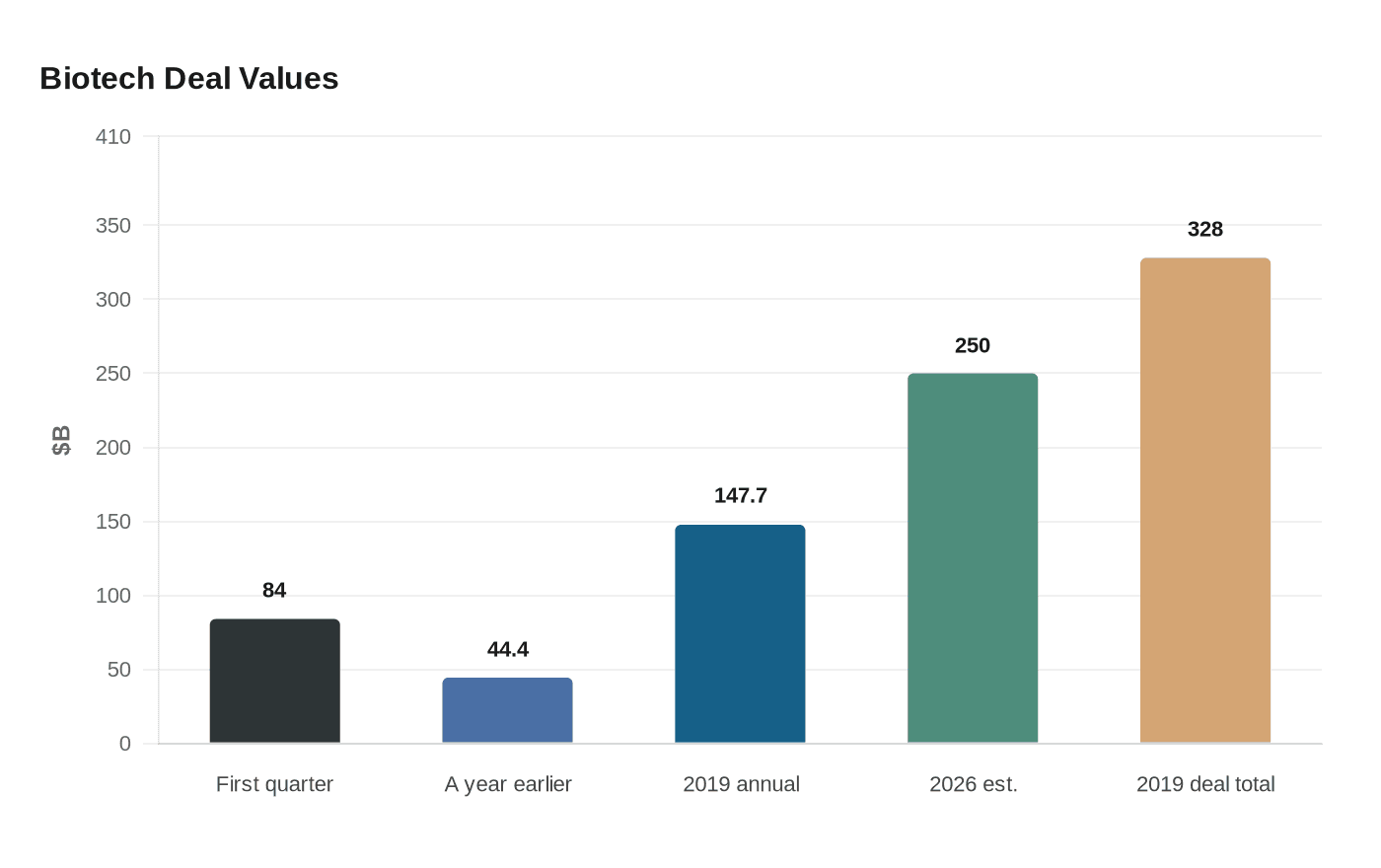
Biotech dealmaking is surging because drugmakers are not just shopping for growth, they are trying to outrun a patent cliff. Large pharmaceutical companies are moving to buy pipelines before blockbuster medicines lose exclusivity, and the first quarter’s $84 billion in biotech M&A showed how urgent that race has become. That was up from $44.4 billion a year earlier and marked the strongest start to a year since 2019, when quarterly deal activity helped lift annual biotech M&A to $147.7 billion.
The scale of the pressure is why analysts see this as more than a temporary rebound. At least three analysts, four investors and one banker told Reuters the pickup looks broader and more durable than a simple return to pre-pandemic dealmaking. If the pace holds, 2026 biopharma M&A could exceed $250 billion, a level that would put the year second only to 2019, when mega-deals such as Bristol Myers Squibb’s purchase of Celgene pushed total deal value to $328 billion.

The underlying problem is easy to quantify. Merck’s Keytruda, which generates more than half of the company’s revenue, is set to lose exclusivity in 2028, and industry estimates put more than $300 billion in revenue at risk over the next five years as other major drugs approach their own expiries. That is forcing cash-rich drugmakers to buy innovation externally instead of waiting for internal research to fill the gap.
The M&A wave is also being helped by better market conditions. Deep cash reserves, attractive biotech valuations, a wave of newly approved drugs and growing confidence in navigating regulatory scrutiny are all feeding the same trade. For biotech firms, that means richer exit values and a faster path to commercialization. For buyers, it is a chance to replace revenues that will otherwise vanish as patents roll off later in the decade.
The policy risk is that a frantic buying spree could strengthen the biggest players even as it speeds drug development. Antitrust regulators and political leaders are likely to scrutinize any deal rush that raises market concentration or keeps drug prices elevated. The patent cliff is doing more than reshaping balance sheets; it is pushing the industry toward a new round of consolidation that could redefine competition in medicine.
This article was produced by Prism’s automated news system from verified source data, official records, and press releases, then run through automated quality and moderation checks before publishing. The system is built and supervised by the people who set the standards it runs under. Read our full AI policy.
Did this article answer your question?

