BJP gains in West Bengal shadowed by massive voter roll purge
West Bengal’s election opened with more than nine million names erased from the rolls, intensifying fears that an audit became a tool of exclusion.
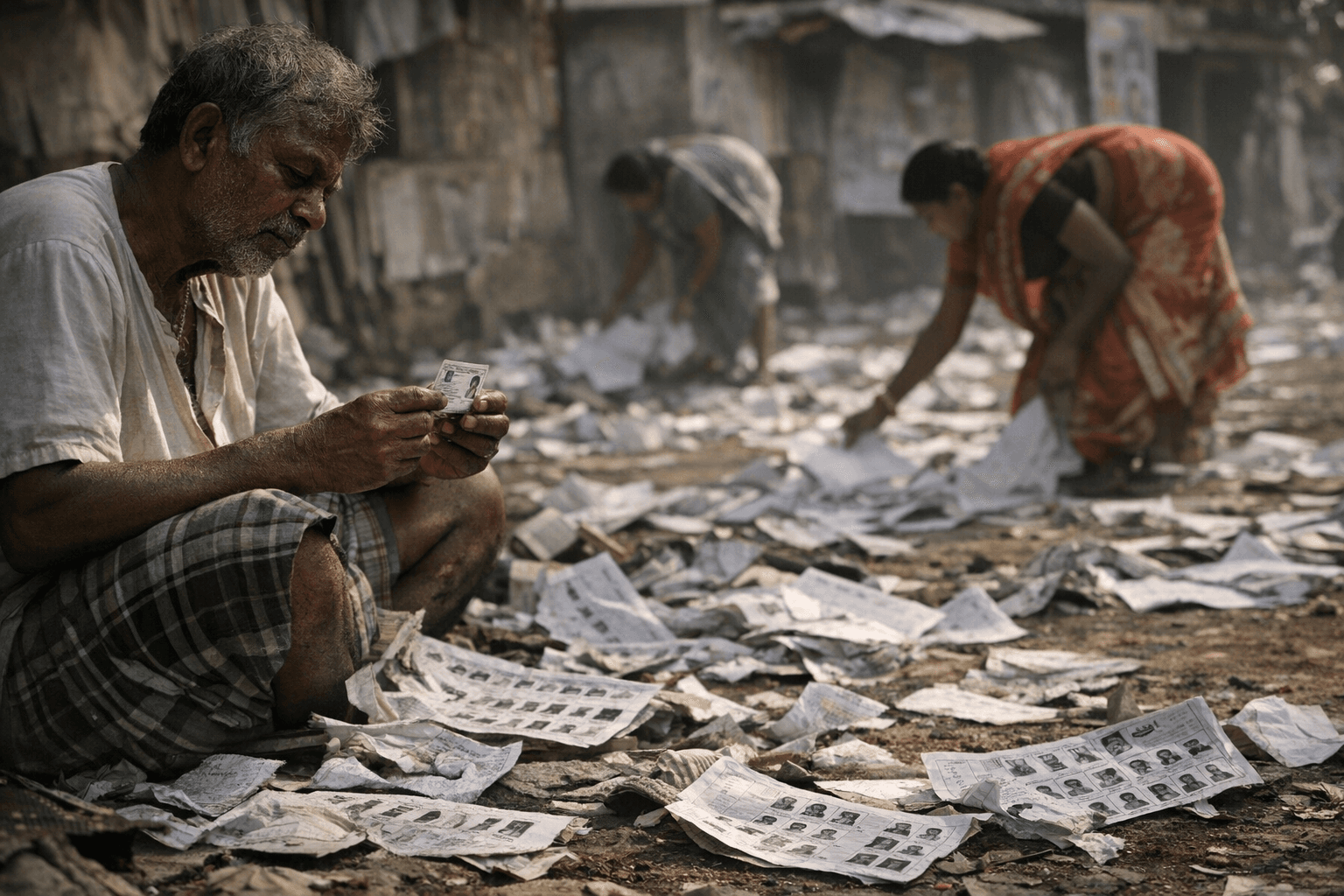
West Bengal entered polling under a cloud that may outlast the campaign itself: a Special Intensive Revision of the voter rolls removed more than nine million names, cutting the electorate by roughly 12 percent and leaving the state’s democracy fighting over who gets counted at all.
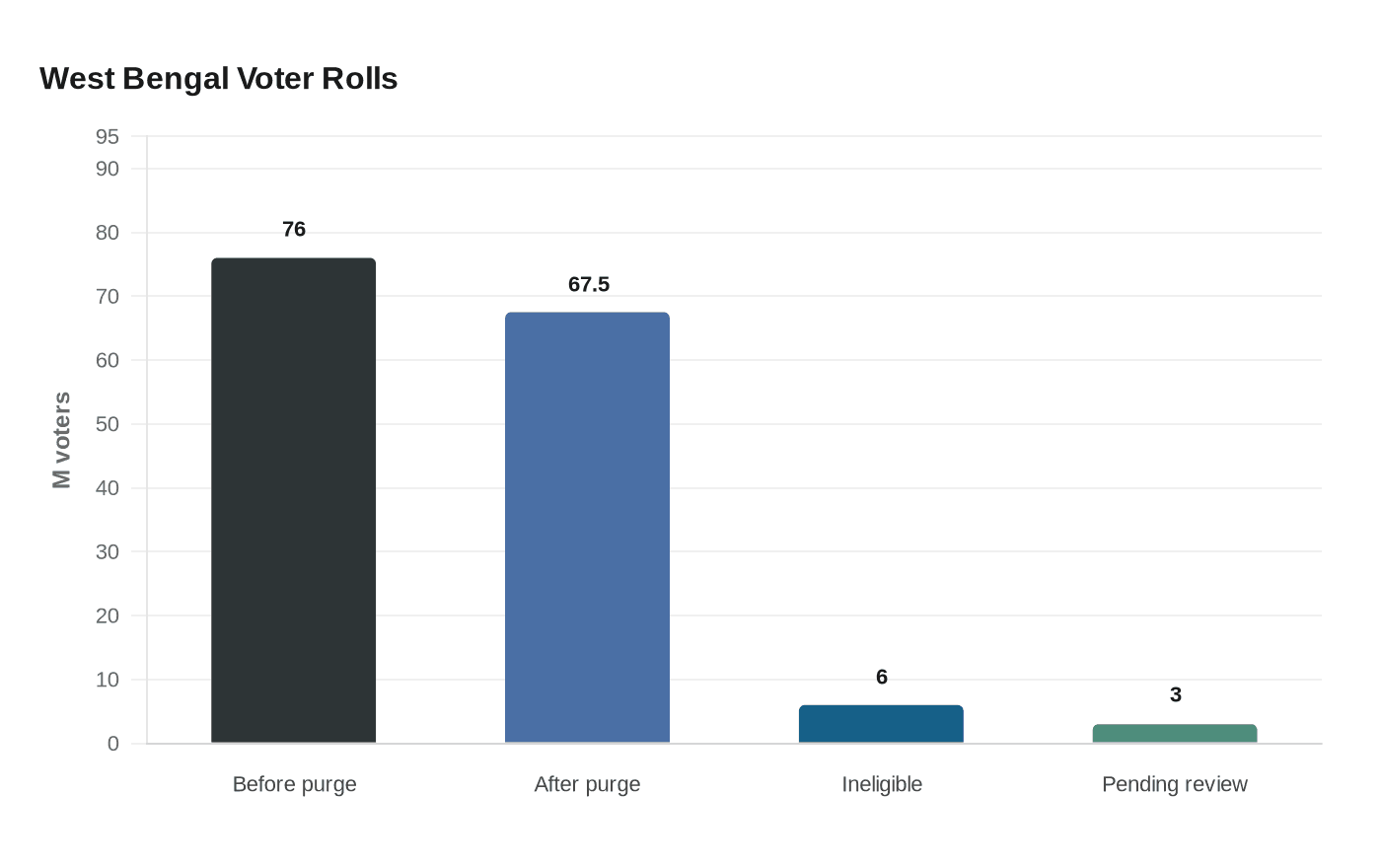
The revised rolls shrank from about 76 million voters to 67.5 million. Officials marked about six million people absentee, dead or otherwise ineligible, while roughly three million more were left in limbo pending tribunal review. In a state where voting is split across two phases on April 23 and April 29, with results due on May 4, the purge has become as politically consequential as any manifesto promise.
That matters because West Bengal is no longer a peripheral target for the Bharatiya Janata Party. It is India’s largest eastern state, long controlled by Mamata Banerjee’s Trinamool Congress, yet now a serious battleground for Narendra Modi’s party. In the 2024 Lok Sabha election, the BJP won 12 of West Bengal’s 42 parliamentary seats, while the Trinamool Congress took 29, a result that confirmed the BJP’s climb from near-irrelevance in the state a decade ago.
The controversy has sharpened because the deletions landed unevenly in political and social terms. Muslims make up about 27 percent of West Bengal’s population, and reporting has pointed to concerns that they were affected in disproportionate numbers relative to their share of the electorate. Banerjee has accused the BJP of deleting names to seize power and said her party would go to court to restore those voters. The dispute has turned a bureaucratic exercise into a test of whether administrative audits can be used as an electoral weapon.
The Supreme Court added another layer of uncertainty by allowing some deleted voters whose appeals had been accepted by tribunals to vote, so long as those decisions were issued before phase-specific deadlines. That intervention offered limited relief, but it did not erase the deeper question now hanging over West Bengal: whether the machinery meant to protect the integrity of the rolls has become a gatekeeper for disenfranchisement.
The BJP has responded by recasting its Bengal pitch. Instead of the more openly Modi-driven attack line that defined its 2021 effort, the party has leaned into local cultural appeals, including references to Maa Kali, while reorganizing its state unit under Samik Bhattacharya ahead of the 2026 contest. Internal analysis of the 2024 results pointed to gains across 143 assembly segments, helping explain why the party sees West Bengal as winnable now. The battle for the state is no longer just about power. It is about who decides the terms of democratic participation itself.
This article was produced by Prism’s automated news system from verified source data, official records, and press releases, then run through automated quality and moderation checks before publishing. The system is built and supervised by the people who set the standards it runs under. Read our full AI policy.
Did this article answer your question?

