BlackRock CEO Larry Fink Says $150 Oil Could Spark Global Recession
Larry Fink warned oil at $150 a barrel would trigger a "stark and steep" global recession, with Brent crude already above $100 amid the Strait of Hormuz crisis.
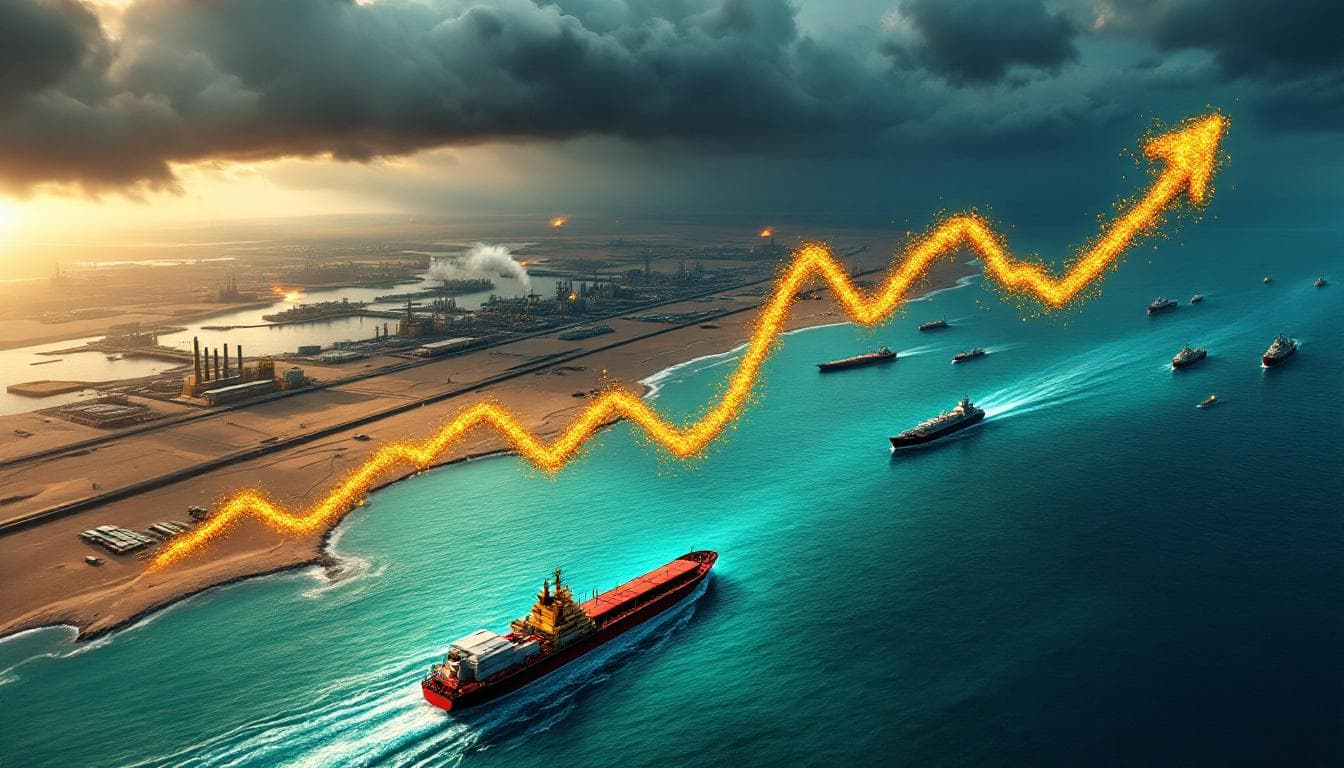
BlackRock CEO Larry Fink said oil prices could reach $150 a barrel and cause a "global recession" if Iran "remains a threat" even after the war ends. The warning, delivered on BBC's Big Boss Interview podcast Wednesday, landed against a backdrop of crude already in triple digits: Brent crude surpassed $100 per barrel on March 8 for the first time in four years, rising to $126 per barrel at its peak since the U.S.-Israeli military campaign against Iran began.
"If there is a cessation of war, and yet Iran remains a threat, a threat to trade, a threat to the Strait of Hormuz, a threat to this peaceful coexistence of the GCC region, then I would argue that we could have years of above $100 closer to $150 oil which has profound implications in the economy," Fink said. Asked directly what happens if oil stays at $150, his answer was brief: "We will have global recession."
For Fink, it is too early to determine the ultimate scale and outcome of the conflict, but he believes it will be one of two extreme scenarios. In the optimistic case, global powers accept Iran, and its goods and services, most importantly its oil, are released onto the world market, pushing prices down. In the other, the Iranian regime continues to stand at odds with global adversaries, and oil prices stay significantly elevated not for mere months, but for years. Fink put the stakes plainly: "The $40 oil implication is one of abundance and growth, the other one is an outcome of probably stark and steep recession."
BlackRock is a financial colossus, controlling assets worth $14 trillion, and is one of the biggest investors in many of the world's largest companies. Its size and spread give Fink, one of the firm's eight co-founders, a unique insight into the health of the global economy.
The closure of the strait has been described as the largest disruption to the energy supply since the 1970s energy crisis, as well as the largest in the history of the global oil market. Its two unidirectional sea lanes facilitate the transit of around 20 million barrels of oil per day, representing roughly 20% of global seaborne oil trade. Prices sank about 4% on Wednesday after reports the U.S. had sent Iran a 15-point proposal aimed at ending the war, raising prospects of a ceasefire, though Fink cautioned those hoping for a moderate middle path that no such outcome exists.
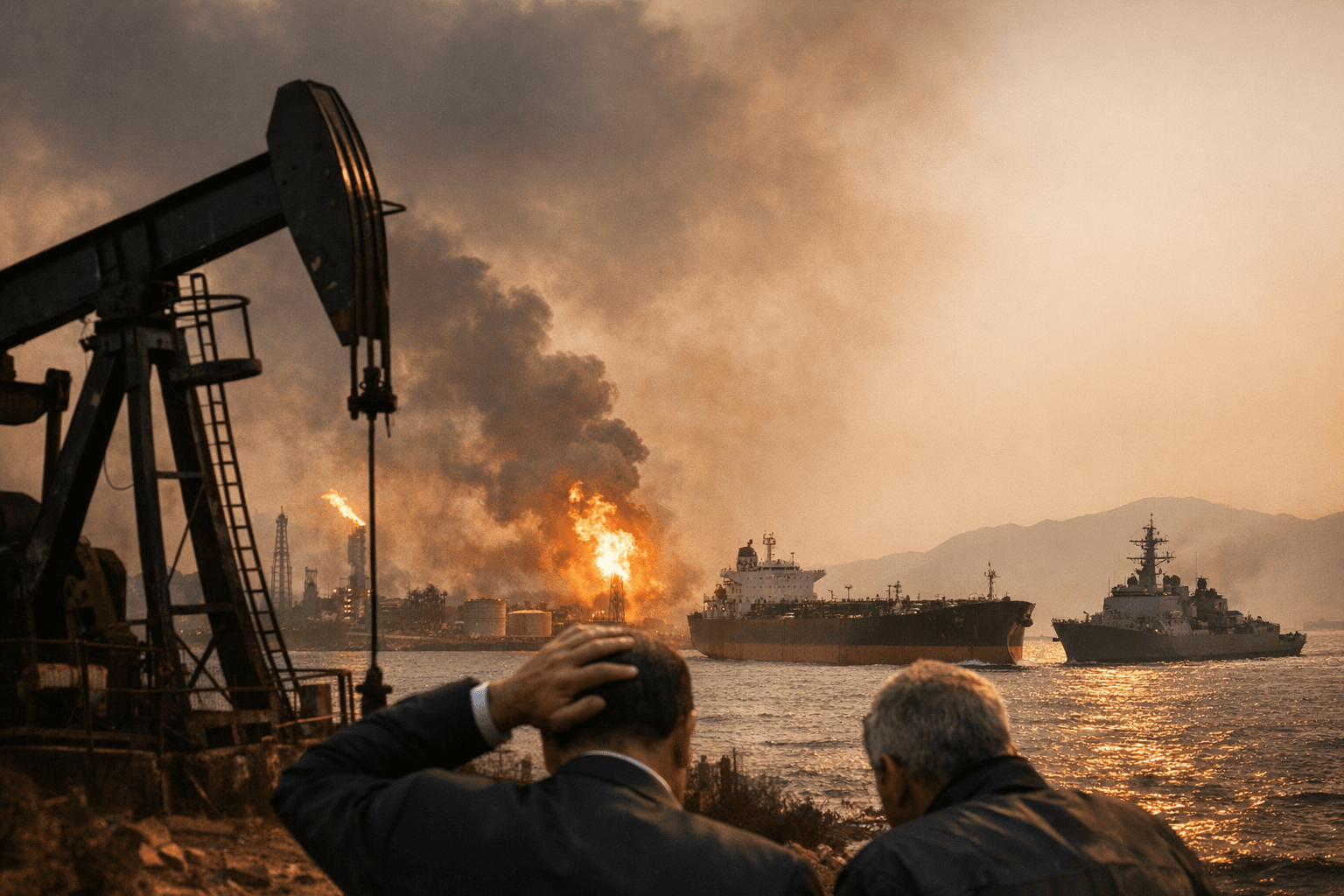
Fink said countries need to be pragmatic about their energy mix, and that "rising energy prices is a very regressive tax" that "affects the poor more than the wealthy." He added that if oil prices were to rise to $150 for three or four years, "you would have so many countries moving so rapidly towards solar and maybe even wind."
Fink is adamant there is no chance of a repeat of the financial trauma seen in 2007-08, when several banks around the world collapsed or had to be rescued, as he believes financial institutions today are more secure. "I don't see any similarities at all," he said. "Zero." The issues affecting some funds account for a small fraction of the overall market and investment from institutions remains strong, he said.
Fink's warning was not the only one coming out of the corporate sector this week. United Airlines CEO Scott Kirby told CNBC he expects high energy prices from the Iran-U.S. conflict to stretch into next year. "I think if you sort of start looking through what's happening in the Middle East and how long it's going to take to recover, even once the Straits of Hormuz are open, it seems like a reasonable assumption for us to make," Kirby said, adding that United plans to decrease flights to prepare for the continuing economic fallout.
The 2026 Iran war, including the closure of the Strait of Hormuz, has led to what has been described as the most severe global supply disruption since at least the 1970s, characterized by the International Energy Agency as the "greatest global energy and food security challenge in history." The conflict has echoed the 1970s energy crisis through acute supply shortages, currency volatility, inflation, and heightened risks of stagflation and recession. Whether that trajectory leads to Fink's $40 scenario or his $150 one may hinge entirely on what Iran's new leadership decides to do next.
Know something we missed? Have a correction or additional information?
Submit a Tip