BlinkLab Enrolls First U.S. Child in FDA Pivotal Smartphone Autism Diagnostic Trial
A child at one of 10 U.S. hospitals was tested using a smartphone app in 15 minutes — the opening shot in BlinkLab's bid to upend autism diagnosis, where families wait up to two years.
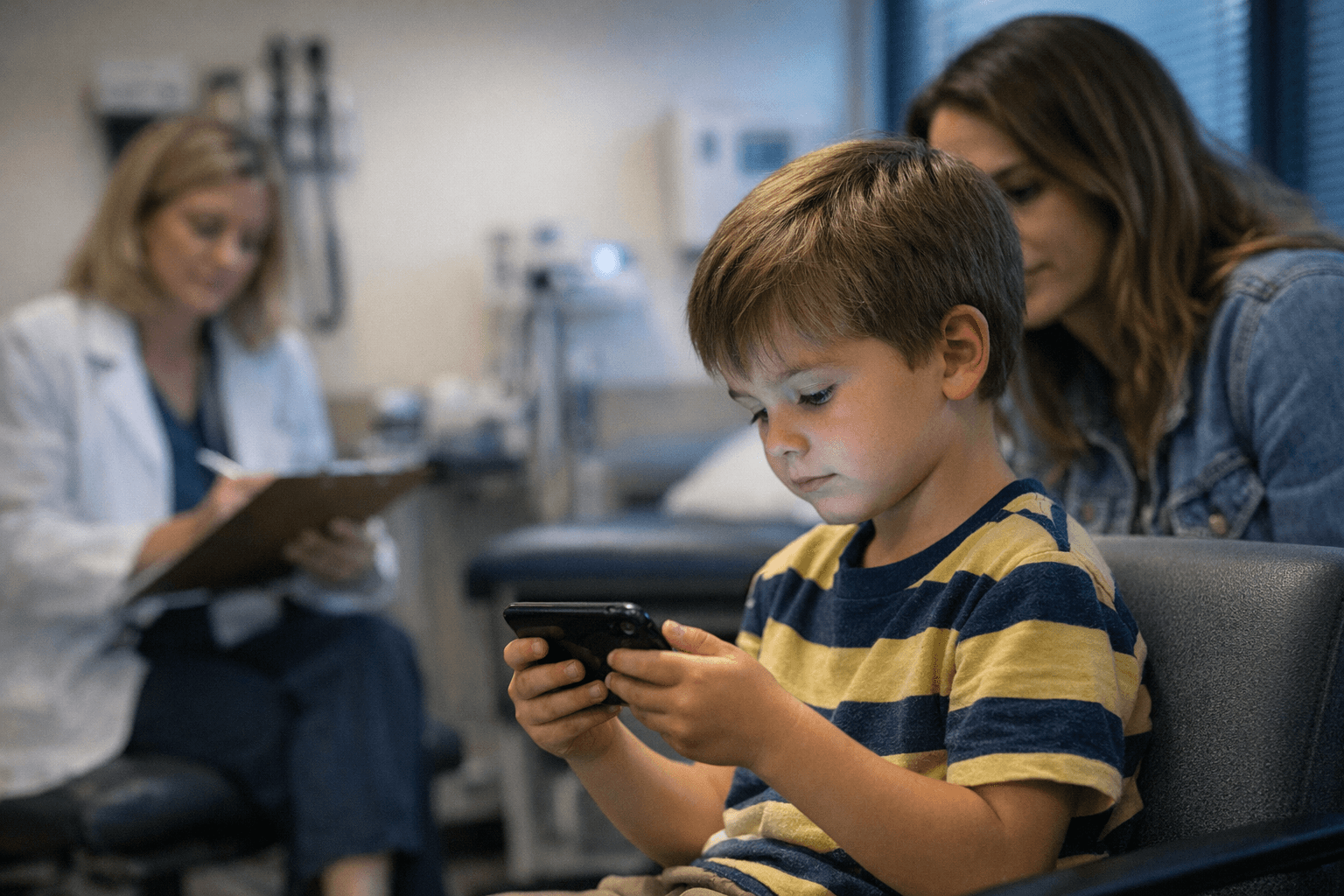
BlinkLab Ltd., a Western Australia-headquartered med-tech company, announced the commencement of its pivotal validation study for an FDA 510(k) submission, with the first child participant now enrolled and tested using its flagship platform, BlinkLab Dx1. The moment, confirmed on March 23, 2026, marked a concrete opening salvo in an effort to replace one of medicine's most backlogged diagnostic pipelines with a 15-minute session on a standard smartphone.
Autism spectrum disorder affects approximately 1 in 31 children in the United States, according to CDC data published in May 2025. Despite that prevalence, access to timely diagnosis remains critically constrained: families face an average wait of 18 to 24 months for formal assessment, and approximately 21% of U.S. autism clinics are currently unable to accept new referrals due to workforce shortages and overwhelming demand.
BlinkLab Dx1 uses a standard smartphone camera and proprietary AI-driven computer vision to capture objective, reflex-based neurometric biomarkers during a 15-minute session in which a child watches age-appropriate video content. The platform analyzes facial reflexes, eye and eyelid movements, startle responses, postural stability, and vocal responses, producing clinician-interpretable diagnostic data.
The study is being conducted across a network of ten leading U.S. clinical institutions chosen to represent broad geographic and demographic diversity: Cincinnati Children's Hospital, Seattle Children's Hospital, the University of Pennsylvania's Perelman School of Medicine, Vanderbilt Kennedy Center, Rush University Medical Center, Drexel University, the University of Nebraska Medical Center, the MU Thompson Center for Autism and Neurodevelopmental Disorders, the Southwest Autism Research and Resource Center, and the University of Arkansas. The University of Arkansas joined as the tenth and final participating site, with the network formally completed on March 16, 2026.
The study is designed to enroll a minimum of 528 children aged between two and 11 years. The pivotal validation study was designed in full alignment with FDA expectations for a 510(k) diagnostic aid submission, employing a double-blinded, multi-centre, within-subjects comparison design that evaluates Dx1 performance against established gold-standard autism assessments. Key endpoints include sensitivity, specificity, negative predictive value, and positive predictive value.
The clinical bar BlinkLab must clear is well-documented. A prior U.S. pilot study involving 485 children demonstrated robust diagnostic performance for the Dx1 device, with results of 83.7% sensitivity and 84.7% specificity that comfortably exceed the FDA's stated thresholds of 65% for both metrics. Those figures were achieved in a clinically diverse pediatric population, confirming robust real-world diagnostic performance.
BlinkLab CEO and Managing Director Dr. Henk-Jan Boele called the enrollment "the most important milestone for BlinkLab to date, following years of focused development, extensive testing, optimisation of our tech, close collaboration and meetings with the FDA, and securing IRB approvals to support clinical execution," adding that "with a clear pathway toward FDA submission and strong execution underway, we believe BlinkLab is well positioned to transform how autism is assessed in clinical practice."
Participant recruitment is expected to be completed within approximately eight months, with the FDA 510(k) submission targeted by end of calendar year 2026. The financial runway to get there is narrow. BlinkLab reported a net loss of A$3,762,532 for the half-year ended December 31, 2025, with cash and cash equivalents standing at A$5,509,160 as of that date, providing an estimated 12-month funding runway. The company continues to operate at a loss and will rely on its current cash reserves and potentially future funding to navigate regulatory and commercialization challenges.
A successful pivotal study and subsequent FDA 510(k) clearance would position BlinkLab Dx1 as a first-of-its-kind AI-powered diagnostic aid that could be deployed at scale to support earlier and more objective autism assessments, with the aim of addressing long wait times, regional inequities, and delayed access to care. For the roughly 1-in-31 American children living with the condition today, that submission deadline at the end of 2026 is the next milestone that matters.
This article was produced by Prism’s automated news system from verified source data, official records, and press releases, then run through automated quality and moderation checks before publishing. The system is built and supervised by the people who set the standards it runs under. Read our full AI policy.
Did this article answer your question?