Blue Origin grounds New Glenn after failed satellite launch, FAA investigates
Blue Origin’s first booster reuse was a partial success, but the failed upper-stage burn sent BlueBird 7 into a lower orbit and triggered an FAA grounding.
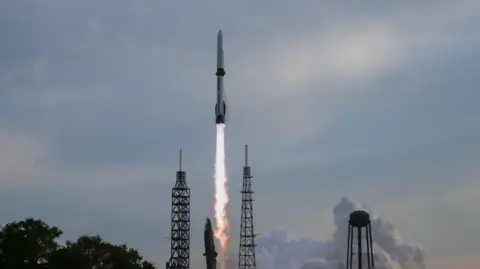
Blue Origin’s New Glenn is grounded while federal regulators review a failed satellite launch that turned a milestone booster recovery into a setback for the company’s effort to build a steadier launch business.
The Federal Aviation Administration ordered a mishap investigation after New Glenn’s third flight, NG-3, lifted off from Launch Complex 36 at Cape Canaveral Space Force Station in Florida at 7:25 a.m. EDT on Sunday, April 19, 2026. The flight was Blue Origin’s first attempt to reuse a New Glenn first-stage booster, and although the booster was successfully recovered, the upper stage did not deliver its payload to the planned orbit.
Blue Origin chief executive Dave Limp said early data indicated that one of the BE-3U engines did not produce enough thrust during the second GS2 burn to reach the target orbit. The company is leading the anomaly investigation with FAA oversight, and the rocket cannot return to flight until regulators approve the final mishap report and any corrective actions.
The customer on the launch, AST SpaceMobile, said its BlueBird 7 satellite separated from the vehicle and powered on, but was left in a lower-than-planned orbit that was too low for its onboard thruster system to keep operating. AST SpaceMobile said the spacecraft will be de-orbited and that it expects insurance to cover the loss. BlueBird 7 was the company’s seventh full-size mobile-broadband satellite and its first to fly on New Glenn, part of AST SpaceMobile’s direct-to-device cellular broadband constellation.

For Blue Origin, the timing matters beyond a single failed mission. New Glenn is central to the company’s push to raise launch cadence, win more commercial business and compete more directly with SpaceX in a market that rewards reliability as much as performance. The rocket is also expected to carry major NASA and commercial payloads, which means every anomaly carries weight not just for Blue Origin’s schedule, but for customer confidence and government planning.
The booster recovery offered Blue Origin a visible first in the New Glenn program, but the upper-stage failure made the mission a reminder that reusability only pays off if the full stack performs. The FAA’s investigation now puts the focus on whether Blue Origin can identify the cause quickly, make the required fixes and prove to customers and regulators that New Glenn can return to flight without repeating the same mistake.
This article was produced by Prism’s automated news system from verified source data, official records, and press releases, then run through automated quality and moderation checks before publishing. The system is built and supervised by the people who set the standards it runs under. Read our full AI policy.
Did this article answer your question?