Blue Origin targets New Glenn return to flight by end of 2026
A pad blast at Launch Complex 36 has put Blue Origin’s New Glenn schedule under fresh strain, and Dave Limp is promising a return before year-end.

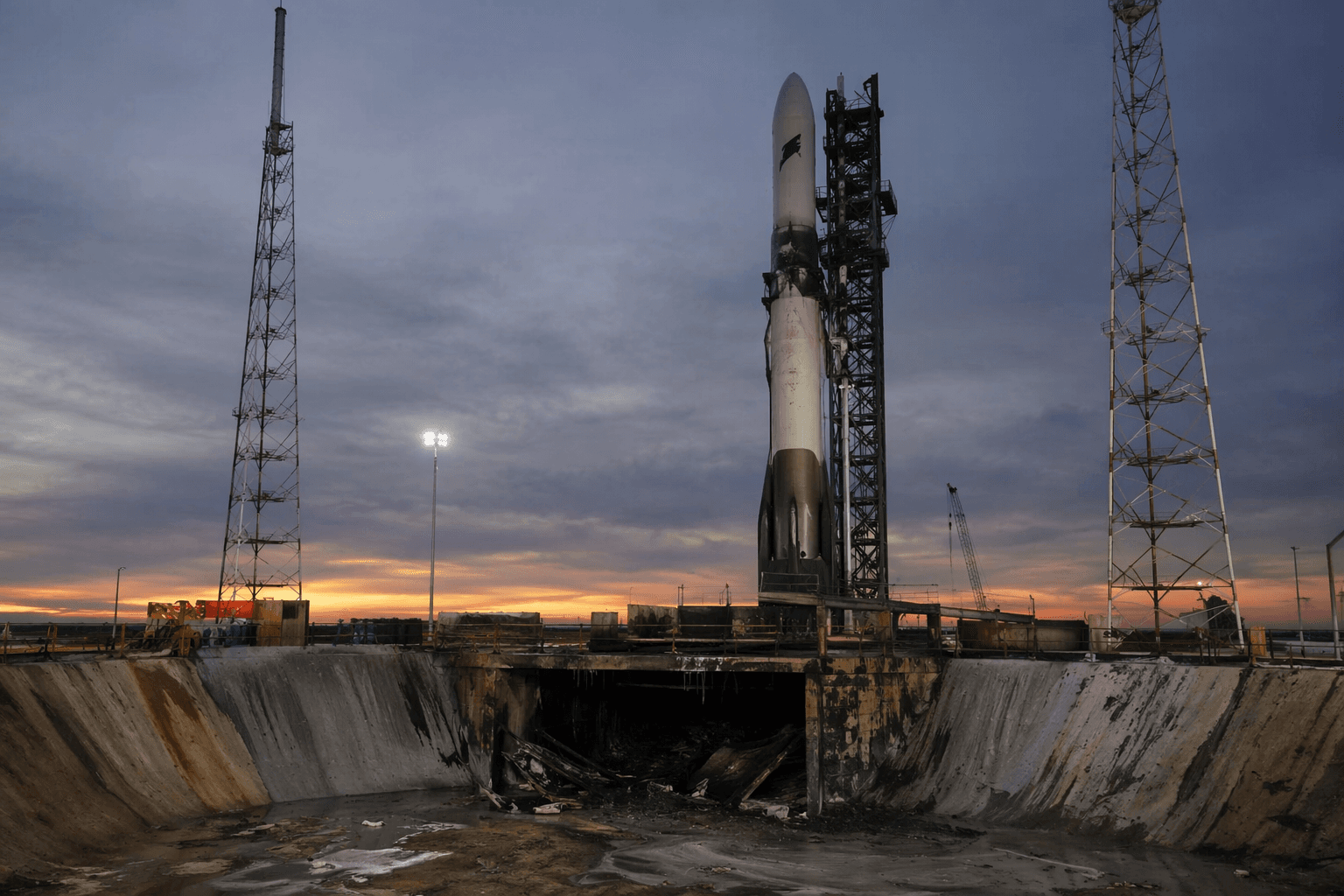
Blue Origin is trying to get New Glenn back in the air before the end of 2026, but a May 28 static-fire explosion at Launch Complex 36 has turned that promise into a test of execution, not just engineering. No satellites were aboard and no one was hurt, yet the blast damaged key pad infrastructure at the Cape Canaveral Space Force Station and added another setback to a program built around reliability, cadence and national-security credibility.
The company said it had regained some access to Launch Complex 36 and was investigating the hotfire anomaly. Dave Limp said Blue Origin had already been working to eliminate the transporter-erector and would shift to an alternative vertical concept of operations, which means a new transporter-erector is not needed. Blue Origin also said the propellant farm and the oxygen, liquid hydrogen and LNG tanks were in good shape, and that quick looks showed the booster and GS2 upper stage in the integration facility appeared healthy.
That matters because New Glenn is not a small, forgiving vehicle. Blue Origin says the rocket can carry more than 13 metric tons to geostationary transfer orbit and 45 metric tons to low Earth orbit. Launch Complex 36, once home to more than 140 Atlas II and III launches, is the only pad Blue Origin has for the rocket, so the failure was not just a vehicle issue but a site-availability problem that can ripple through the manifest.
The company had begun to build real flight experience before the explosion. New Glenn’s second mission on November 13, 2025, deployed NASA’s ESCAPADE twin spacecraft and landed the first stage on Jacklyn. Its third mission flew on April 19, 2026, carrying AST SpaceMobile’s BlueBird 7, but the satellite ended up in the wrong orbit. The Federal Aviation Administration ordered Blue Origin to investigate the upper-stage malfunction, and the company was preparing a fourth mission before the pad blast interrupted the cadence.
The timing raised the stakes. NASA announced new Moon Base-related contracts on May 27, 2026, and continues to plan Artemis work involving commercial landers from Blue Origin and SpaceX. NASA has also highlighted Blue Origin’s Blue Moon Mark 2 crew cabin as it prepares for lunar-orbit and lunar-surface milestones later this decade. Outside reporting said NASA chief Sean Duffy described the pad repair as likely to take “serious time.”

For Blue Origin, another delay would cost more than schedule. It would weaken its case with customers deciding between proven launch tempo and promised capacity, from Amazon Leo and AST SpaceMobile to NASA and national-security missions. SpaceX has already defined the market standard on flight rate; Blue Origin now has to show that New Glenn can join it, not just approach it.
This article was produced by Prism’s automated news system from verified source data, official records, and press releases, then run through automated quality and moderation checks before publishing. The system is built and supervised by the people who set the standards it runs under. Read our full AI policy.
Did this article answer your question?