Japan bonds slump as fiscal fears and yen surge rattle markets
Japan’s 10-year bond yield hit 2.77% after a weak auction, while the yen jumped and AI shares slid, exposing how fast fiscal fears can spread.
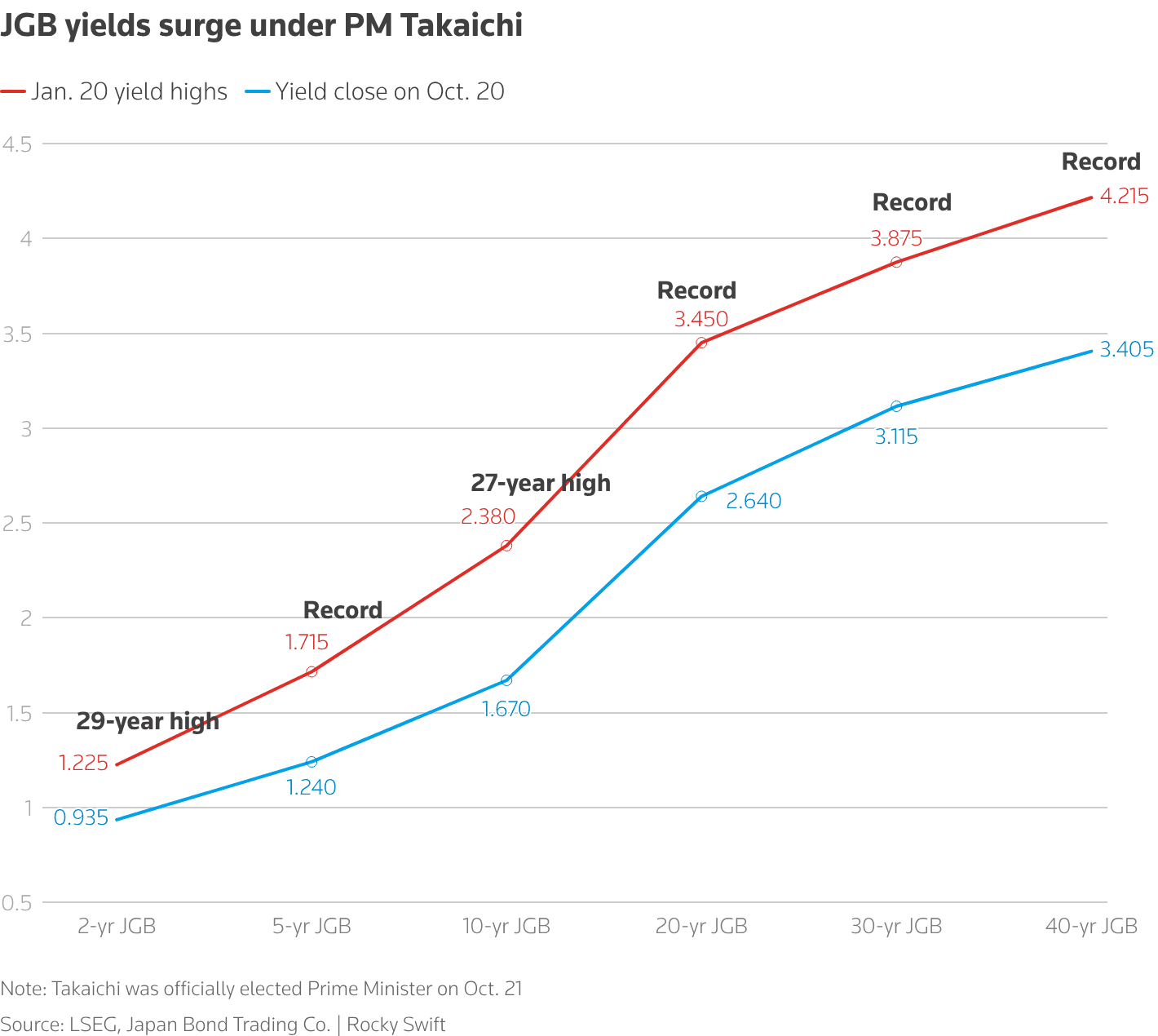
Japanese government bonds sold off Thursday as investors reacted to renewed fiscal concerns, pushing the 10-year yield to 2.77%, its highest level since mid-May. The yen rose sharply against the U.S. dollar at the same time, keeping intervention fears in focus, while Tokyo shares were hit by a broad pullback in AI-related names after an overnight tech selloff on Wall Street.
The trigger was a weak auction and a government policy mix that traders read as more permissive on borrowing. The Finance Ministry set the coupon on the July issue of 10-year JGBs at 2.7%, the highest in 29 years and one month, a striking marker of how quickly funding costs have climbed. A separate market reading put the 10-year yield as high as 2.745% intraday after the auction. Earlier in the week, a tepid 20-year bond sale had already unsettled buyers.

Investors were also focused on the government’s growth strategy, which removes wording on fiscal consolidation and points to heavier spending for strategic industries. The plan envisions more than 370 trillion yen in combined public and private investment through fiscal 2040 across 17 strategic fields, including 102 trillion yen earmarked for artificial intelligence and semiconductors. The roadmap was presented on June 25 to the Council of Economic and Fiscal Policy and the Council for Japan’s Growth Strategy, after the June 24 growth strategy announcement. For traders, the scale of the plan revived an old fear: that growth policy may be pursued at the expense of fiscal discipline.
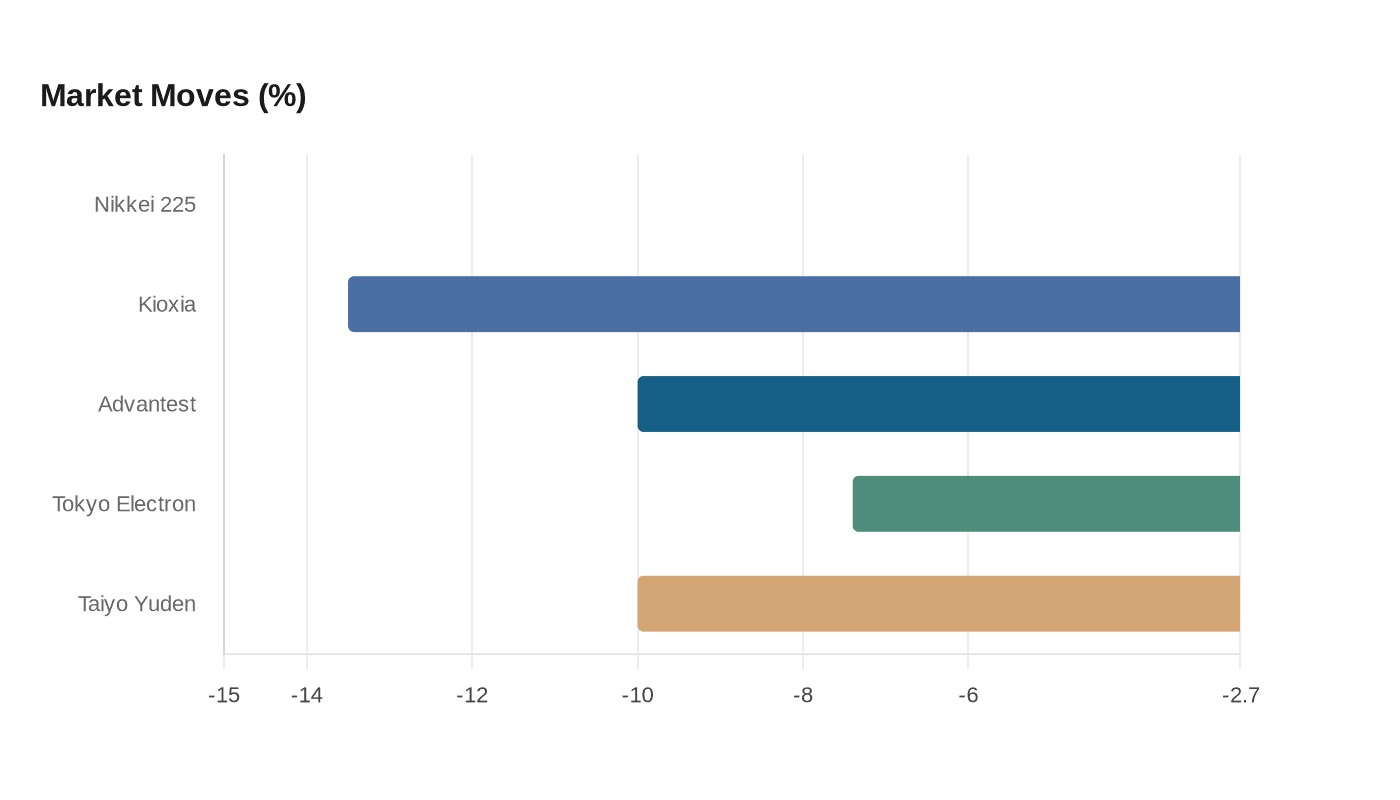
Equities echoed that caution. The Nikkei 225 fell 2.47% to close at 68,733.15, with chip and AI-linked names leading the decline. Trading data showed Kioxia Holdings down as much as 13.5%, Advantest off about 10%, Tokyo Electron down 7.4% and Taiyo Yuden lower by 10%. The Topix managed a small gain, suggesting buyers stepped in selectively even as profit-taking hit the fastest-rising parts of the market. Strategists said the move looked like a correction after a powerful quarterly advance, but the backdrop remained fragile because global technology stocks had lost momentum and Japan’s policy signals were unsettling bond investors.
Japan’s market reaction matters beyond Tokyo because it shows how quickly bond stress, currency swings and AI-stock enthusiasm can collide. When sovereign yields rise on fiscal anxiety, the pressure can spread from government debt into the valuations that have driven the global technology trade, a risk U.S. investors are watching closely.
This article was produced by Prism’s automated news system from verified source data, official records, and press releases, then run through automated quality and moderation checks before publishing. The system is built and supervised by the people who set the standards it runs under. Read our full AI policy.
Did this article answer your question?

