BMW expands E Ink concept cars with color-changing technology at CES
BMW keeps dressing concept cars in E Ink, but its shifting panels still raise one question: who, exactly, needs a car that can change color?
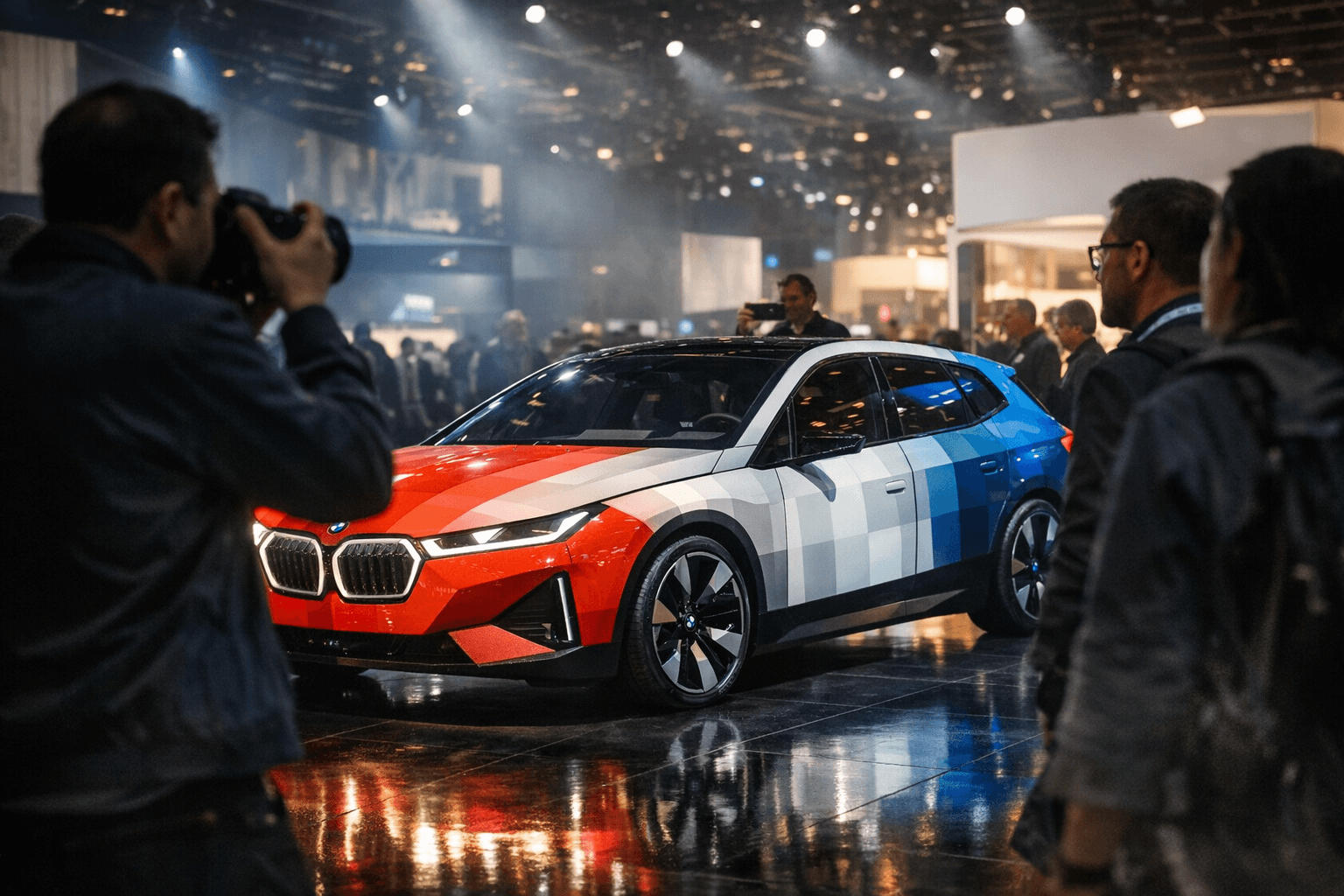
BMW has turned color-changing bodywork into a recurring CES spectacle, moving from the grayscale BMW iX Flow concept in 2022 to the BMW i Vision Dee and BMW i5 Flow Nostokana, both fitted with color E Ink panels. The effect is striking, but the practical case for the technology remains unclear.
The original iX Flow introduced the idea with the same grayscale E Ink panels used in e-readers like the Kindle, giving the car a dynamic exterior that could alter its appearance. That first version framed the concept as a moving canvas more than a new transportation feature. The later Dee and i5 Flow Nostokana pushed the idea further by upgrading the panels to color, signaling that BMW sees the technology as more than a one-off stunt.
Still, the leap from concept car to consumer product is where the story gets hard. A vehicle skin that can shift shades on demand would have to withstand sunlight, rain, road grime, impact, car washes and years of vibration and wear. It would also have to navigate a thicket of vehicle rules around lighting, signaling and exterior appearance. A dramatic demo can show what is possible on a convention stage; it does not prove that the feature is ready for daily driving.
The harder question is what problem the technology actually solves. Personalization is the most obvious answer, and there is no doubt that a car that can change its look would grab attention in a showroom or on a social feed. But changing from one color to another does not make a car safer, cheaper to own or more efficient to drive. It does not ease traffic, cut insurance bills or improve charging times. For most drivers, those are the issues that matter far more than a shifting body panel.
That leaves BMW’s E Ink experiments in a familiar place for automotive futurism: visually memorable, technically ambitious and commercially uncertain. The company has shown that it can make a car look like it stepped out of a design studio sketchbook. It has not yet shown that a color-changing exterior is a feature drivers will need, can afford or will keep working after the novelty fades.
Sources:
Know something we missed? Have a correction or additional information?
Submit a Tip