Bolivia’s Rodrigo Paz meets Trump as country pivots toward the U.S.
Rodrigo Paz met President Trump in Miami as Bolivia’s new administration signals a rapid reorientation: DEA invited back, visa-free travel for Americans and multibillion-dollar loans.
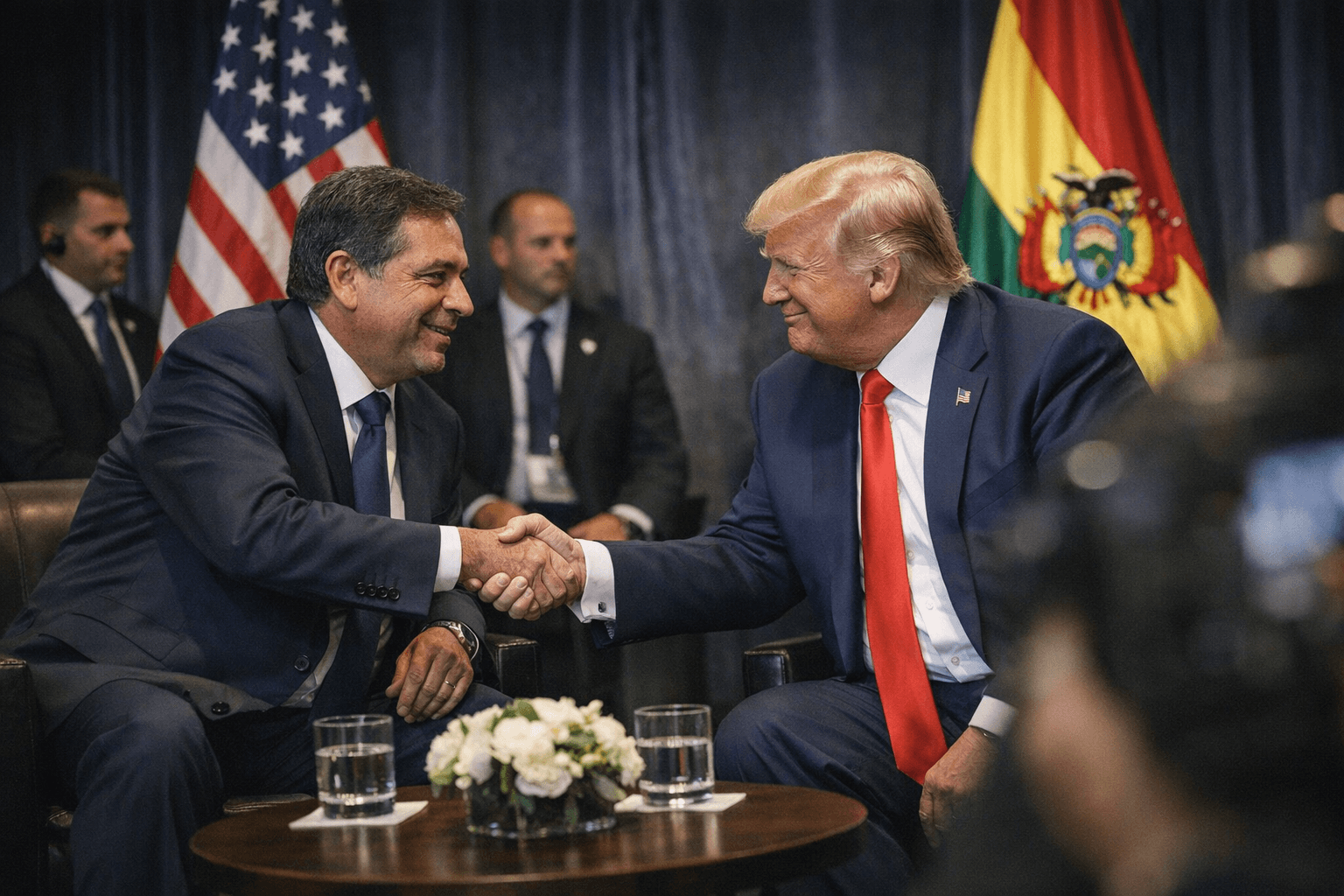
Rodrigo Paz traveled to Miami to meet President Donald Trump at a White House gathering called the "Shield of the Americas," a high-profile stage for a rapid diplomatic and economic pivot toward Washington. The Bolivian president’s administration has moved quickly since he took office in November, announcing a suite of policy shifts that break with roughly two decades of official distance from the United States.
Paz’s government has invited the Drug Enforcement Administration to officially return to Bolivia for anti‑trafficking operations, eliminated visa requirements for U.S. citizens, announced that a U.S. ambassador would return to La Paz and secured multibillion-dollar loans, including from the Washington-based Inter-American Development Bank, aimed at boosting the economy and creating jobs. The administration is also actively courting U.S. technology companies, naming Amazon, Tesla and Oracle as targets for investment promotion.
The Miami summit convened about a dozen presidents, including Javier Milei of Argentina and Nayib Bukele of El Salvador, and centered on drug trafficking, trade and China’s influence in Latin America. The gathering, dominated by right-wing leaders, underscored a broader regional rightward shift and offered Paz a moment to signal alignment with U.S. security and economic priorities.
The changes mark a stark reversal from the politics of the Evo Morales era. Morales, the leftist president from 2006 to 2019, often called the United States "the empire," expelled American officials including the ambassador and deepened ties with Venezuela, Iran and Russia. Bolivia, a mineral-rich, landlocked South American nation, now appears to be recalibrating those relationships in pursuit of investment, credit and security cooperation.
The policy moves have immediate market implications. Visa liberalization and the announced return of a U.S. ambassador remove diplomatic friction that can deter business travel and deal-making. Invitations to U.S. tech firms signal an active push for foreign direct investment beyond extractive industries; combined with multibillion-dollar lending from regional lenders, these steps are meant to shore up public finances and stimulate employment. For investors, the package reduces political risk relative to the prior two-decade posture and could lift interest from multinational corporations and lenders, especially in mining supply chains and infrastructure tied to mineral exports.
Security cooperation matters as well. Bringing the DEA back signals tougher bilateral coordination on drug trafficking and narco-trafficking interdiction. That could stabilize parts of the country that have deterred investment, but it also commits Bolivia to U.S.-led operational frameworks that will be politically contentious at home and regionally.
Strategically, the pivot reduces the room China, Venezuela and other partners carved out during the Morales years, shifting influence back toward Washington through a mix of diplomacy, lending and private investment. The real test will be whether these headline moves translate into concrete projects and jobs on the ground: multibillion-dollar loans and investment pledges must be converted into signed contracts, infrastructure and hiring to alter growth trajectories.
Paz’s Miami appearance sealed a political about-face; the next measure of success will be economic outcomes. If the administration can turn diplomatic access and lender interest into investment and employment, the pivot will register as a substantive reorientation of Bolivia’s place in hemispheric politics and markets.
This article was produced by Prism’s automated news system from verified source data, official records, and press releases, then run through automated quality and moderation checks before publishing. The system is built and supervised by the people who set the standards it runs under. Read our full AI policy.
Did this article answer your question?