Bowlins Trading Post Remains Vital I-10 Crossroads for Lordsburg Community
Local readers will learn why Bowlins Continental Divide Trading Post is essential to Lordsburg and Hidalgo County as a fuel, supply and social hub on I‑10 and what that means for travel, jobs and local resilience.
1. Strategic I‑10 crossroads and geography
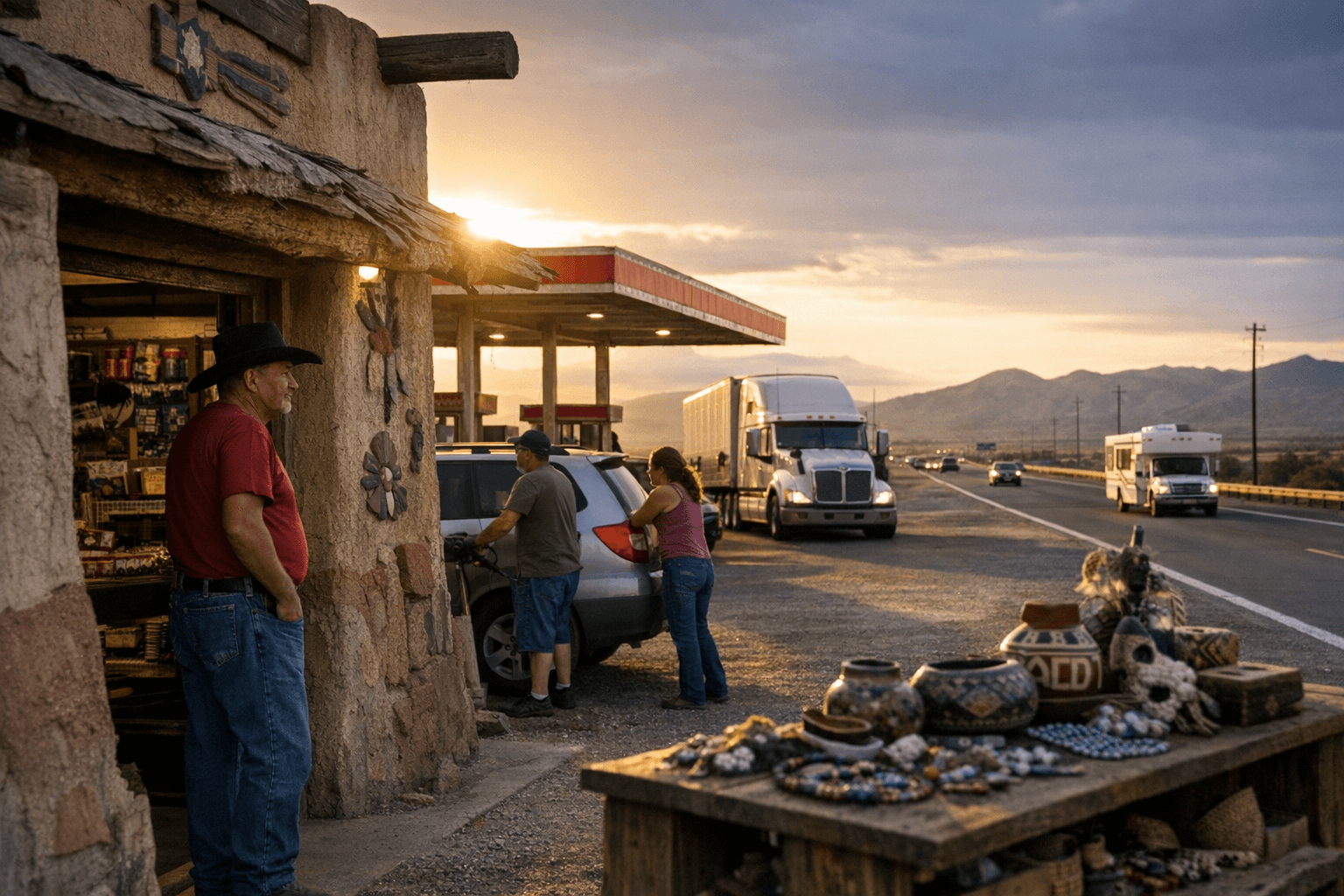
Bowlins Continental Divide Trading Post sits on Interstate 10 east of Lordsburg in New Mexico’s Bootheel, making it one of the few full‑service stops on a long stretch of highway between larger cities. That location turns a retail outlet into a commercial node: it serves mixed traffic flows of local drivers, ranchers, hunters, school teams and long‑haul trucks using a coast‑to‑coast corridor. For Hidalgo County — a low‑population, low‑density area — having a reliable pit stop on I‑10 preserves mobility and reduces the effective distance between major service centers.
2. Deep roots in community life
Operating for decades, the trading post has become woven into Lordsburg’s small‑town identity as a rendezvous point for school sports, community groups and neighbors. Beyond transactions, it functions as an informal meeting place where people pick up supplies and swap local information, reinforcing social capital that many rural communities rely on. That intangible value contributes to community cohesion in a county with roughly 4,200 residents and sparse public services.
3. Full‑service offerings that matter
Typical services at the trading post include diesel and gasoline pumps (with truck‑friendly lanes), a convenience store carrying groceries and travel essentials, a modest hot‑food counter or pizza outlet, public restrooms and basic vehicle fluids. These amenities are not luxuries in a desert stretch of I‑10 — they are necessity goods and services that keep people moving and vehicles roadworthy. For travelers and local businesses alike, having these items available locally cuts costly detours and downtime.
4. Critical support for trucking and freight flows
Truck drivers depend on confirmed diesel availability and space to maneuver; trading posts like Bowlins help keep freight moving by offering truck‑friendly services and rest options. Interruptions to diesel supply at a single node can cascade into delivery delays and higher freight costs regionally, making reliable fuel inventory management a microeconomic shock‑absorber for regional supply chains. The site’s role is therefore both operationally and economically significant for carriers crossing southern New Mexico.
5. Local employment and small‑business economics
As a longstanding local business, the trading post provides jobs and circulation of dollars in a county economy with limited private‑sector scale. Payroll, supplier purchases and the spillover to nearby vendors represent a small but meaningful multiplier in areas where every job counts. Keeping such businesses viable helps limit retail leakage to larger urban centers and sustains tax revenue that supports county services.
6. Emergency staging and resilience role
When weather, crashes or construction interrupt I‑10 traffic patterns, the trading post often acts as a staging point for responders and stranded travelers — offering shelter, fuel, water and logistical information. In sparsely served corridors, these facilities become de facto emergency nodes; their continuity can materially affect response times and community safety during storms or prolonged incidents. Maintaining them is therefore a public‑safety as well as commercial priority.
7. Operational challenges and constraints
Remote trading posts face limited staffing, variable hours, and supply‑chain constraints for fuel deliveries and fresh food inventory — challenges intensified in low‑density counties. That reality means travelers should not assume 24/7 availability, and operators must balance inventory costs with unpredictable demand. These constraints can raise unit costs for consumers and complicate long‑range planning for truck fleets.
8. Market trends and policy implications
Long‑term trends — from consolidation in retail fueling to rising electric vehicle adoption — will reshape what rural trading posts must offer. Federal investments such as the Infrastructure Investment and Jobs Act have directed funds toward EV charging corridors and rural broadband, creating an opportunity for places like Bowlins to diversify services (fast chargers, digital payments, improved connectivity). Local and state policymakers should consider targeted incentives or grants to help rural stops modernize while preserving core services.
9. Practical guidance for travelers and truckers
When you plan a stop east of Lordsburg, prepare for limited hours outside peak seasons: carry water, a charged phone and needed medications, and confirm diesel availability before relying on a single remote stop. For commercial drivers, checking posted truck‑stop amenities and scheduling refuels at known reliable nodes reduces the risk of costly delays. Simple preparedness reduces pressure on local providers and enhances community resilience.
10. Forward‑looking local recommendations
To keep Bowlins and similar trading posts viable, community leaders and residents can advocate for investments that lower operating costs and expand services — such as EV charging grants, improved broadband for point‑of‑sale systems, and lean incentives for workforce training. Preserving the trading post’s practical functions while encouraging modern upgrades aligns economic resilience with local identity: it’s the pragmatic, boots‑on‑the‑ground approach our Bootheel community needs to keep I‑10 running and Lordsburg connected.
Sources:
Know something we missed? Have a correction or additional information?
Submit a Tip