Bradford celebrates David Hockney with major exhibitions and nationwide draw project
Bradford is framing Hockney as both hometown icon and global modern master, with a Tate Britain survey, a Science and Media Museum show and a nationwide draw project.
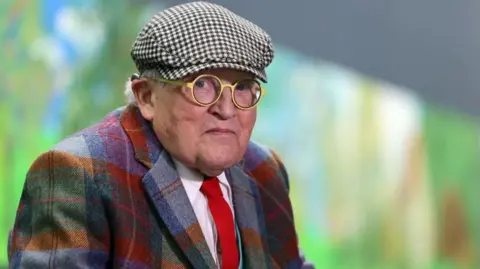
Bradford has spent decades turning David Hockney from local prodigy into civic emblem, and now that story is being told across museums, galleries and a nationwide drawing project. The scale matters because Hockney’s career has always run on two tracks at once: deeply rooted in Yorkshire and unmistakably global in reach.
Bradford's artist, but never only Bradford's
Hockney was born in Bradford in 1937, and that local origin has never been an incidental footnote to his career. He studied at Bradford School of Art from 1953 to 1957, then went on to the Royal College of Art from 1959 to 1962, where he won the college’s gold medal in 1962 for his draughtsmanship and innovative painting.
That path matters because it shows how a distinctly provincial beginning fed directly into national and international recognition. As a teenager, he used a pram loaded with paints and brushes as a mobile art studio on Bradford’s streets, a vivid image of an artist working from the everyday world around him rather than from any distant artistic capital. The same eye for ordinary life later shaped the work that made him famous in California and Los Angeles, and the landscapes and family scenes that kept Yorkshire at the centre of his imagination.
The city has built a lasting home for his work
Bradford’s attachment to Hockney is not ceremonial, it is built into the city’s public cultural geography. Salts Mill in Saltaire, the 19th-century mill associated with Sir Titus Salt, houses one of the largest collections of Hockney’s art, and the permanent 1853 Gallery gives that collection a fixed public presence. That means his work is not only in major museums and private collections, but also anchored in the West Yorkshire landscape that helped form him.
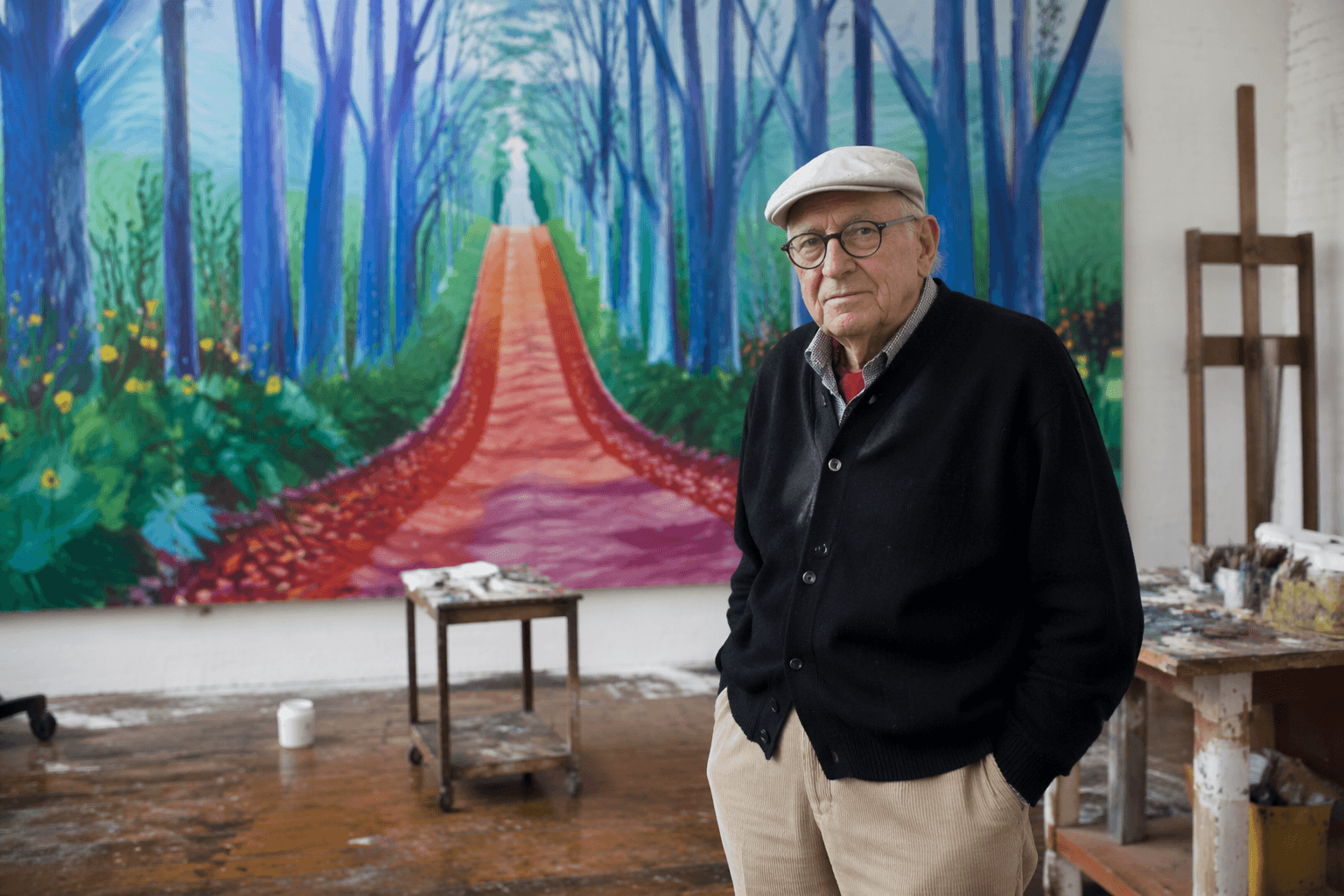
The civic recognition has been equally deliberate. Bradford made Hockney a Freeman of the City in 2000, and his connection to the district has remained a source of repeated public celebration ever since. In practical terms, that has allowed Bradford to claim him not just as a famous former resident, but as an artist whose work continues to define the city’s cultural self-image.
A major 2025 programme widens the frame
The current wave of attention brings that local pride into a wider national conversation. The David Hockney Foundation says David Hockney: Pieced Together opened in January at Bradford’s Science and Media Museum, exploring his pioneering use of film and photography through the years. That focus is important because it reminds viewers that Hockney’s practice was never limited to paint alone, even when his best-known images were shaped by it.
Alongside that Bradford show, Tate Britain has mounted a major Hockney exhibition with more than 200 works spanning his career. The range is telling: it includes early queer love and desire, portraits of his parents, and recent home-and-studio works. Taken together, those pieces present Hockney not as a single-style artist, but as someone who kept returning to intimacy, family, place and self-representation across decades of changing technique and public reputation.
Why DRAW! turns admiration into participation
Bradford 2025 UK City of Culture has taken a different route to public engagement with DRAW!, a nationwide project inspired and supported by Hockney. The idea is simple and ambitious at once: encourage people across the United Kingdom to make and submit drawings, turning a personal act into a collective cultural exercise. Bradford 2025 invited people of all ages to take part, and each month a different artist has prompted new drawings, widening the project beyond a single voice.

That structure fits Hockney’s own legacy unusually well. His work has always made a case for looking harder at the ordinary, whether he was painting Yorkshire lanes, domestic interiors, family members or sunlit California scenes. A nationwide drawing project built in his name extends that logic outward, suggesting that the most familiar subjects can become culturally significant when they are seen with enough attention.
For Bradford, the value of DRAW! is not just participation for its own sake. It also reinforces a larger argument about Hockney’s place in British culture: that an artist from Bradford can speak to the whole country without losing the local accent of his work. The project gives everyday mark-making a public platform, while keeping Hockney’s influence tied to the city that first shaped him.
Why Hockney matters beyond the art world
Hockney’s importance reaches beyond exhibitions because he changed the status of the subjects he chose. He made people, rooms, gardens, roads and landscapes feel monumental without making them abstract, and that is why his work still travels so effectively between Bradford, London, Yorkshire and the American West. The emotional scale is often domestic, but the cultural scale is unmistakably international.
That tension between regional roots and global stature is what makes Bradford’s current celebrations feel so apt. Hockney is not being honoured simply as a famous son; he is being presented as proof that a place can generate art with worldwide force. In Bradford, that idea has moved from civic pride to a durable cultural asset, and Hockney remains one of the clearest reasons why.
This article was produced by Prism’s automated news system from verified source data, official records, and press releases, then run through automated quality and moderation checks before publishing. The system is built and supervised by the people who set the standards it runs under. Read our full AI policy.
Did this article answer your question?