Brazil Projects $70-$90 Billion Trade Surplus as 2026 Goal
Brazil’s trade ministry on Jan. 6 announced an ambitious $70–$90 billion trade surplus target for 2026 after a stronger-than-expected $68.3 billion surplus in 2025. The government’s optimism contrasts with a wide array of independent forecasts, underscoring key uncertainties for the currency, external accounts and economic policy next year.
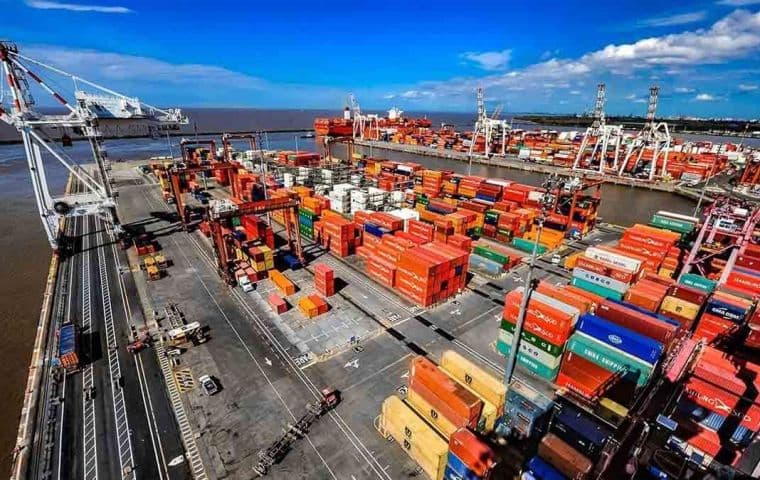
Brazil’s Ministry of Development, Industry, Trade and Services (Mdic) said in Brasilia on Jan. 6 that it expects a trade surplus of $70 billion to $90 billion in 2026, following a $68.3 billion surplus in 2025 that exceeded the ministry’s own $61 billion forecast. The ministry reported a $9.6 billion surplus for December 2025 and said agricultural shipments led the export performance in 2025, with soybeans, beef and coffee the main contributors.
The 2025 surplus nevertheless fell short of the $74.2 billion recorded in 2024, reflecting faster growth in imports than exports as domestic demand and investment recovered even amid high borrowing costs aimed at keeping inflation in check. The ministry’s projection for 2026 therefore signals expectation of either stronger commodity receipts, subdued import growth, or a combination of both sufficient to expand the trade gap in Brazil’s favor.
Independent surveys and institutional forecasts present a markedly mixed picture. A Valor survey of 46 consultancies, industry groups and financial institutions produced a median forecast of a $67 billion surplus for 2026, with a compiled range from $43.5 billion to $85 billion. The Brazilian Foreign Trade Association (AEB) is among the more optimistic private forecasters, projecting a $77.4 billion surplus in 2026 versus an estimated $63.8 billion for 2025. By contrast, Deloitte’s published outlook stands far below most estimates, forecasting only a $9 billion surplus in 2025 and $13 billion in 2026 while expecting net international reserves to turn positive in 2026 aided by IMF disbursements and capital inflows under the RIGI program.
Central bank-informed projections add another dimension. Compilations of the central bank’s external-account estimates show a wider current-account deficit of $76 billion for 2025 and a $60 billion deficit for 2026, alongside trade-balance revisions to a $52 billion surplus for 2025 and a $64 billion surplus for 2026. Those projections also assume stronger capital inflows, with foreign direct investment put at about $75 billion for 2025 and $70 billion for 2026, and domestic bank lending growth of roughly 9.4 percent in 2025 and 8.6 percent in 2026.

The divergence across forecasts highlights key methodological differences and underlying uncertainties: assumptions about commodity prices and volumes, the pace of import recovery tied to investment and credit, and the scale and stability of capital inflows. For markets, a higher-than-expected trade surplus would relieve pressure on the real and bolster reserve buffers, reducing the need for abrupt foreign-exchange intervention. Conversely, if exports weaken or imports accelerate, the currency and reserves could face strain, limiting policy flexibility for both fiscal and monetary authorities.
For now, the government’s $70–$90 billion band represents the most authoritative official target for 2026, but private and international estimates cluster well below the midpoint. The coming months will test which assumptions, strong commodity receipts, restrained import growth, or sustained capital inflows, materialize and determine Brazil’s external-account trajectory into 2026.
This article was produced by Prism’s automated news system from verified source data, official records, and press releases, then run through automated quality and moderation checks before publishing. The system is built and supervised by the people who set the standards it runs under. Read our full AI policy.
Did this article answer your question?

