Brazilian Judge Permanently Blocks Sugarloaf Mountain Zipline Project
A federal judge permanently blocked Rio's Sugarloaf zipline after construction crews drilled into the UNESCO-listed rock face before permits were ever granted.

A Brazilian federal judge has permanently blocked a 50-million-reais zipline project at Rio de Janeiro's Sugarloaf Mountain, ending a legal battle that began in 2023 after construction crews drilled directly into the granite face of one of the world's most recognised landmarks without formal authorisation.
The project, developed by Parque Bondinho Pão de Açúcar, the company that has operated the site since its iconic cable car launched in 1912, would have strung four steel ziplines across 755 metres of preserved Atlantic Forest between Sugarloaf and the neighbouring Morro da Urca. Riders would have descended 176 metres at speeds reaching 100 kph, with the inaugural ride originally planned for the second half of 2023.
The legal unravelling began when drilling into Sugarloaf's rock face started in September 2022, before Iphan, the federal body responsible for protecting Brazil's historic and artistic heritage, had formally authorised the work. Iphan later approved the project, but federal prosecutors argued it had done so illicitly. Federal judge Paulo André Bonfadini issued the first suspension order on June 2, 2023, writing that "large perforations were made in Sugarloaf, yes, perforations, without it being known with certainty how much damage this could cause." He immediately barred the company from any further drilling, cutting or structural modification of the rock.
The ruling landed against a backdrop of organised and sustained public opposition. In March 2023, roughly 200 people gathered at the base of Sugarloaf to protest the ongoing construction. A grassroots campaign called the "Sugarloaf without a Zipline" movement collected more than 23,000 signatures on an online petition. Mountaineers, environmental groups and residents of the adjacent Urca neighbourhood all raised objections, with some warning that UNESCO could strip the site of its World Heritage designation, which it received in 2012 alongside Christ the Redeemer on Corcovado. The two peaks together form part of a 91.5-hectare Natural Monument that draws approximately 1.6 million visitors each year.
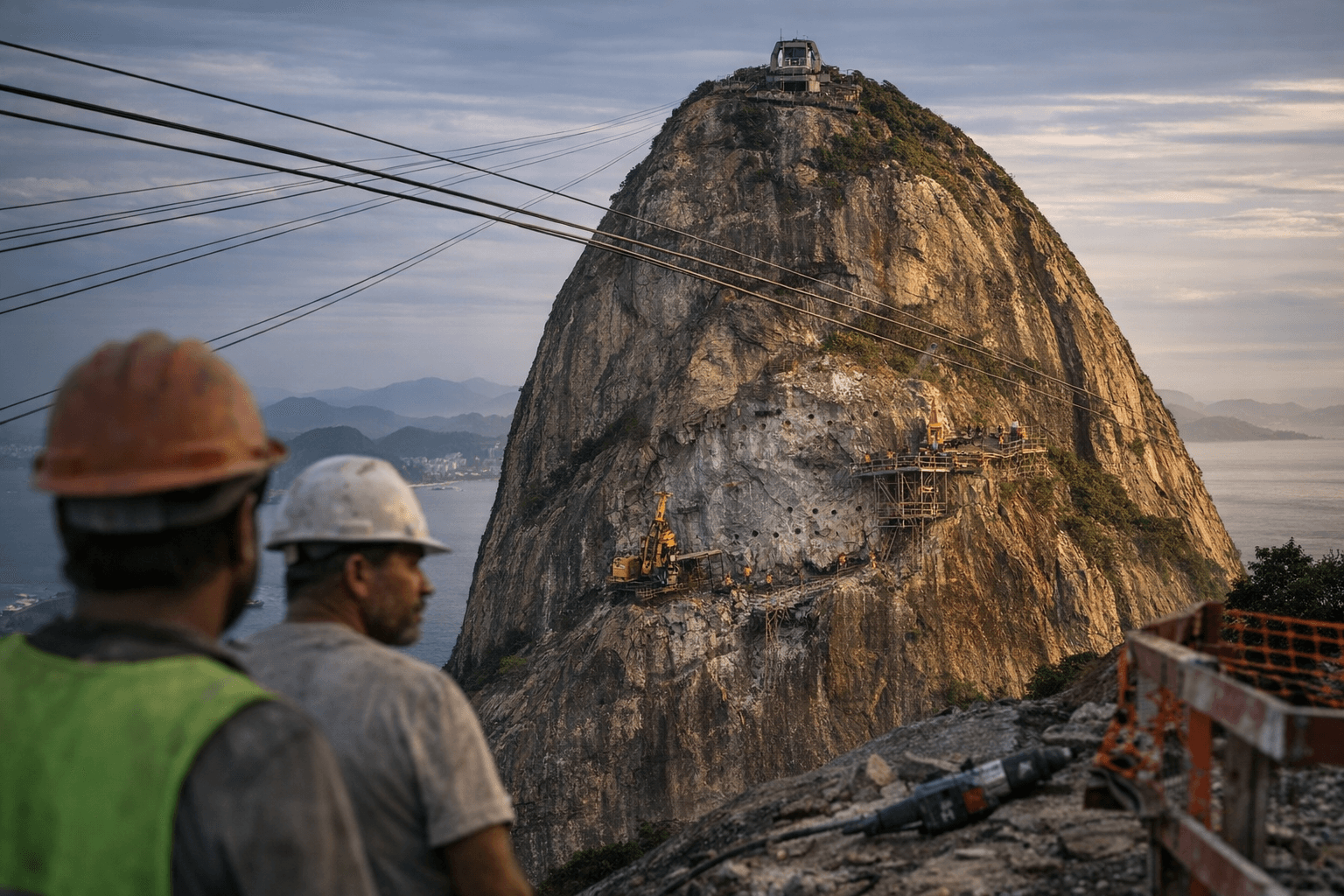
Federal prosecutors found that construction had "altered the land's natural outline due to the rock's demolition and drilling." Both Iphan and Parque Bondinho are now defendants in a civil lawsuit, each facing fines of at least US$9.5 million (50 million reais). Prosecutors issued a 60-day deadline for the company to present a remediation schedule covering the removal of all structures and residual construction materials from the site.
Parque Bondinho maintained throughout the proceedings that its licensing process had observed "the absolute legality of the works" and complied with all technical requirements set by Iphan and Rio's Municipal Secretary of Environment and Climate. The company also argued that noise from riders would not be detectable from the ground and that the attraction would have driven additional tourism to the area.
With the definitive ruling now in place, the focus shifts to how extensively the protected rock face was compromised by nearly two years of contested construction, and whether the site can be restored to the condition that earned it UNESCO recognition in the first place.
This article was produced by Prism’s automated news system from verified source data, official records, and press releases, then run through automated quality and moderation checks before publishing. The system is built and supervised by the people who set the standards it runs under. Read our full AI policy.
Did this article answer your question?


