Brazilian Kayapo leader prepares to carry Raoni's rainforest legacy
Megaron Txucarramae is stepping forward as Raoni Metuktire, 94, recovers from pneumonia, with the Kayapo fight for the Amazon entering a new phase.

Megaron Txucarramae is preparing to inherit more of the burden carried for decades by Raoni Metuktire, as the 94-year-old Kayapo leader recovers from recent health problems and the Amazon faces mounting pressure from mining, pasture and climate-driven fires. At 75, Megaron has spent much of his life defending Indigenous land in Brazil, and now says he is ready to extend the struggle that made Raoni a global symbol of rainforest protection.
In the village of Pykany, inside the Menkragnoti Indigenous Territory in Para state, Megaron spoke during a trip organized by Greenpeace to monitor illegal mining on Kayapo land. He has long been involved in fights over land demarcation in the Amazon, hydropower projects and illegal extraction, and he framed the defense of the forest as a matter far beyond one community. “I will continue it, continue his struggle,” he said, placing himself squarely in the line of succession behind his uncle and mentor.
Raoni’s fragile health has sharpened that transition. The Kayapo elder was hospitalized on May 14 in Sinop, Mato Grosso, for pneumonia and later spent time in intensive care as a precaution because of his age and underlying conditions. A medical bulletin said he had a favorable clinical evolution and no fever while in intensive care, and he had returned home after a week there. Earlier in May, he was also hospitalized on May 7 for a chronic hernia and discharged two days later. Several recent hospitalizations have underscored how quickly the movement could lose the man who carried it onto the world stage.
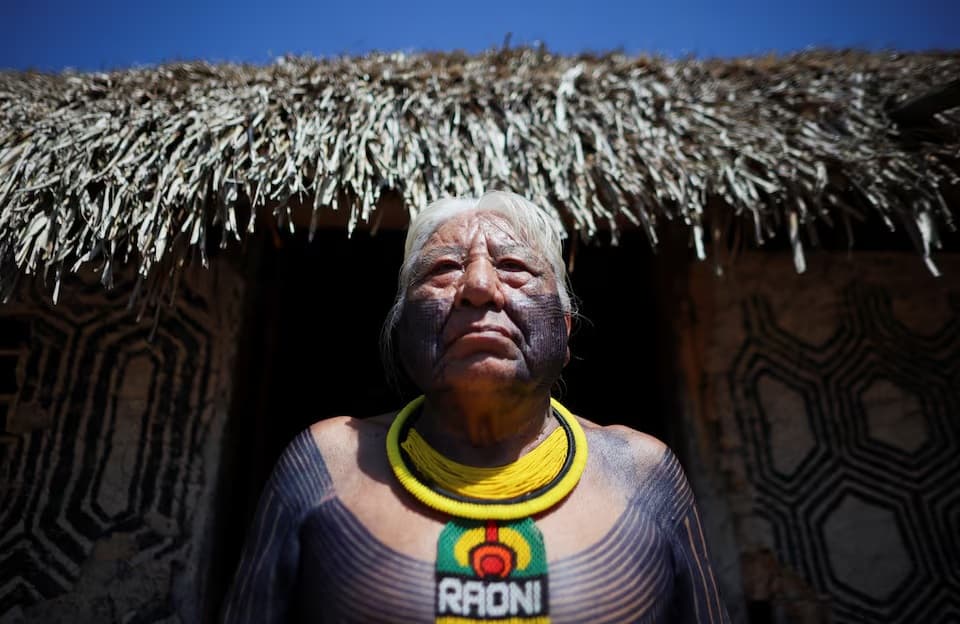
The Kayapo first came into contact with non-Indigenous Brazilians in the 1950s, when Megaron was still a child, and the struggle for territory has only grown more dangerous since then. Raoni has appeared with presidents, popes and Sting in rainforest campaigns since the 1980s, turning Indigenous resistance into an international cause. Today, the stakes are harsher: the Amazon has lost nearly a fifth of its forest cover to crops, pasture and mining, while droughts and climate-linked wildfires deepen the threat to Indigenous lands and communities. Megaron’s rise suggests continuity rather than replacement, but the next phase of the fight will have to confront a more aggressive mix of economic interests and political resistance while trying to preserve the moral authority Raoni built over generations.
This article was produced by Prism’s automated news system from verified source data, official records, and press releases, then run through automated quality and moderation checks before publishing. The system is built and supervised by the people who set the standards it runs under. Read our full AI policy.
Did this article answer your question?


