Brazilian police raid ex-Rio governor and refinery owner in tax probe
Brazilian federal police searched a former Rio governor and a refinery owner as a tax-evasion probe widened around fuel money and unpaid debts worth billions.

Brazilian federal police searched former Rio de Janeiro governor Cláudio Castro and Ricardo Magro, the owner of the privately owned refinery Refit, in a suspected tax-evasion probe that pushed one of Brazil’s most politically sensitive business sectors back into the spotlight.
The operation tied together a former state chief executive and a fuel-industry owner whose company sits at the center of tax collection, energy supply and regional power. Castro had already resigned as governor on March 23, 2026, ahead of a Superior Electoral Court deadline, and was preparing to run for the Senate. That made the raid politically explosive at a moment when Rio’s governing class is already under pressure over corruption and fiscal oversight.

Castro’s lawyer said he had not yet been told the grounds for the warrants. Magro did not immediately respond to requests for comment. Refit said it was working to regularize inherited tax liabilities and denied ever falsifying tax returns to obtain tax advantages.
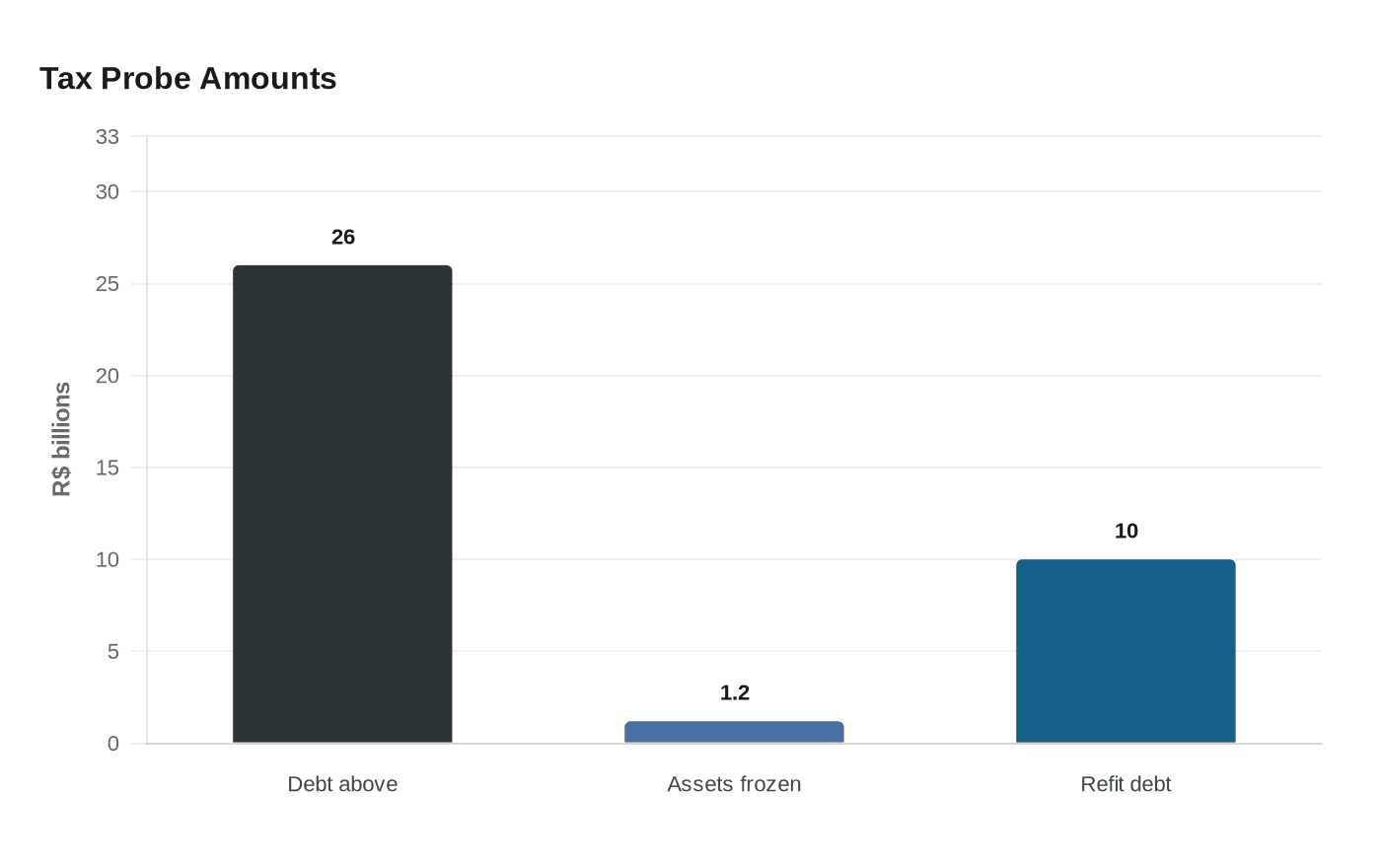
The case fits into a broader enforcement campaign aimed at fuel companies and repeat tax debtors. In November 2025, Receita Federal said the Poço de Lobato operation targeted what authorities described as the country’s largest repeat tax debtor, with debts above R$26 billion. State authorities said that wider probe included 126 search-and-seizure warrants and measures to freeze R$1.2 billion in assets.
Rio-related reporting has also said Refit’s debt in the state alone was estimated at R$10 billion in a 2025 enforcement action. That scale helps explain why investigators are treating the refinery not as an isolated tax case, but as part of a larger network where fuel money, political access and tax evasion can intersect.
Separate Brazilian coverage said Magro lives in Miami and has been placed on Interpol’s red notice list, underscoring how closely authorities have watched him. For prosecutors and tax officials, the point is not just whether one company underpaid. It is whether strategic fuel assets and public office were used to shield a broader scheme that drained state revenue and distorted competition.
The search warrants showed how quickly a tax inquiry can become a test of institutional power in Rio. With a former governor under scrutiny and a refinery owner already flagged by authorities, the case now stands as a measure of how far Brazil’s enforcement agencies are willing to go against actors at the junction of politics, oil and public finance.
This article was produced by Prism’s automated news system from verified source data, official records, and press releases, then run through automated quality and moderation checks before publishing. The system is built and supervised by the people who set the standards it runs under. Read our full AI policy.
Did this article answer your question?