Brazil's BYD labor dispute exposes tensions over investment and abuse allegations
Brazil pulled BYD into its dirty list, then a court yanked it back days later, sharpening questions over whether green investment outran labor enforcement.
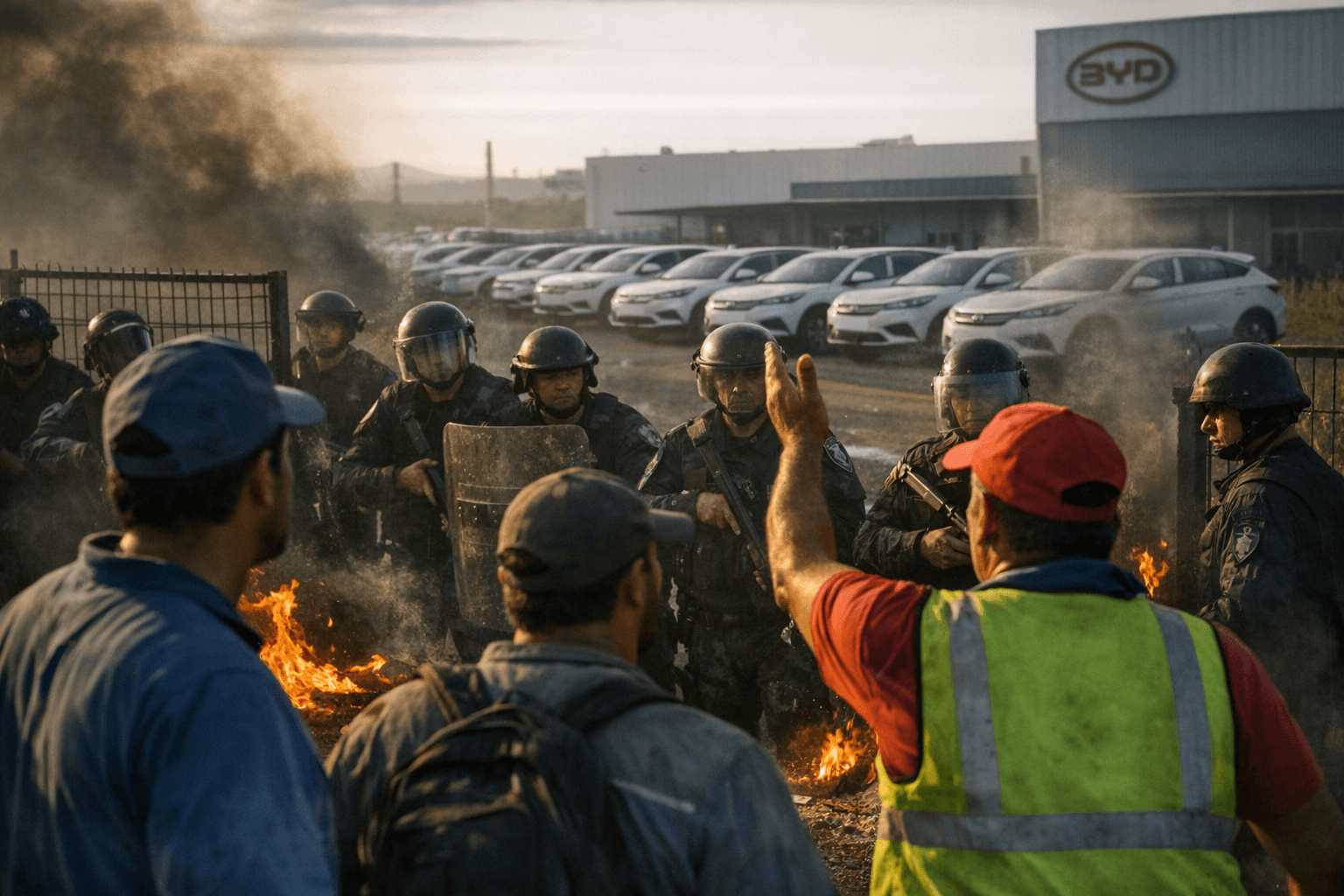
Brazil’s labor fight with BYD has become a test of whether the drive to court electric-vehicle investment is blunting enforcement against abusive work conditions. The country’s Labor Ministry added BYD Auto do Brasil to the Lista Suja on April 7 after inspectors said 471 Chinese workers had been brought into Brazil illegally and 163 were rescued from slave-like labor at a construction site tied to the company in Camaçari, Bahia.
The case began with an operation on Dec. 19, 2024, and the ministry said the investigation continued for months before the blacklist update. In its semiannual April 2026 review, the registry grew to 613 names after 169 new employers were added. The dirty list matters well beyond reputation: companies on it can face limits on access to loans from Brazilian banks, giving the designation direct financial consequences as well as political ones.
That is what makes the BYD dispute so sensitive. Reuters reported that Labor Minister Luiz Marinho told the top labor inspector to hold off on adding BYD’s name without offering a technical justification. Two days later, on April 9, a Brazilian court issued an injunction removing the automaker from the list while a final ruling is still pending. The firing of the labor inspection chief, Luiz Fausto Marinho de Medeiros, has drawn criticism from Anafitra, the national association of labor inspectors, which said the move weakens Brazil’s fight against labor abuses and undermines the force of the registry.
The episode lands in the middle of Brazil’s push to position itself as a hub for clean manufacturing. Lula was briefed in December 2024 that BYD planned to start Brazilian vehicle production by March 2025, with 10,000 direct jobs by the end of 2025 and another 20,000 by the end of 2026, according to government material. BYD also said it expected its Bahia complex to produce 150,000 vehicles a year initially, rising to 300,000 in a later phase. Agência Brasil later reported that the Camaçari investment totaled BRL 5.5 billion.
President Luiz Inacio Lula da Silva attended the factory inauguration in October 2025 and described it as evidence of BYD’s confidence in Brazil, even as the labor case was already unfolding. That juxtaposition captures the political stakes now hanging over the dispute: Brazil wants the jobs, the capital and the green-tech prestige, but the dirty list exists to show that even flagship investors are not supposed to escape scrutiny when inspectors find labor that looks like slavery.
This article was produced by Prism’s automated news system from verified source data, official records, and press releases, then run through automated quality and moderation checks before publishing. The system is built and supervised by the people who set the standards it runs under. Read our full AI policy.
Did this article answer your question?


